
Window Film Facts for Philadelphia Properties
Window film's performance claims are backed by independent testing, Department of Energy recognition, and decades of real-world installation data. Whether you are evaluating window film for energy savings, UV protection, or carbon reduction goals, here are the facts and statistics that matter.
Every statistic on this page is backed by independent testing, DOE recognition, or manufacturer performance data

What do the numbers say about window film?
Window film's performance claims are backed by independent testing, Department of Energy recognition, and decades of real-world installation data. Whether you are evaluating window film for energy savings, UV protection, or carbon reduction goals, here are the facts and statistics that matter.
According to the U.S. Department of Energy, energy-efficiency retrofits of existing buildings — including window film that reduces the building envelope's energy use — can reduce operational costs, particularly in older buildings. Window film has been identified by the DOE as a "first-tier technology" for building energy efficiency.
PERFORMANCE FACTS
THEDATA.
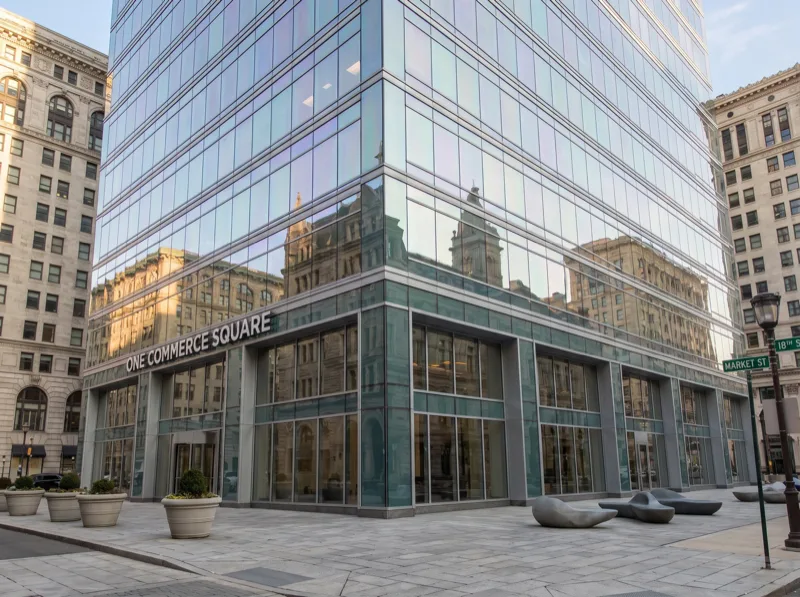
A collection of real window film installations across Philadelphia. Every project backed by independently verified performance data and manufacturer specifications.
Hover the photos · click to bring forward
What the data shows about window film performance
Three categories of performance data that matter most to Philadelphia property owners — energy efficiency, UV protection, and return on investment.
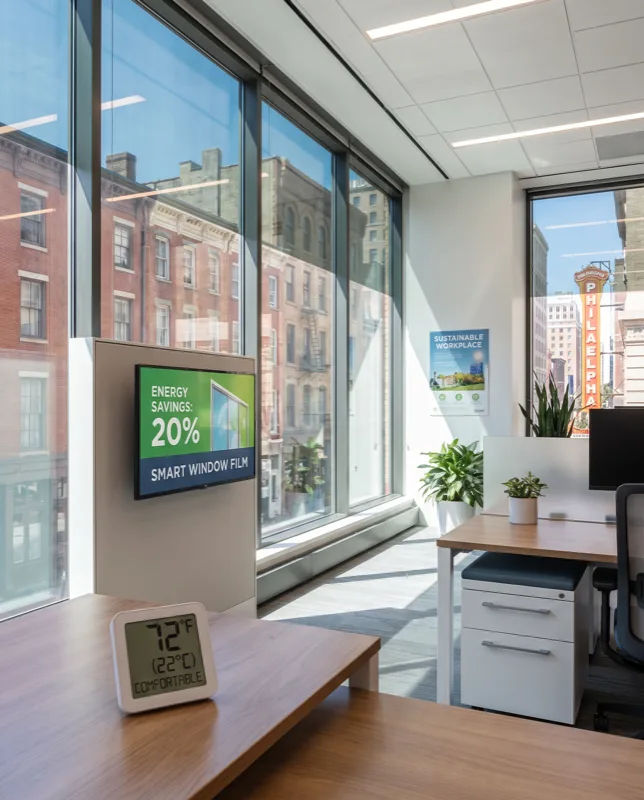
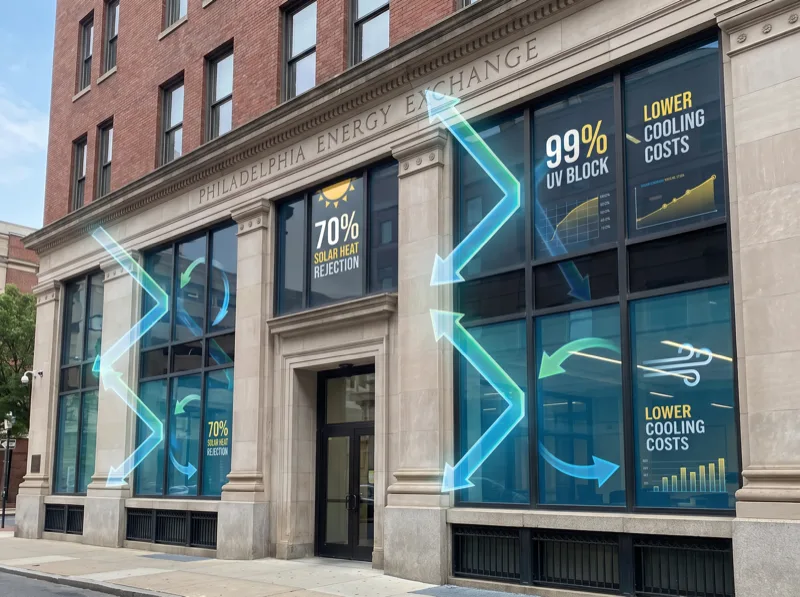
Window film can reject up to 97% of infrared radiation from the sun and block up to 60% of solar heat from entering through glass. Property owners save $1–$2 per square foot of film installed — as much as 19 kWh per square foot of glass annually. Residential property owners see average cooling cost savings of 30% in summer and 10–15% in winter. The Department of Energy has identified window film as a "first-tier technology" for building energy efficiency.
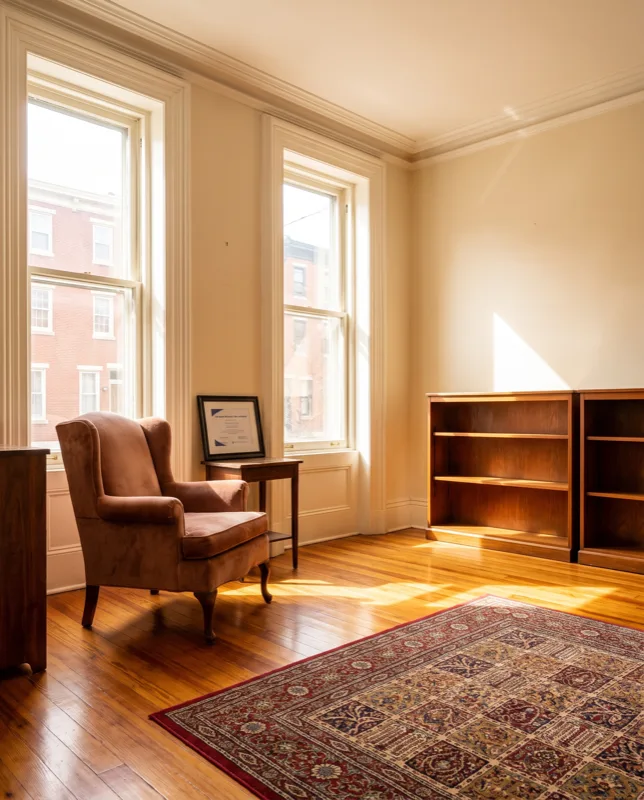
Window film blocks up to 99.9% of UVA and UVB radiation — the leading cause of interior fading for furnishings, flooring, and artwork. UV rays account for 40–60% of all interior fading. Window film also improves the energy efficiency of existing glass by up to 92%, effectively converting single-pane glass to near double-pane performance in thermal management terms.
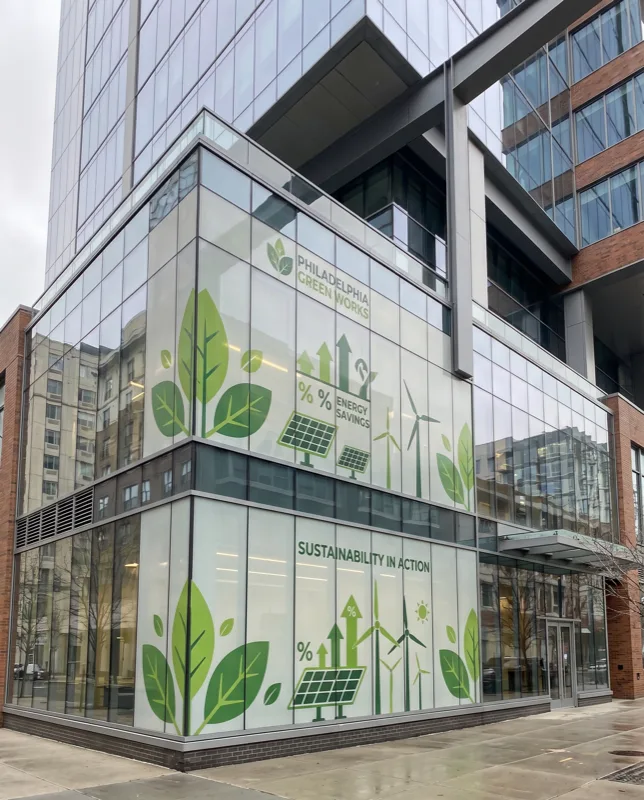
Businesses typically achieve full ROI on window film within 6 months to 3 years depending on glazing area and film type. Window film can deliver carbon-negative benefits within 6 months of installation. Solar heat gain and radiant heat loss account for approximately one-third of a home's total energy costs — and approximately 40% of energy lost in any building exits through its windows. Every 16 feet of film installed saves the energy equivalent of one barrel of oil annually.
What are the headline statistics for window film?
Six numbers that define the performance of professional window film on Philadelphia properties.
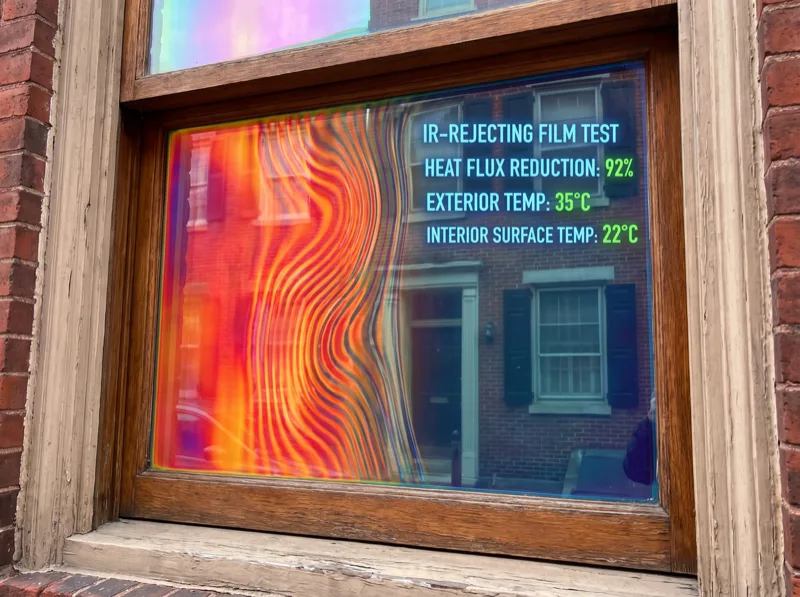
97% IR Rejection
Top-tier window films reject up to 97% of infrared radiation from the sun, dramatically reducing heat gain through glass.
99.9% UV Block
Industry standard for UV-rated films — blocks virtually all UVA and UVB radiation regardless of visible light transmission.
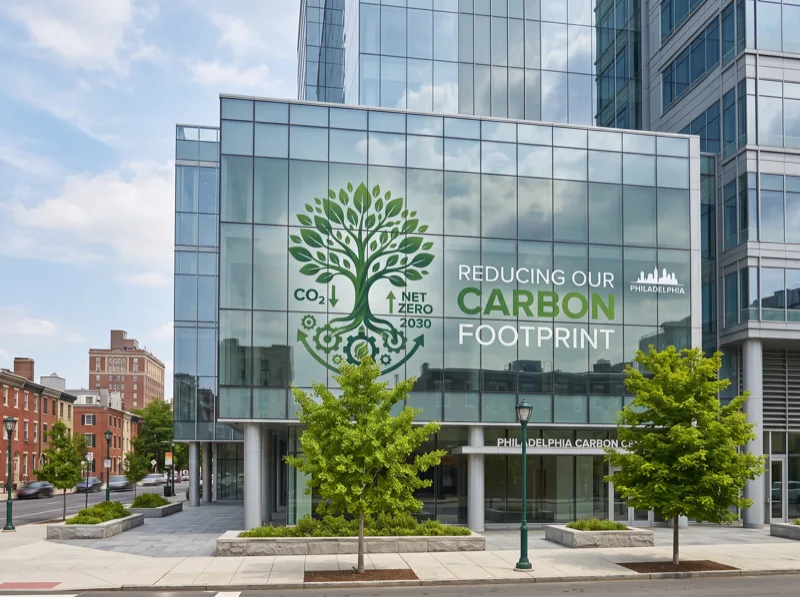
Carbon-Negative in 6 Months
The energy saved by window film exceeds the embodied carbon of manufacturing and installing it within 6 months.
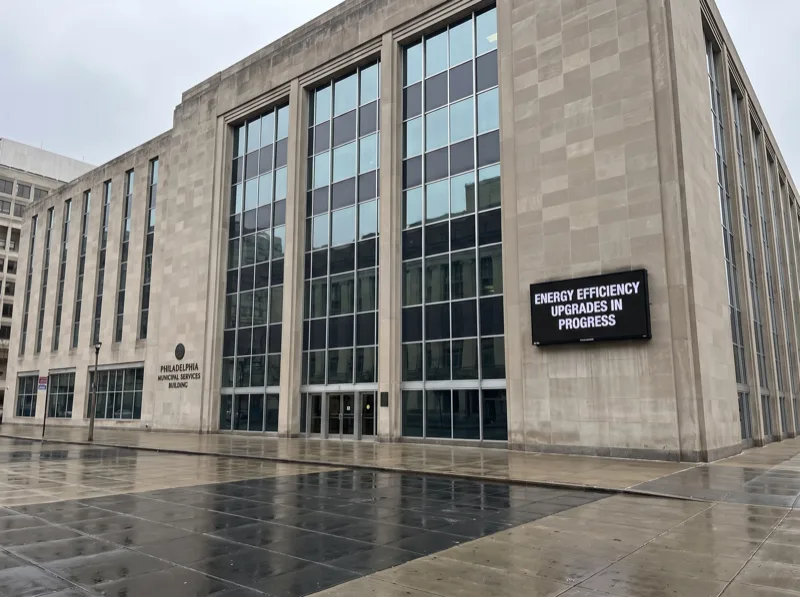
DOE First-Tier Technology
The Department of Energy has identified window film as a first-tier technology for building energy efficiency.
30% Summer Savings
Residential property owners typically see an average of 30% savings on energy costs during summer months.
92% Glass Efficiency
Window film can improve the energy efficiency of existing glass by up to 92%, converting single-pane to near double-pane performance.
Window film performance at a glance
FAQ
Common questions about window film performance data
Everything you need to know about the sources, methodology, and real-world applicability of these performance statistics.
This data comes from independent lab testing, manufacturer performance data, Department of Energy studies, and real-world installation case studies accumulated over decades of commercial and residential window film application. All figures represent tested results from certified film products.
Yes — most premium films from 3M, LLumar, Vista, and other major brands achieve 99.9% UV rejection regardless of the film's visible light transmission level. Even clear, low-visibility films block virtually all UV radiation while remaining nearly invisible on glass.
Energy savings begin immediately on day one of installation. Most property owners notice reduced HVAC cycling within the first billing cycle after installation, with measurable cost reductions typically visible within the first month of summer or winter use.
The 92% figure represents maximum improvement potential on single-pane glass with a high-performance Low-E film. Actual improvement varies by glass type, orientation, and film selected. Our team provides property-specific energy projections during your free consultation.
It means the energy saved by the film exceeds the embodied carbon of manufacturing and installing it within 6 months of installation — so the film has a net positive environmental impact remarkably quickly. This makes window film one of the fastest-payback sustainability investments available for buildings.
Yes — our team provides free onsite assessments and can model expected savings based on your building's glazing area, glass orientation, existing glass type, and local climate data. Contact us to schedule a free consultation for your property.
Ready to put these numbers to work for your property?
Contact us for a free onsite consultation. We assess your glass, model projected savings, and show you exactly how these statistics apply to your building.
 David R.
Center City
 Lisa M.
Rittenhouse
 Robert K.
South Street
 Janet F.
Manayunk
 Sarah M.
Fishtown
 Marco V.
Old City