
Bomb Blast Window Film in Philadelphia
for Office Towersfor Government Facilitiesfor Hotels and Convention Centersfor Hospitals and Medical Centers
GSA and ASTM-rated blast mitigation film that holds glass in place after a blast event — protecting Philadelphia building occupants from fragment injury without replacing your glass.
Trusted by Philadelphia office towers, government facilities, hotels, hospitals, and high-occupancy commercial buildings.





Glass fragment injuries account for up to 90% of casualties from blast events in buildings — Whole Building Design Guide
Unprotected Glass Is the Primary Blast Hazard in Any Building
- In a blast event, standard glass shatters and propels fragments at high velocity — the primary cause of occupant injury is not the blast wave but the glass.
- Blast mitigation film in Philadelphia is applied to existing glass and holds shattered fragments in the film matrix — preventing the glass from becoming a projectile hazard.
- Philadelphia's dense urban environment, federal building presence, high-profile hospitality, and international business profile create meaningful blast risk across the Class A office and government facility portfolio.
- GSA and Department of Defense guidelines increasingly require blast mitigation for any building housing federal tenants or high-value occupancies.
"Laminated glass and window film are among the most cost-effective methods to reduce glass-fragment hazards from explosions in existing buildings," according to the Whole Building Design Guide — Window Security. GSA TS01-2003 classifies blast glazing performance on a scale from "No Hazard" to "High Hazard," and Window Film Philadelphia specifies 8–14 mil film with perimeter attachment to achieve a "Minimal Hazard" or "Low Hazard" rating on existing commercial glass. For broader forced-entry concerns, see our commercial safety and security window film page. Buildings with high solar load may also benefit from reviewing our 3M window film products, some of which combine solar control with security performance.
Schedule a blast risk assessment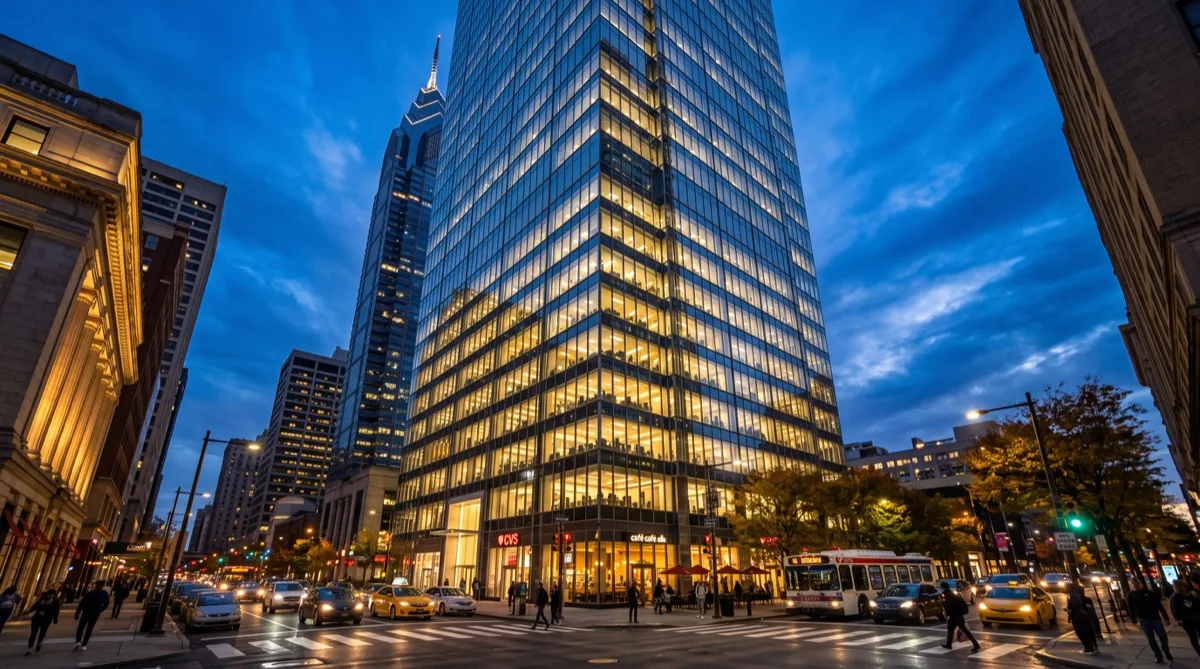

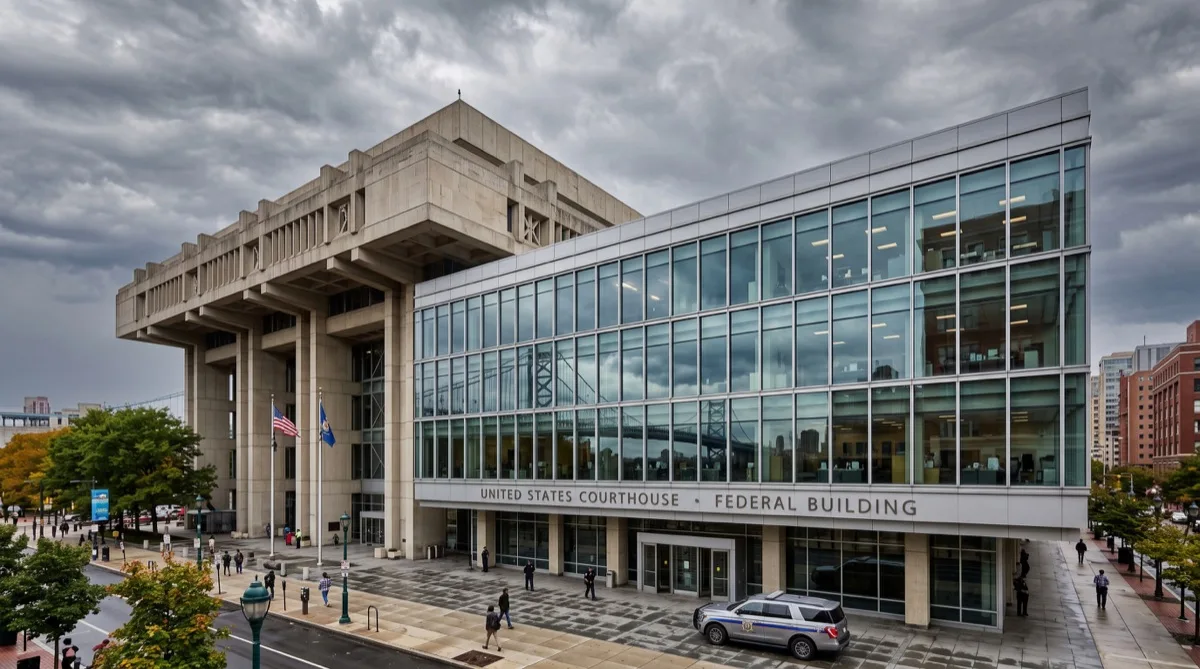
How does blast film change the failure pattern?
Blast mitigation film is selected around the physics of glass failure: fragment velocity, frame pullout, and the negative pressure phase that follows the initial blast wave.
The Physics of Blast Hazard — and How Film Stops It
Glass fragments propelled by blast events travel at velocities exceeding 100 mph — blast mitigation film holds them in the film matrix, preventing occupant injury. The film and attachment system turn uncontrolled fragments into a retained glass-film unit.
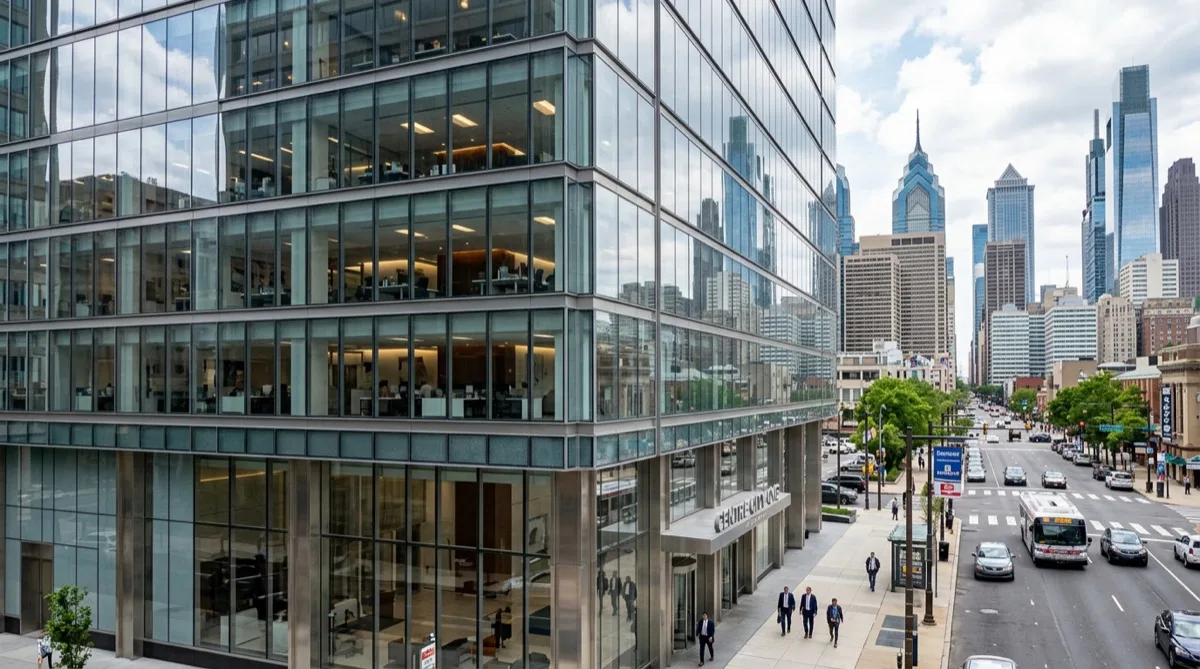
Commercial High-Rise Glass
Lobby, podium, and ground-floor zones get priority treatment.
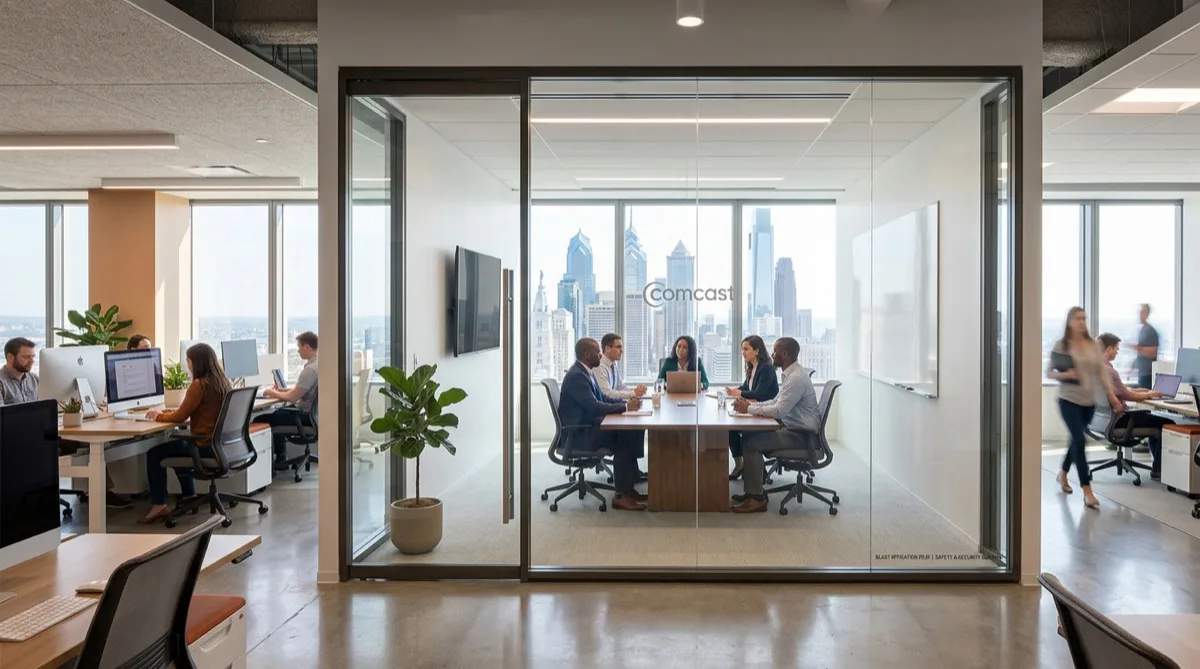
Priority Glazing Zones
Blast-facing facades, entries, and public-facing glass are evaluated first.
GSA TS01-2003 & ASTM F1642 Rated
Specifications are selected from products tested to government and glazing blast standards, with the correct attachment method documented for the building record.
Compliance DocumentationNo Glass Replacement Required
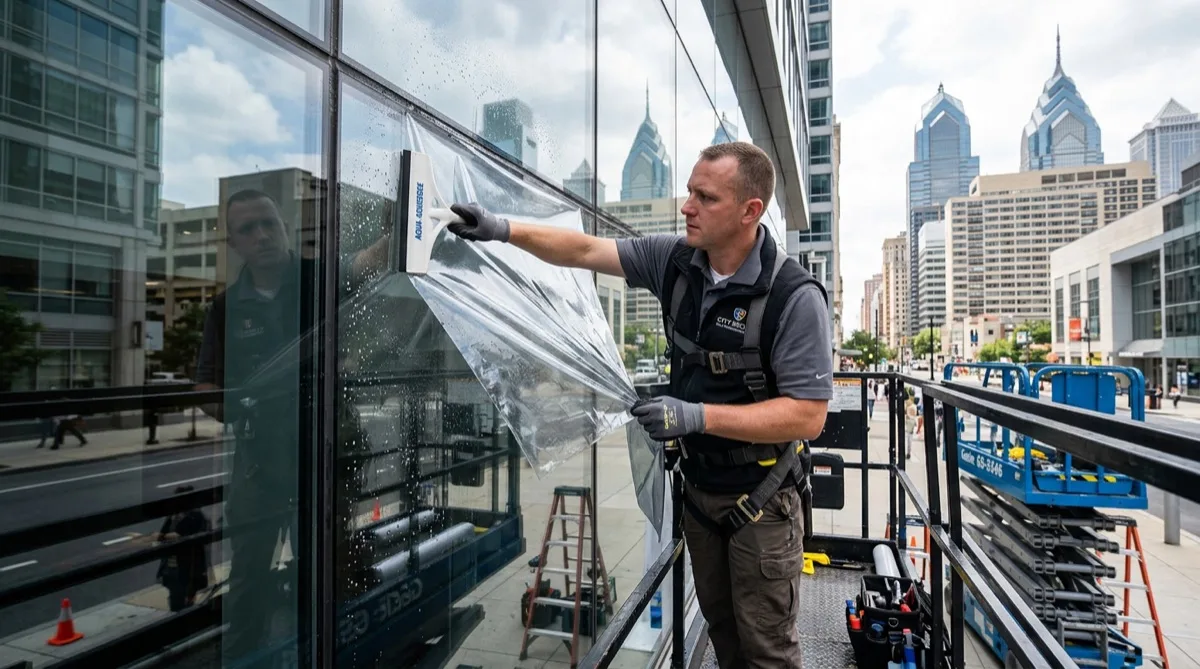
Blast mitigation film installs on existing glass — no removal or replacement required. The retrofit path controls cost while improving fragment retention, and most Philadelphia installations require no additional glass work.
Retrofit Protection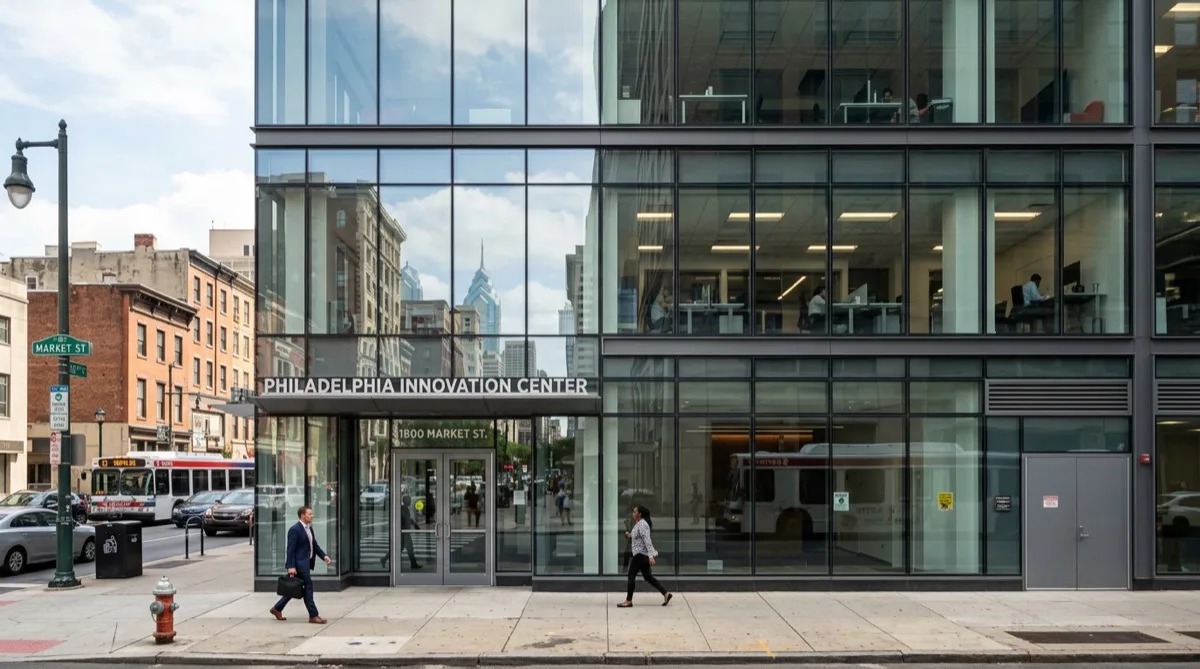
Cost-Effective Hazard Mitigation
Existing buildings can improve blast hazard performance without rebuilding the glazing system.
Blast Film Installed Where Glass Risk Is Highest
Commercial, civic, medical, transit, and hospitality applications across Philadelphia.
Where We Install
Blast-Protected Buildings Across Philadelphia
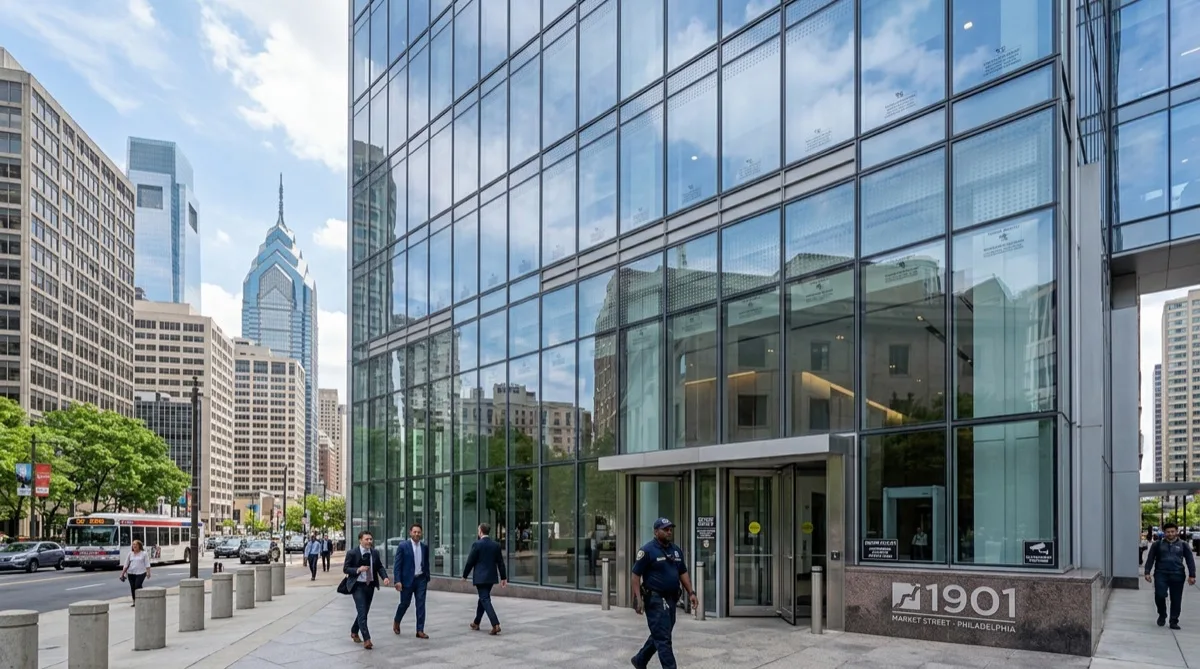
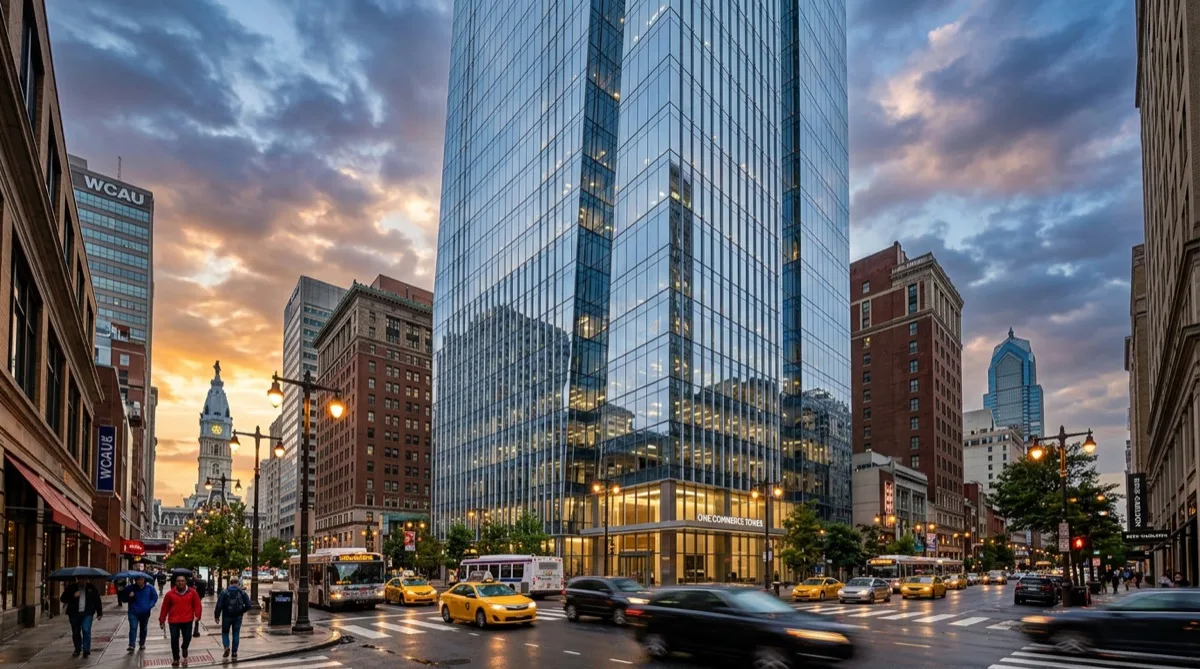
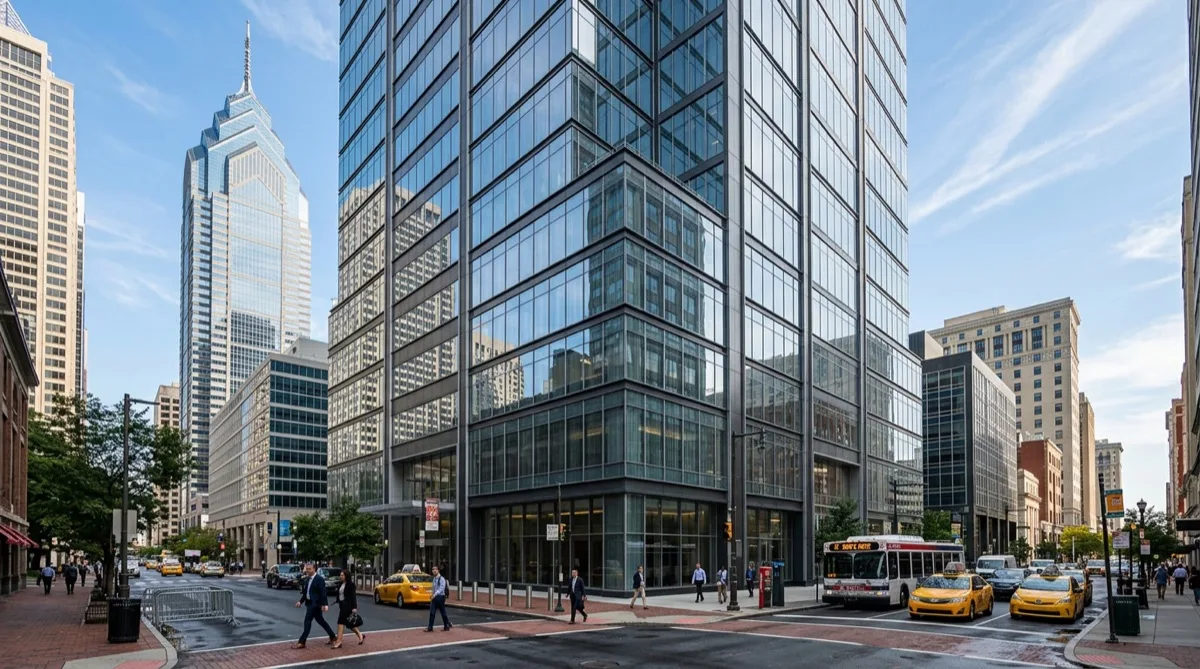
Office Towers & Class A Commercial
Center City and University City office towers
Federal tenants and high-profile financial occupancies often require documented blast film specifications — including attachment system selection, GSA or ASTM compliance records, and installation completion reports. We prioritize lobby glass, ground floors, podium levels, and blast-facing facades.
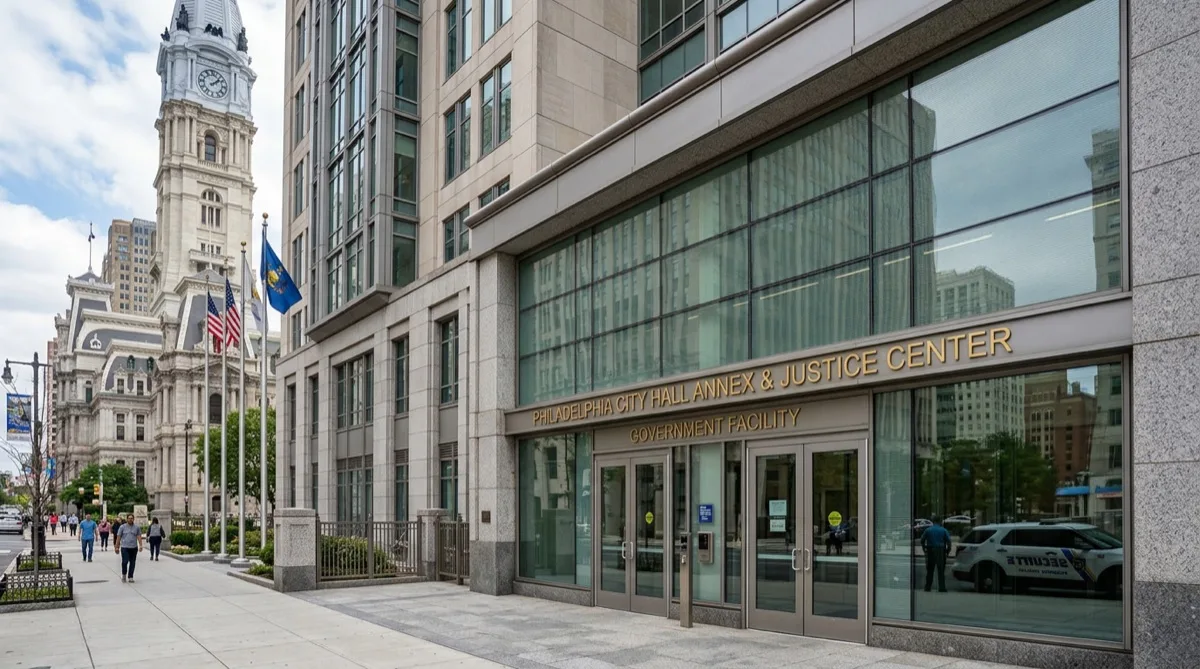
Government & Civic Facilities
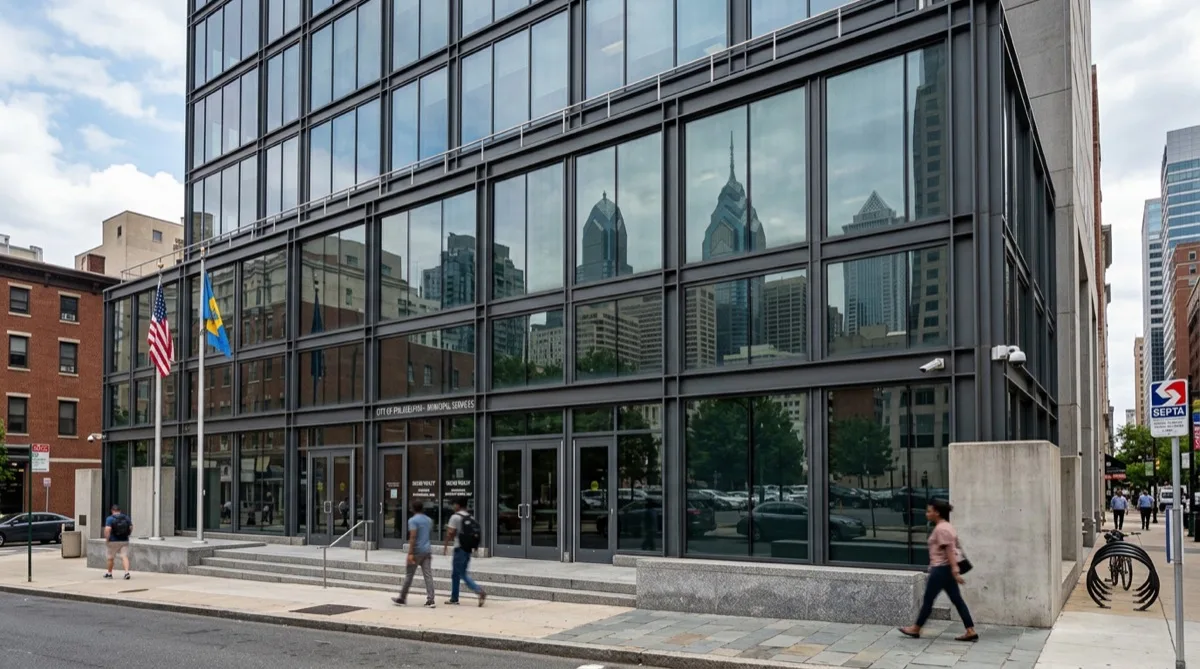
Federal buildings, municipal offices, court buildings, civic centers
Government facilities require blast film installations that match specific approval pathways — GSA TS01-2003 and ASTM F1642 documentation, product specification sheets, and installation completion records provided as standard.
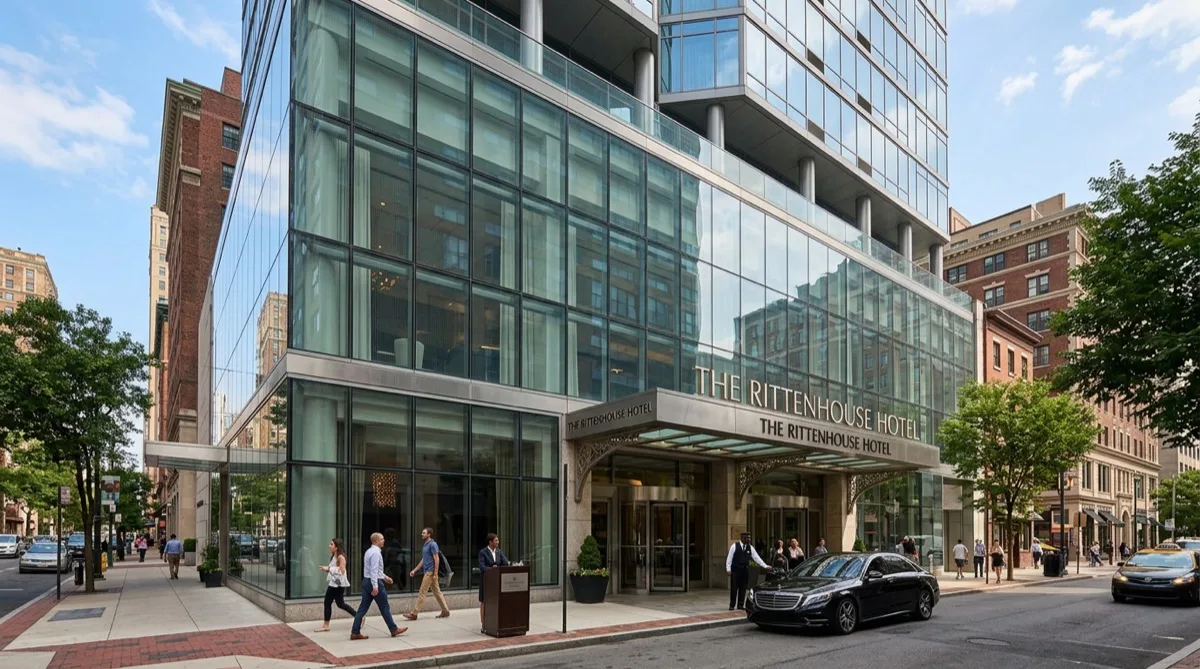
Hotels & Convention Centers
Large hotel lobbies and high-occupancy hospitality venues
Public-facing glass in hospitality environments can be upgraded while the building stays open. Bomb blast film for Philadelphia hotels and convention centers retains glass fragments in lobby and event-space glass — protecting guests in high-occupancy settings.
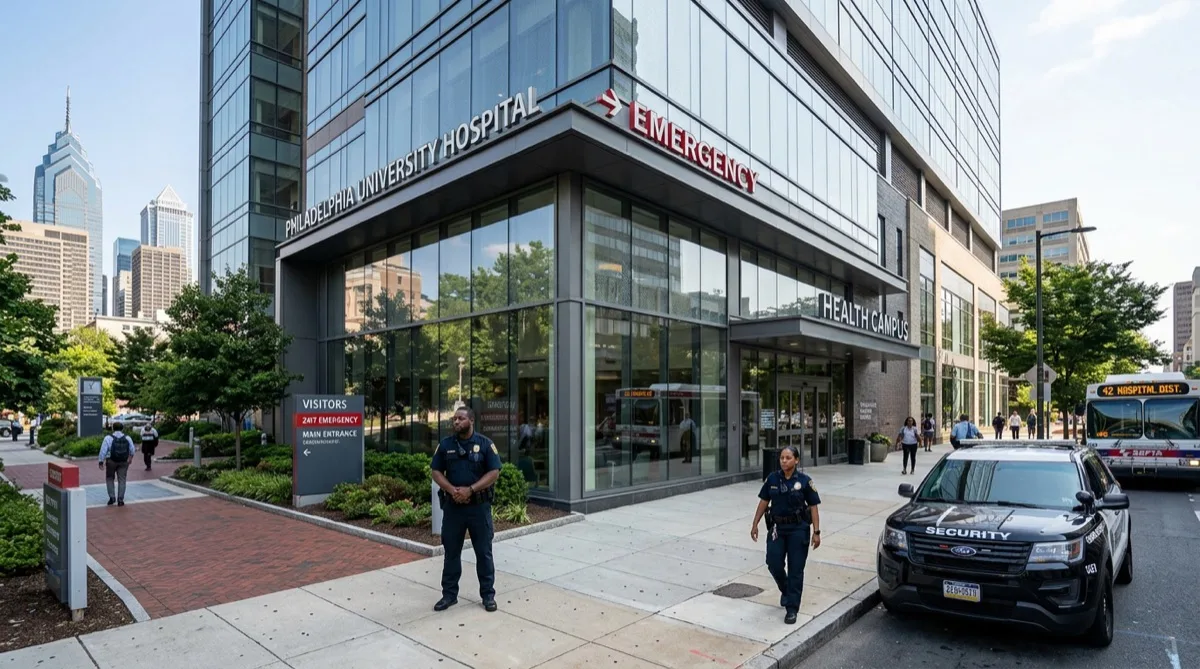
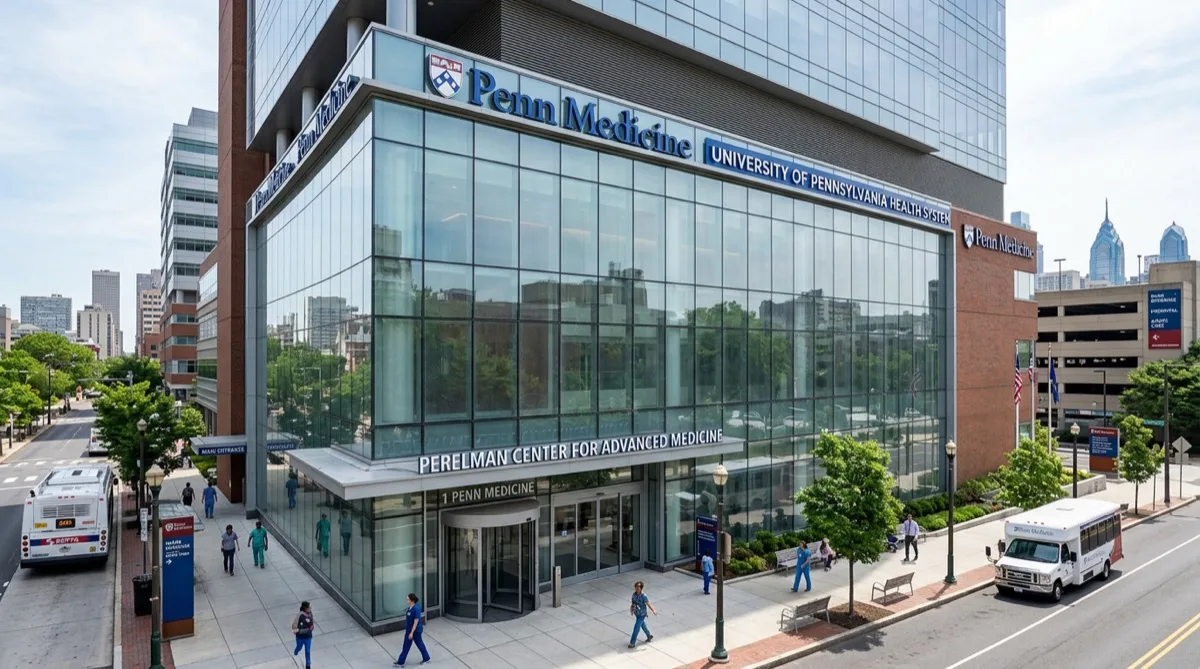
Hospitals & Healthcare
Jefferson Health, Penn Medicine, CHOP
High-occupancy health facilities require carefully phased access and documented product selection. Emergency department, lobby, corridor, and public-facing glass can be prioritized by risk.
A Compliance-Ready Blast Film Process
A blast mitigation installation in Philadelphia requires documented specification, proper attachment system selection, and compliance records — not just film application. Our process covers all three.
01Blast Risk Assessment+
We evaluate your building's glazing exposure zones, proximity to high-risk areas, tenant profile, and applicable GSA/insurance requirements. We identify priority glass (lobby, ground floor, blast-facing facades).
02Specification & Compliance Documentation+
We recommend the appropriate film and attachment system for your building's risk profile and provide GSA TS01-2003 and ASTM F1642 compliance documentation for your records, permits, and insurance carrier.
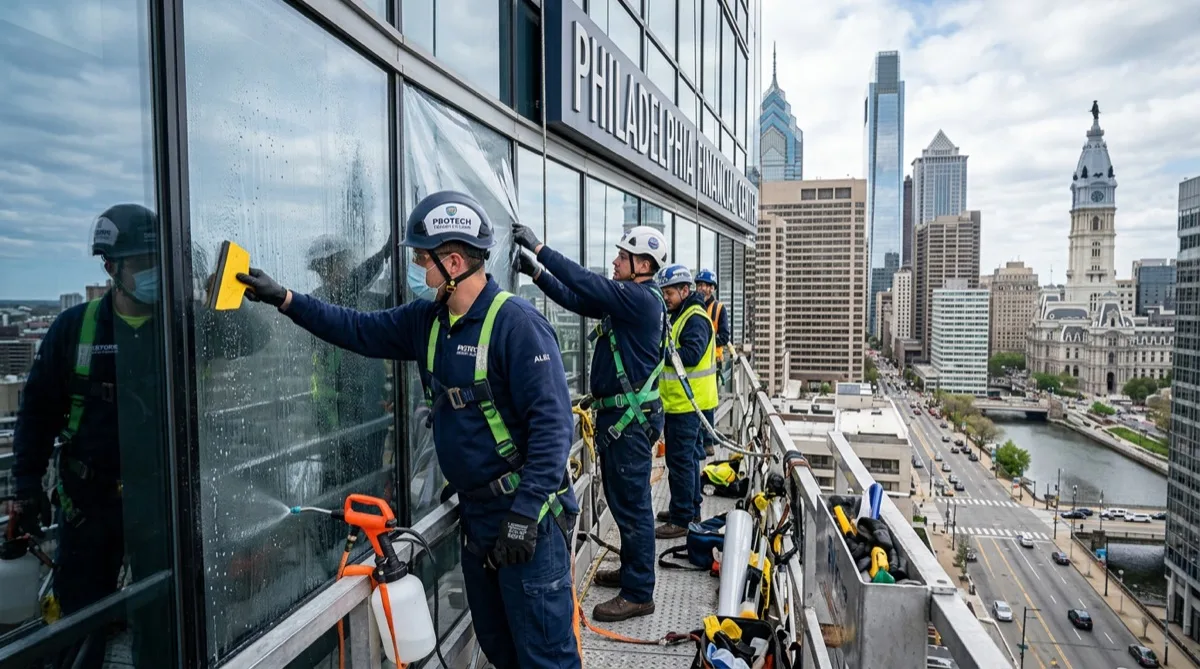
03Professional Installation+
Our certified installers apply the film and attachment system to your specified glazing zones. We provide a completion report with film specification, warranty terms, and compliance documentation.
4.9 out of 5 ★★★★★ Google Reviews
Documented Protection for High-Risk Glass
Philadelphia property leaders on bomb blast window film in Philadelphia — documentation, compliance, and security upgrades.

Richard C.
"We manage a Class A office building in Center City with federal tenants who require blast film on all ground-floor and lobby glass. The team understood GSA compliance requirements and provided full documentation. Installation was professionally managed."
Property Manager — Class A Office Tower, Center City

Patricia H.
"Our Philadelphia hotel was updating its security posture following recommendations from our insurance carrier. Blast mitigation film on the lobby and ground floor glass was one of the recommendations. The cost was far less than we anticipated and the documentation was thorough."
Security Director — Philadelphia Hotel

James O.
"Government facilities work requires precise documentation and compliance. The team knew the GSA TS01-2003 standard, provided the right product, and understood how to document the installation for our records. Excellent professional work."
Facilities Manager — Government Facility, Philadelphia
Product Data
Blast Mitigation Window Film — Product Comparison
Manufacturer and standards data for products commonly specified for blast-focused Philadelphia glazing projects.
| Product | Manufacturer | Thickness | GSA Standard | ASTM Standard | Attachment Required | UV Blocked |
|---|---|---|---|---|---|---|
| Scotchshield Ultra S800 | 3M | 8 mil | GSA TS01-2003 | — | Recommended | 99% |
| Armorcoat Safety Series | Solar Gard | 8–14 mil | — | ASTM F1642 | Required | 99% |
| Clearshield Blast | Madico | 14 mil | GSA compliant | ASTM F1642 | Required | 99% |
| Safety Series Ultra | LLumar | 8 mil | — | ASTM F1642 | Recommended | 99% |
Source: 3M Scotchshield Ultra S800 TDS; Solar Gard Armorcoat product bulletin; Madico product specification; GSA TS01-2003 standard (2003); ASTM F1642-15.
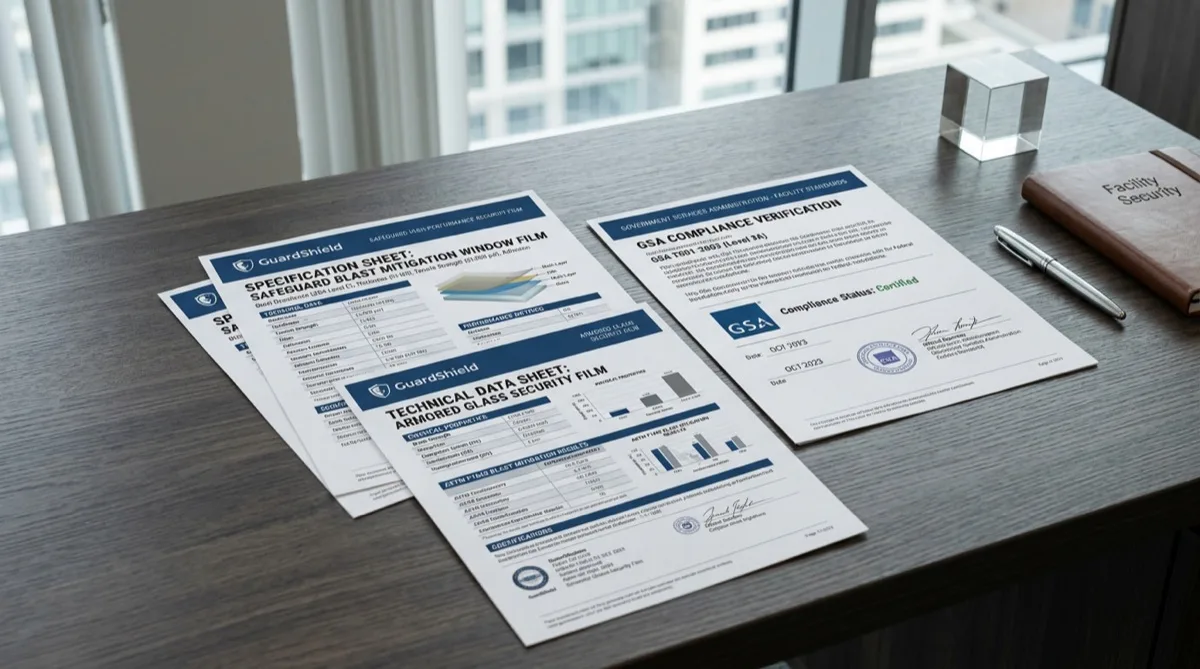
Technical Resources
GSA & ASTM Documentation for Compliance Review
GSA TS01-2003 compliance documentation, ASTM F1642 product specs, and government facility case studies for the blast mitigation films we install in Philadelphia.
- 3M Scotchshield — Blast Mitigation Security Film Specification
- 3M Scotchshield Ultra S800 — Product Bulletin
- Solar Gard Armorcoat — Safety & Security Specification
- 3M Scotchshield — Armed Forces Service Center Case Study
- Madico Clear Safety — Government Facility Case Study
Frequently Asked Questions
Technical answers about blast standards, attachment systems, retrofit glass, and specification support.
Talk to a SpecialistBlast mitigation window film is a heavy-duty security film applied to glass that holds shattered glass fragments in place after a blast event. In an explosion, the primary cause of injury from glass is not the blast wave itself but the glass fragments propelled outward at high velocity. Blast mitigation film bonds to the glass and retains fragments in the film matrix when the glass breaks — dramatically reducing the projectile fragment hazard to occupants inside the building.
GSA TS01-2003 is the U.S. General Services Administration's standard test method for measuring the resistance of window systems to blast loading. The standard defines test conditions, measurement criteria, and performance classifications (No Break, No Hazard, Minimal Hazard, Very Low Hazard) for glazing systems subjected to blast pressure. Films tested to GSA TS01-2003 have demonstrated documented blast fragment retention performance under standardized blast loading conditions.
Yes. Blast mitigation film is a retrofit solution applied to existing glass without glass replacement. This makes it significantly more cost-effective than replacing standard glass with laminated safety glass or blast-resistant glazing systems. The film is applied to the interior glass surface and adheres with pressure-sensitive adhesive. An edge attachment system bonds the film at the perimeter of the frame — critical for maximizing blast resistance performance.
Standard security or safety film (2–4 mil) is designed for fragment retention after physical impact — forced entry, vandalism, accidents. Blast mitigation film (8–14 mil) is engineered for the specific load profile of a blast event — a high-pressure wave followed by a negative pressure phase that pulls glass outward. The heavier mil weight and pressure-sensitive adhesive system of blast film are calibrated for this dynamic loading pattern, not just static or impact resistance.
Blast mitigation film requirements for Philadelphia buildings depend on the building type, occupancy, tenant profile, and applicable federal guidelines. Buildings housing federal tenants, high-value financial institutions, embassies or consulates, and certain government facilities may have explicit blast protection requirements under GSA or Department of Defense standards. Insurance carriers for high-occupancy buildings increasingly recommend blast mitigation as part of comprehensive security hardening. Our team can advise on requirements applicable to your specific building and tenant profile.
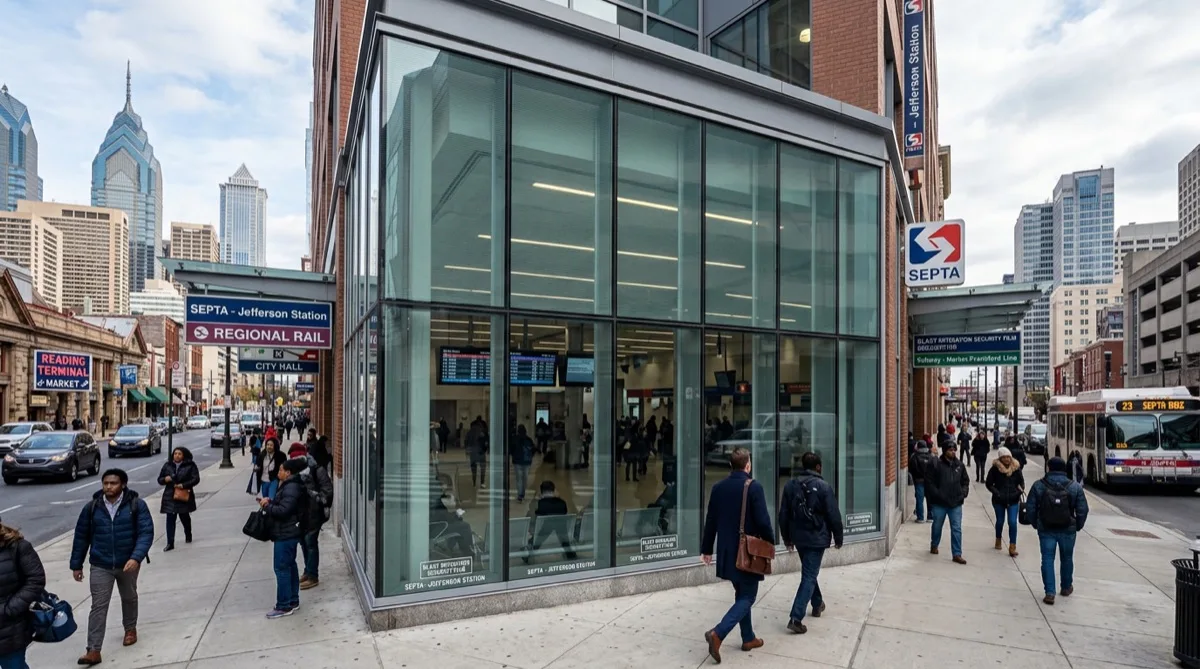
The highest-priority Philadelphia applications for blast mitigation include federal and government buildings, financial institutions and Class A office towers with high-profile tenants, hotels and convention centers with large public lobbies, hospitals and medical centers with emergency department exposure, transit hubs and transportation infrastructure, and high-density retail and hospitality venues in high-foot-traffic corridors.
Yes. At 8–14 mil thickness, blast mitigation films provide significant forced entry resistance in addition to blast fragment retention. The same properties that hold glass together under blast loading — film weight, adhesive bond strength, and edge attachment — also dramatically slow forced entry attempts through treated glass. For facilities with both blast and forced entry concerns, blast mitigation film addresses both with a single installation.
The attachment system bonds the film to the window frame at the glass perimeter, preventing the glass-film unit from pulling away from the frame under blast negative pressure. Without an attachment system, the film may hold the glass fragments together but the entire glass unit can be expelled from the frame. With the attachment system properly specified and installed, the glass-film unit remains in the frame opening — maintaining the building envelope integrity after a blast event.
We do not provide installation time estimates as they depend on the number and size of glass panels, access requirements, building height, whether an attachment system is required, and the film specification. We provide a realistic project timeline in your written proposal after the site assessment. Most commercial installations are completed with minimal disruption to building operations.
Contact us for a free site assessment. We evaluate your building's glass exposure, identify priority glazing zones (lobby, ground floor, blast-facing facades), and recommend the appropriate film specification and attachment system. We provide GSA TS01-2003 and ASTM F1642 compliance documentation for permit and insurance purposes. Our team has experience with government facility requirements and can support your approval process.
Ready to Assess Your Blast Exposure?
Get a free blast film assessment for your Philadelphia building — priority glazing zones, product specification, and compliance documentation included.