
Mass Transit & Airport Window Film in Philadelphia
Window film built for Philadelphia Airport TerminalsSEPTA StationsRail HubsBus TerminalsTransit Centers .
Philadelphia's transit infrastructure — from PHL's terminal concourses to SEPTA's underground stations — faces a unique combination of heavy foot traffic, vandalism exposure, solar heat gain, and public safety requirements. Airport window film in Philadelphia and mass transit window film address all of it without disrupting operations.
Trusted by Philadelphia transit authorities, airport facilities, and rail operators










Infrastructure-Grade Protection for Philadelphia's Highest-Traffic Glass
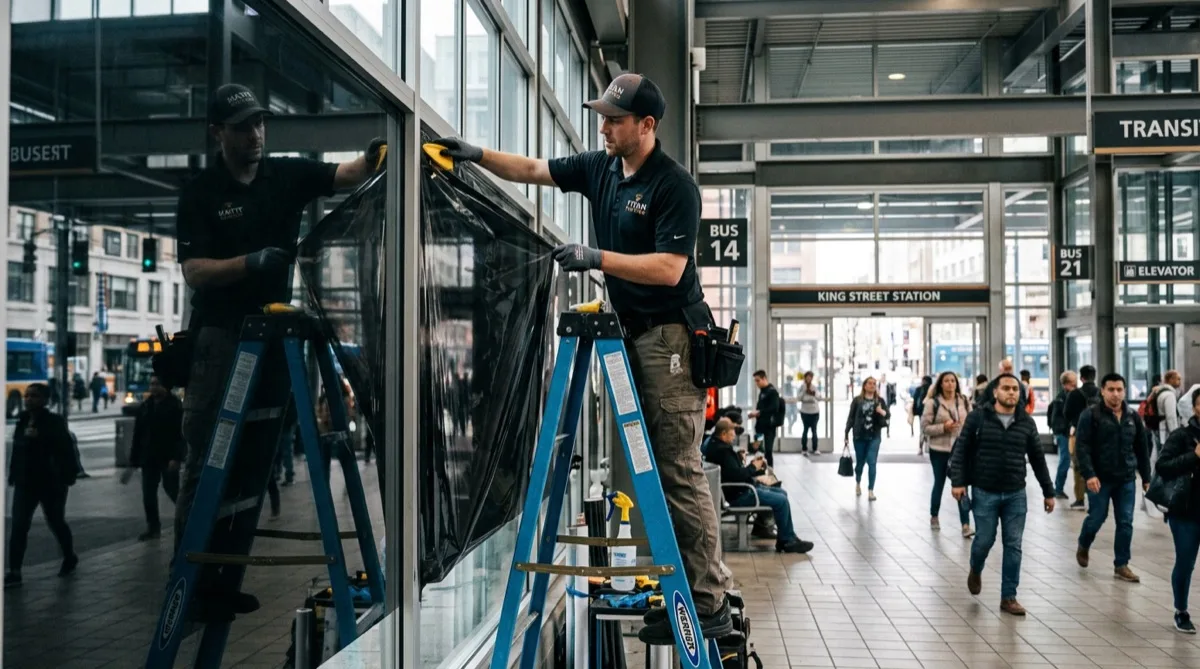
Mass transit and airport window film is professionally applied polyester film bonded directly to glass, metal, and mirror surfaces in high-traffic public infrastructure. Unlike standard commercial window film, transit-grade specifications address vandalism protection, passenger safety, solar management, and energy efficiency simultaneously — all without disrupting daily operations. The Federal Aviation Administration recognizes airport facilities as critical infrastructure requiring specialized materials and installation procedures.
Airport window film in Philadelphia addresses the specific challenges of massive glass structures — terminal concourses, station skylights, platform canopies — where solar heat gain is extreme, vandalism exposure is constant, and thousands of daily passengers depend on safe, comfortable infrastructure. Mass transit window film handles everything from stainless steel fare gates to underground SEPTA station mirrors, converting reactive maintenance budgets into predictable facility management programs.
High Traffic, Hard Surfaces, Zero Tolerance for Downtime
Graffiti & Vandalism
Tagging and etching on station glass, metal signage, and mirror surfaces — costly to restore and replace across hundreds of daily-passenger locations.
Passenger Safety
Shattered glass risk in high-density public spaces — from accidents, severe weather, or security incidents — creates serious liability for transit operators.
Solar Heat Gain
Massive glass areas in PHL terminals and station skylights create extreme solar heat gain, making passenger waiting areas uncomfortable and unusable during peak hours.
HVAC Energy Costs
Airports and train stations are among the most energy-intensive public building types in the built environment — expansive glass facades drive continuous, uncontrolled solar load.
Transit-Grade Window Film Performance — By the Numbers
Certified performance for the most demanding public infrastructure applications.
ASTM F1642
Security film standard for blast and forced-entry resistance — the benchmark for public transit and airport safety glazing.
99% UV
UV radiation blocked from treated glazing — protecting passengers and interior surfaces in concourses and waiting halls.
79% Heat Reduction
Solar heat gain reduction through treated glass — making passenger waiting areas, gate seating, and concourses comfortable year-round.
Glass · Metal · Mirrors
Anti-graffiti film bonds to all smooth surfaces — station glass, stainless steel panels, elevator interiors, and platform mirrors.
Mass Transit Window Film Across Every Facility Type
From PHL's terminal concourses to SEPTA's underground platforms — the right film specification for every surface and environment.
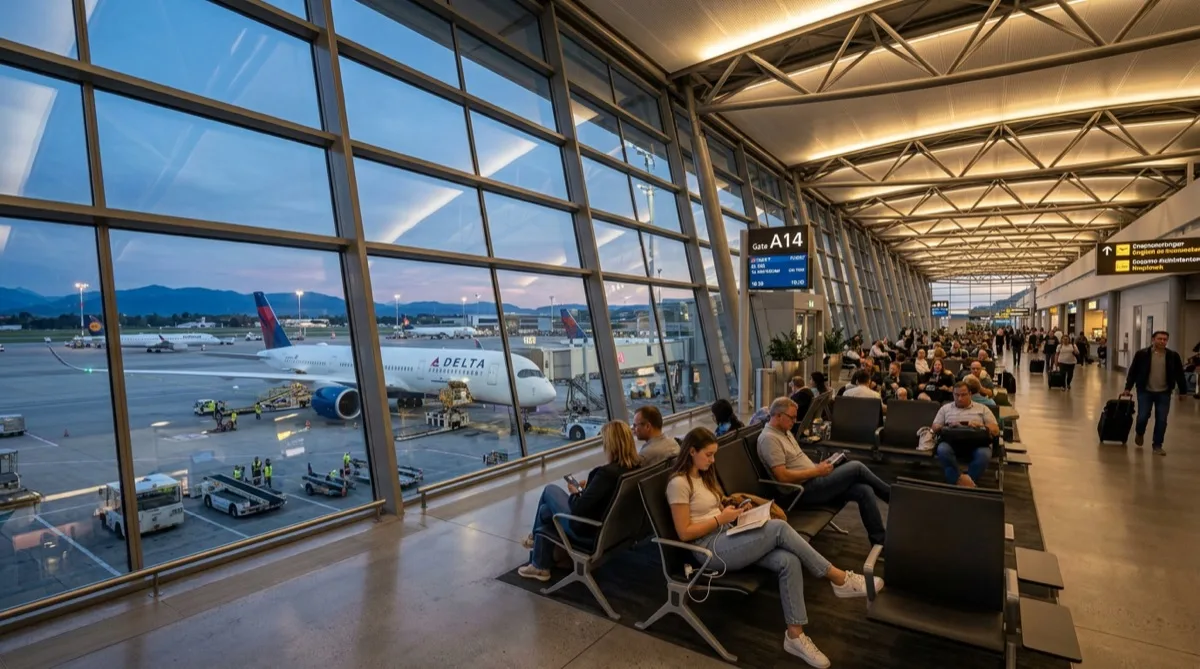
Airport Terminals
PHL Terminals A–F, gate areas, departure lounges — solar control, safety, and anti-graffiti film.
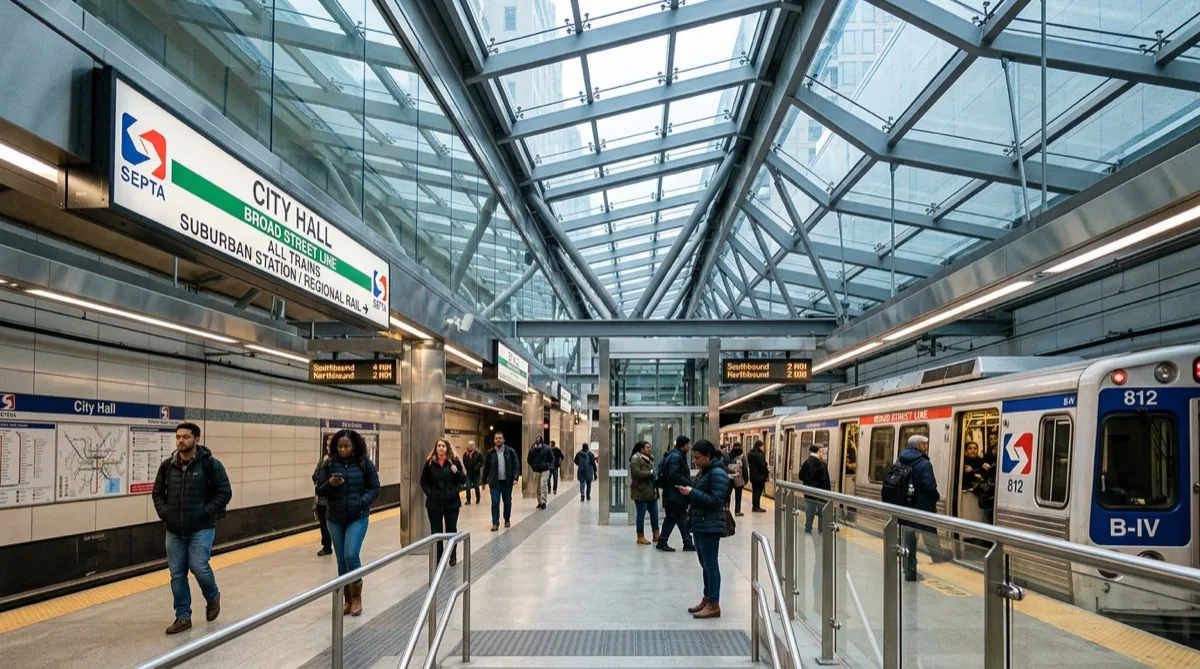
SEPTA Stations
Subway, trolley, Regional Rail platforms and concourses — anti-graffiti and solar film across the network.
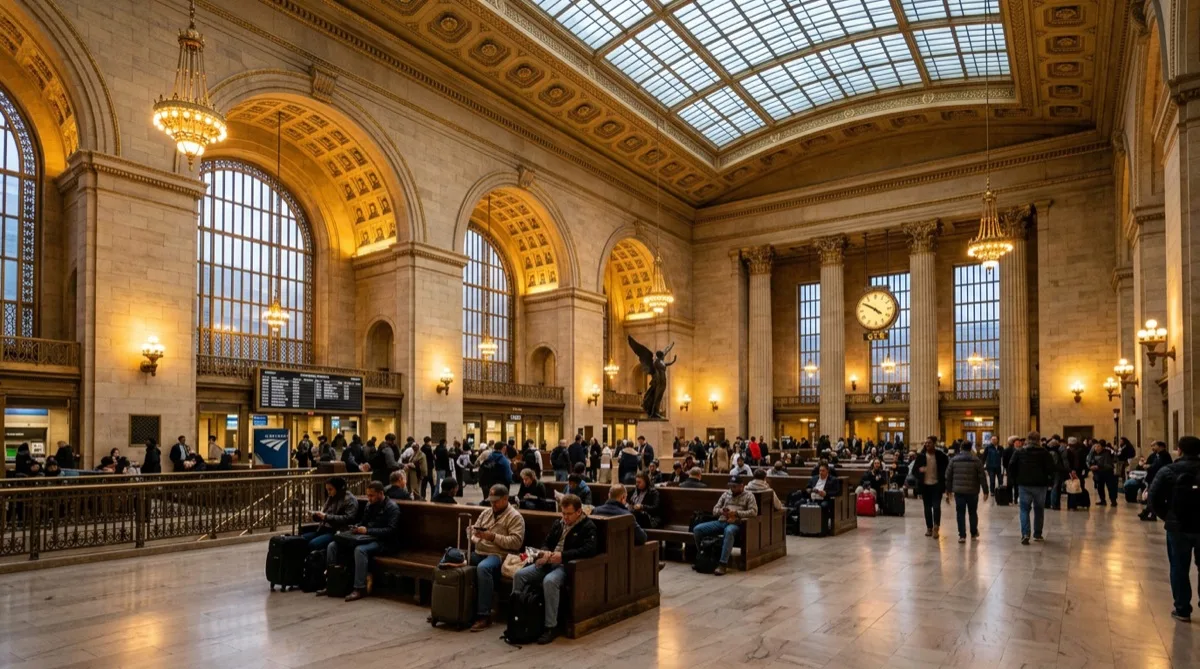
Intercity Rail
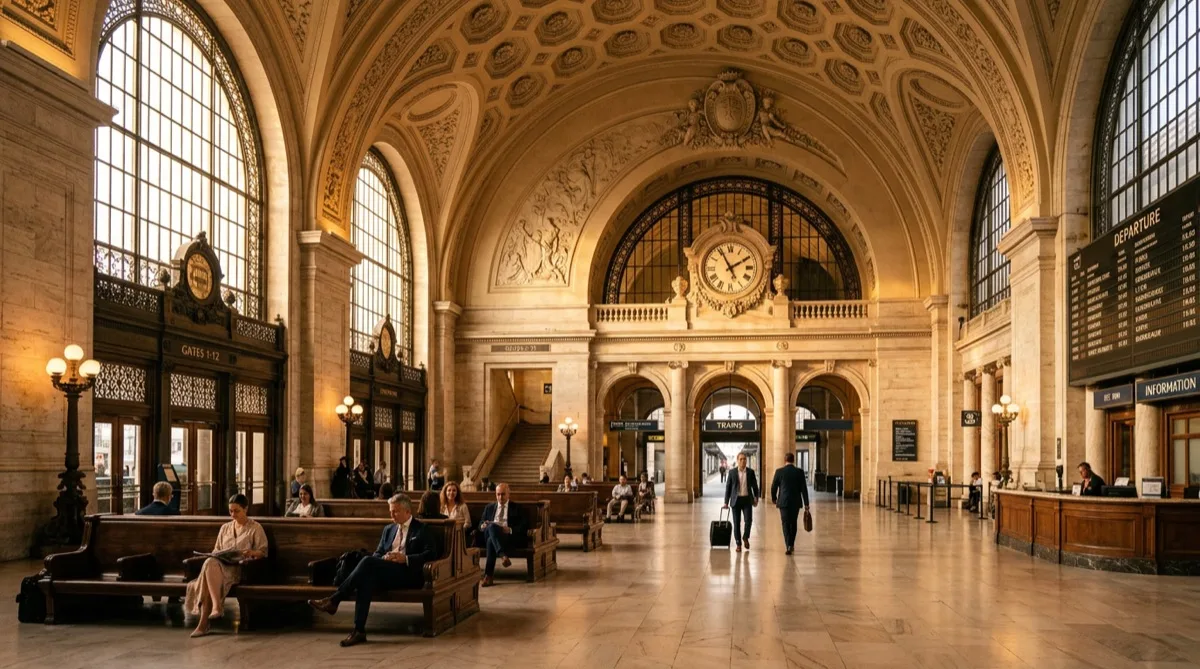
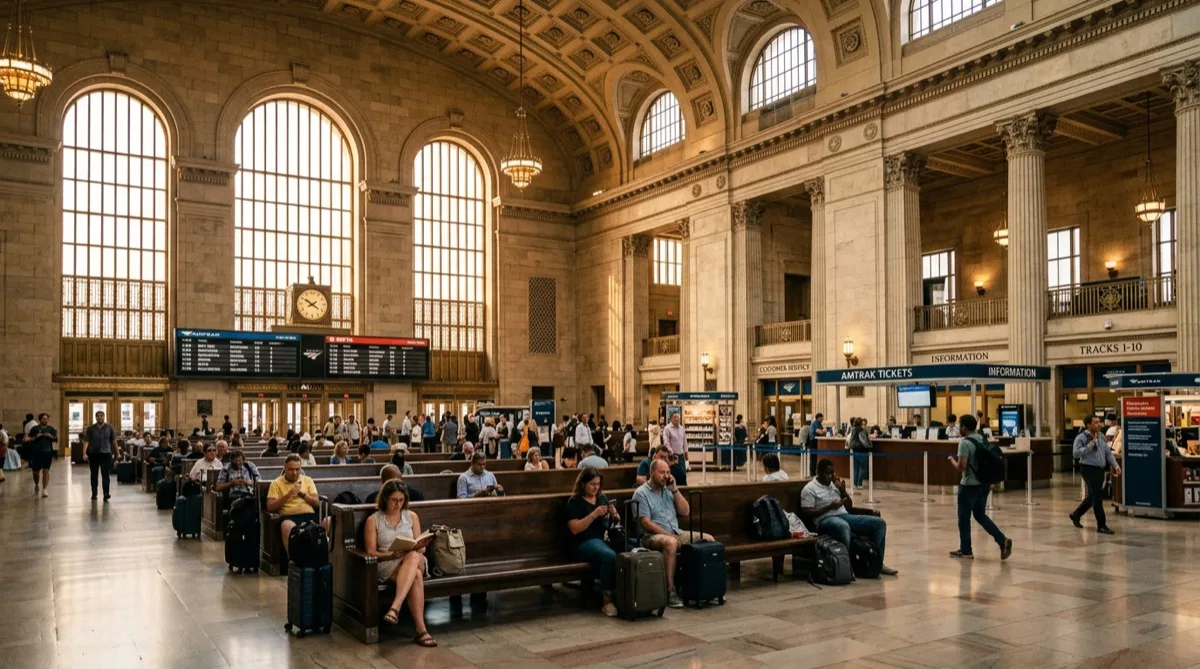
Philadelphia intercity rail terminals and SEPTA hubs — solar and safety film for grand-hall glazing.
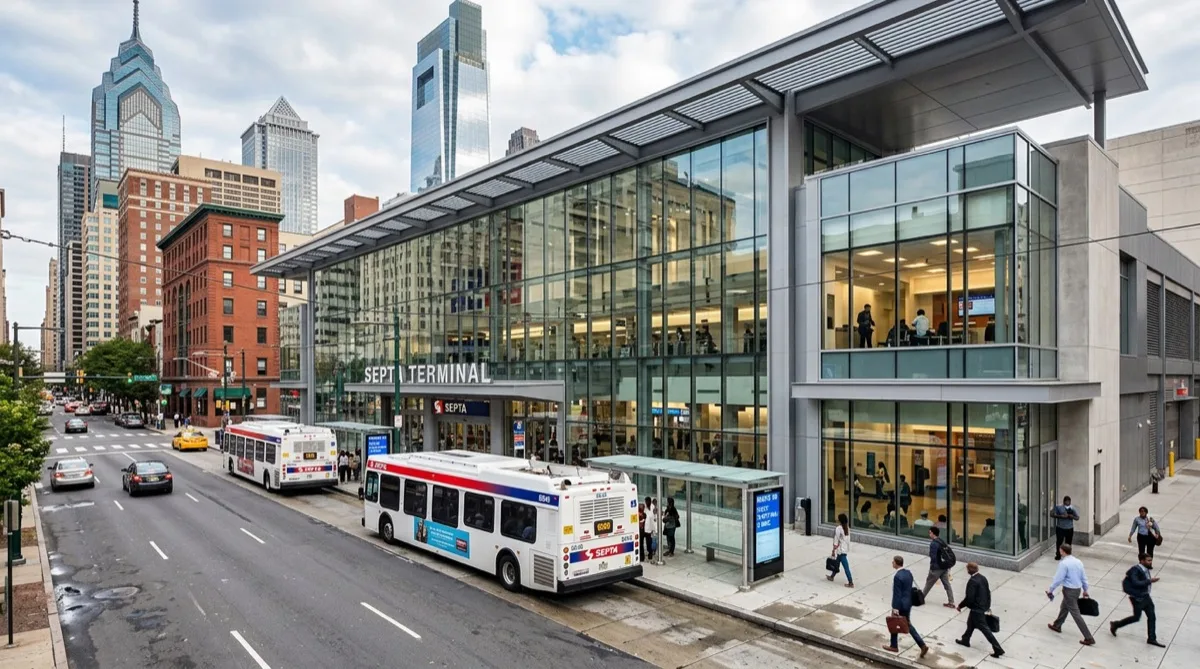
Bus Terminals & Hubs
69th Street Transportation Center, Greyhound terminal — full-surface anti-graffiti and solar solutions.
How does window film protect Philadelphia's highest-traffic glass?
Vandalism protection, passenger safety, solar comfort, and energy management — addressed in a single professionally specified installation across every surface type.
Protect Every Surface, Not Just the Glass
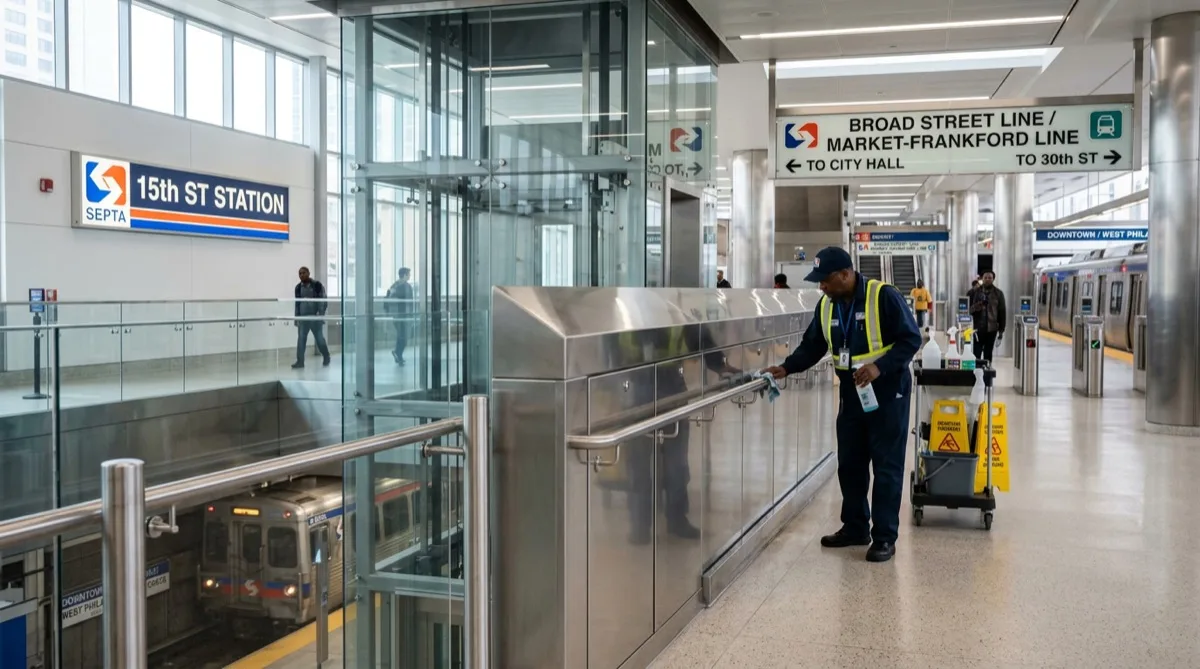
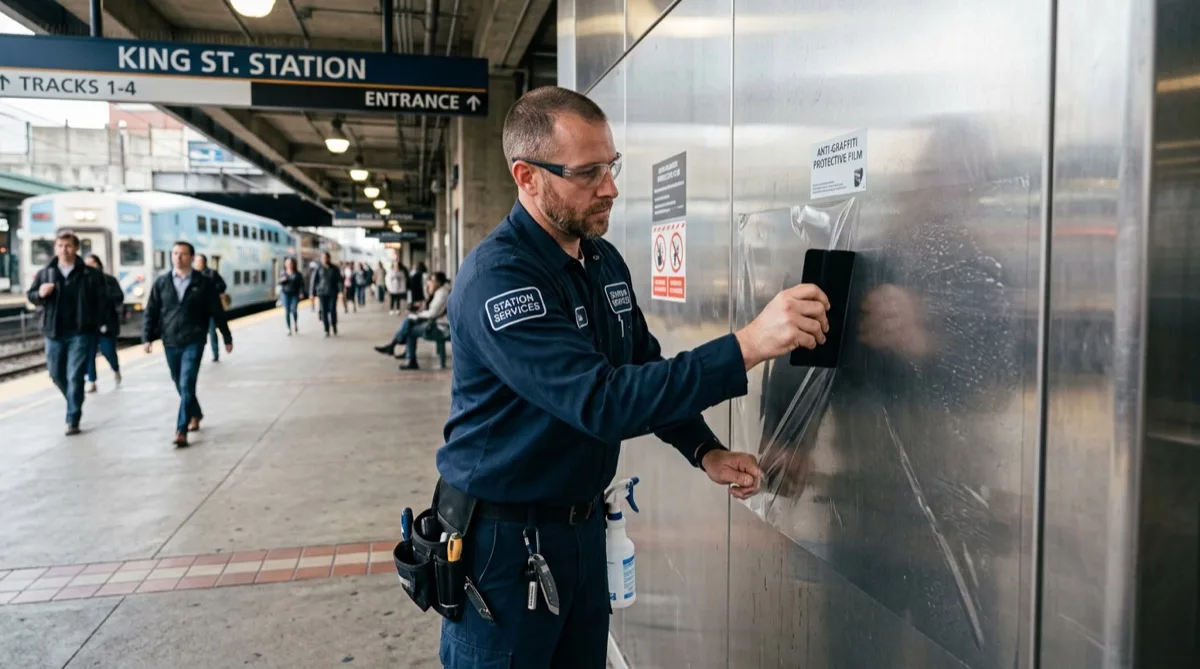
Transit infrastructure takes vandalism on glass station windows, stainless steel fare gates, platform mirrors, elevator interiors, and restroom fixtures. Standard glass restoration or metal refinishing is expensive and takes surfaces out of service. Sacrificial anti-graffiti window film bonds to glass, metal, and mirror surfaces as a removable protective layer — when tagged or etched, the film is peeled and replaced, not the surface underneath.
For SEPTA stations on high-vandalism corridors and street-level PHL parking structure glass, anti-graffiti film replaces a reactive maintenance budget with a predictable, low-cost management program. Philadelphia transit agencies have applied sacrificial film to everything from underground station mirrors to exposed steel column cladding.
- Protects glass, metal, and mirrors — not just windows
- Peel and replace the film, not the surface underneath
- Converts reactive restoration costs into a predictable maintenance program
Passenger Safety in High-Density Public Spaces
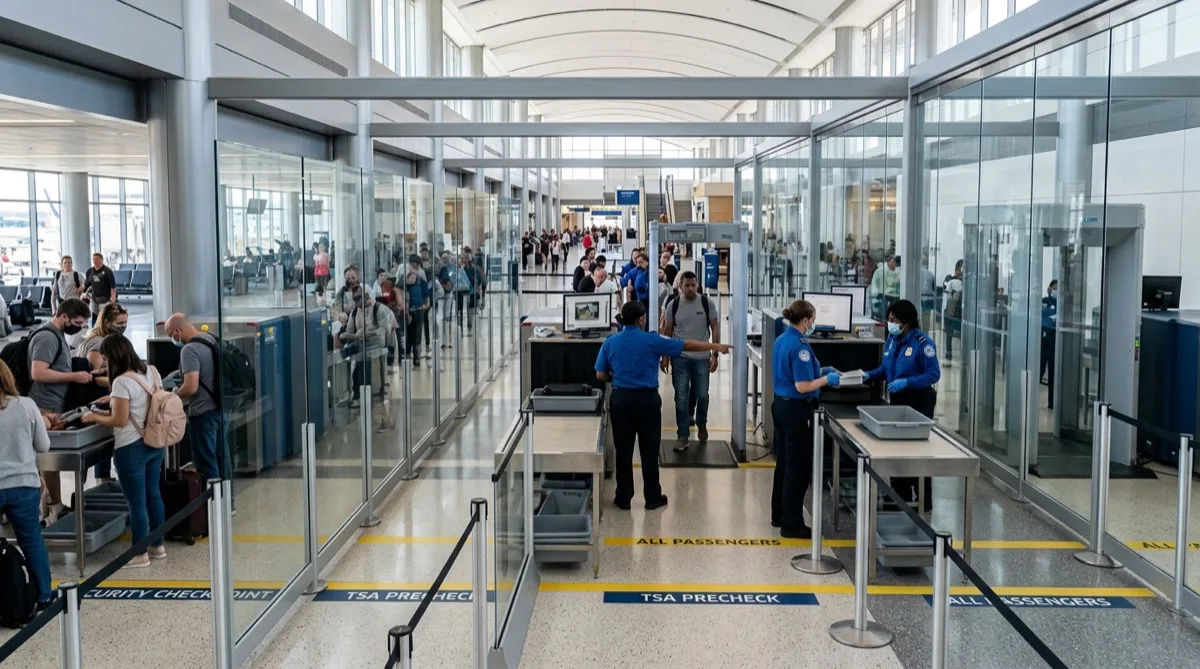
Large public infrastructure — terminal concourses, station waiting halls, ticketing windows — concentrates thousands of daily passengers near glass surfaces. Safety and security film rated to ANSI Z97.1 and ASTM F1642 holds glass fragments in place if breakage occurs from accidents, structural stress, severe weather, or a security incident. Passengers aren't exposed to flying glass.
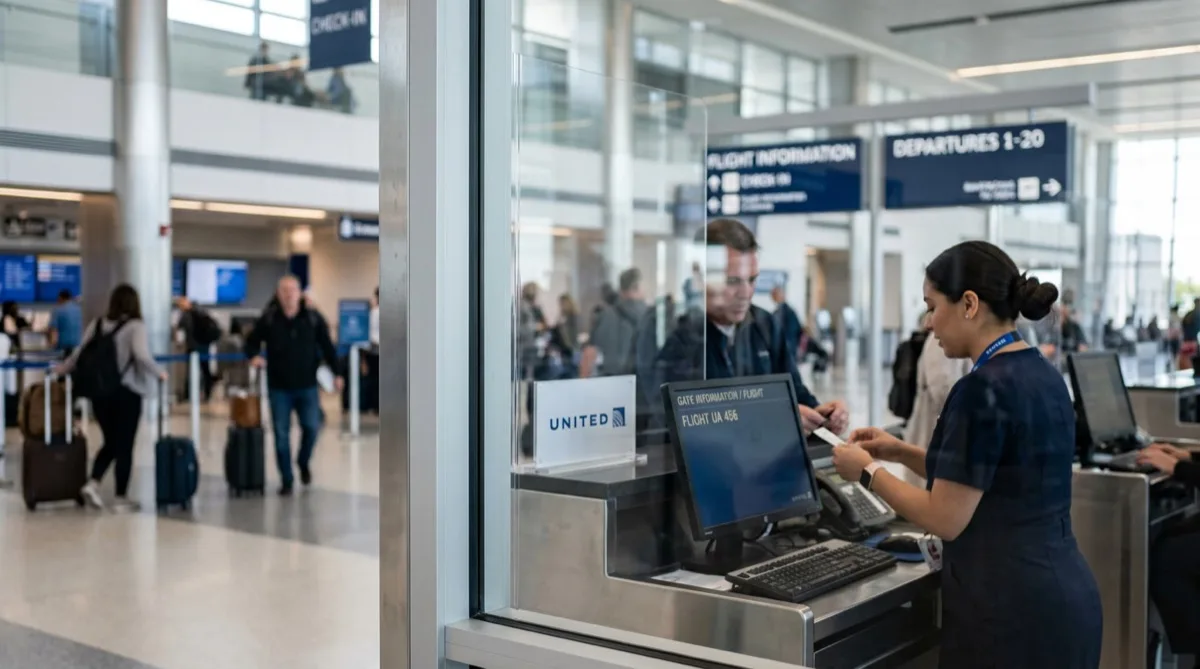
At Philadelphia International Airport, security film on glass partitions near check-in and baggage claim adds a critical layer of passive protection. At SEPTA stations, safety film on platform canopy glazing addresses both accidental breakage and blast mitigation in accordance with OSHA ergonomic guidelines for public facility safety standards.
- ANSI Z97.1 and ASTM F1642 rated — meets public facility standards
- Holds glass intact on breakage — no flying fragments
- Invisible after installation — no visible change to station aesthetics
Passenger Comfort Across Every Waiting Area
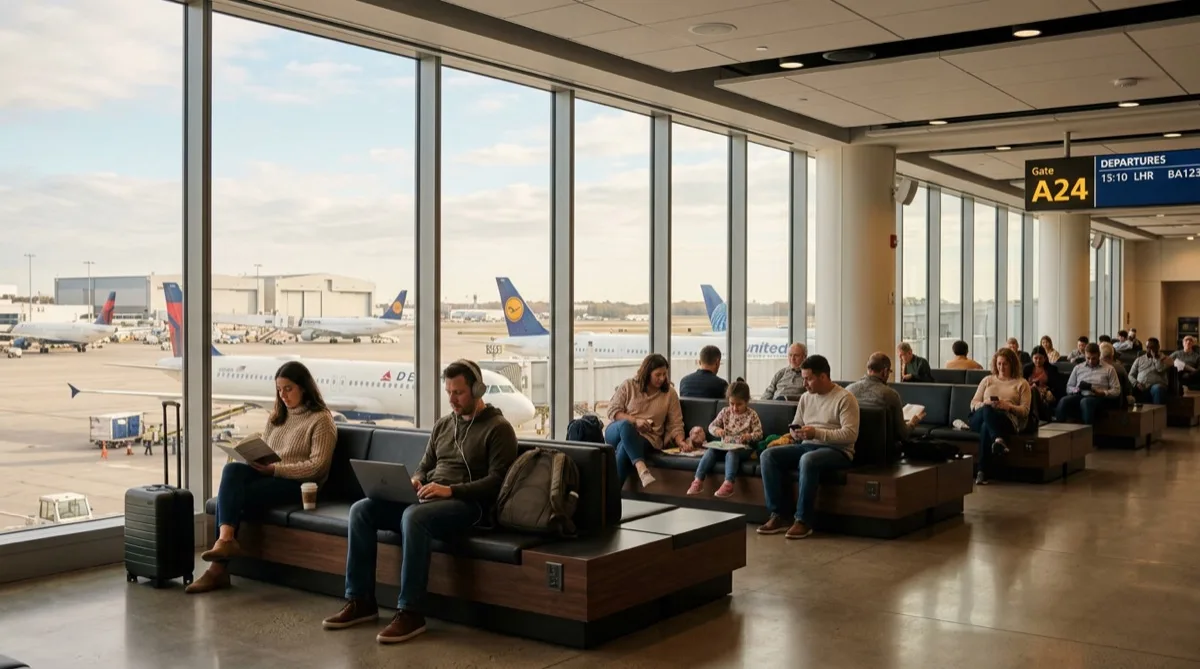
South- and west-facing terminal windows at PHL and the grand hall glazing at Philadelphia’s historic intercity rail terminals create intense solar heat gain in passenger waiting areas. Seating near west-facing windows becomes uncomfortable during peak afternoon hours, and HVAC systems cycle continuously trying to compensate. High-VLT glare reduction film cuts solar heat gain by up to 79% while maintaining the bright, open feel that modern transit architecture requires.
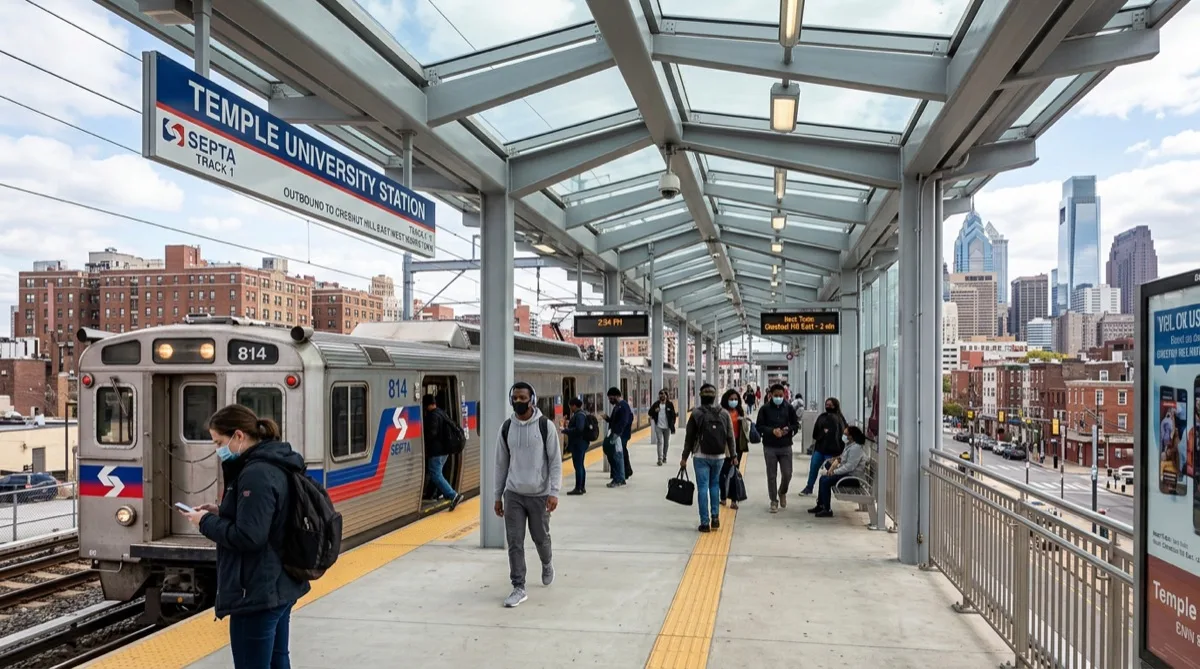
At SEPTA Regional Rail stations with glazed platform canopies — like Suburban Station and Temple University Station — solar film makes platform waiting comfortable year-round. Passengers stop avoiding sun-exposed seating. Staff workstations near perimeter glass maintain a consistent temperature without relying on portable cooling units.
- Up to 79% solar heat reduction — passenger areas stay comfortable
- High-VLT film preserves the open, light-filled character of transit architecture
- Reduces hot spots near south and west-facing glazing without blackout film
Managing Energy Costs in Large Glass Structures
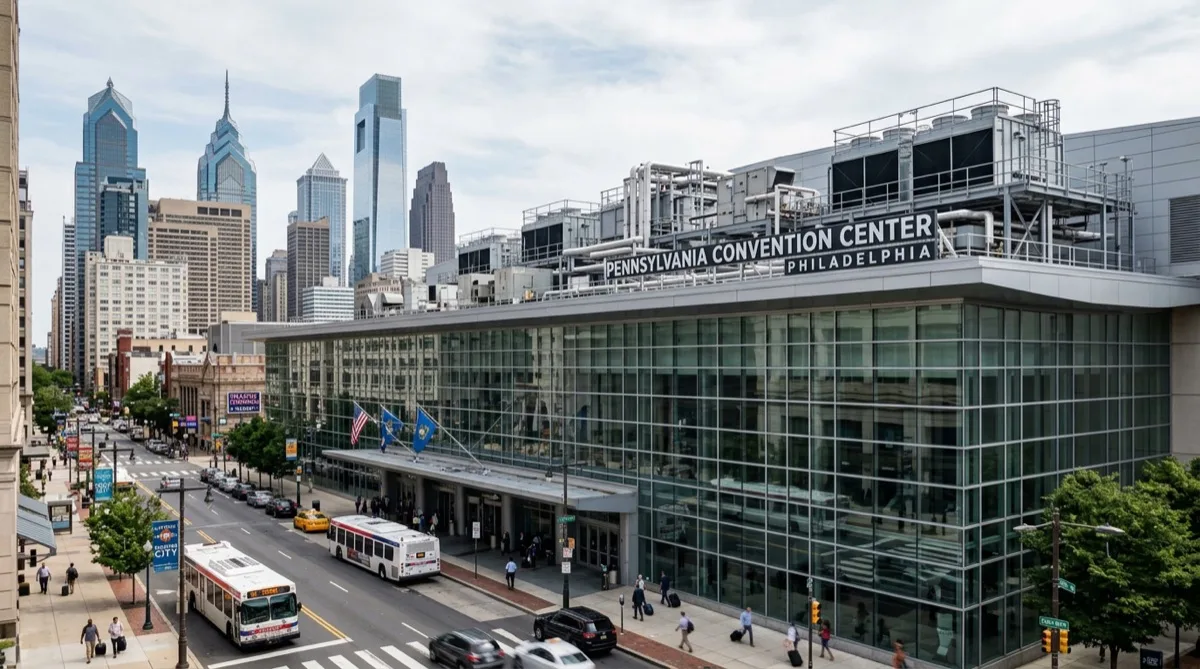
Airports and transit stations are among the most energy-intensive commercial building types, according to the U.S. Energy Information Administration. Their defining feature — expansive glass for natural light and wayfinding — is also their largest source of uncontrolled solar heat gain. Airport window film in Philadelphia terminals cuts solar heat transmission by up to 79%, directly reducing the HVAC load across gate areas, ticketing halls, and concourses.
For SEPTA and Amtrak facilities, Low-E insulating film adds a winter benefit — reflecting interior heat back into waiting areas through single-pane glazing common in older Philadelphia station buildings. Year-round, energy savings from reduced solar load and improved thermal performance contribute directly to lower utility costs across the facility portfolio.
- Up to 79% reduction in solar heat gain through treated glazing
- Low-E film adds winter insulation for older single-pane station glass
- Works across the full facility — terminals, concourses, ticketing, offices
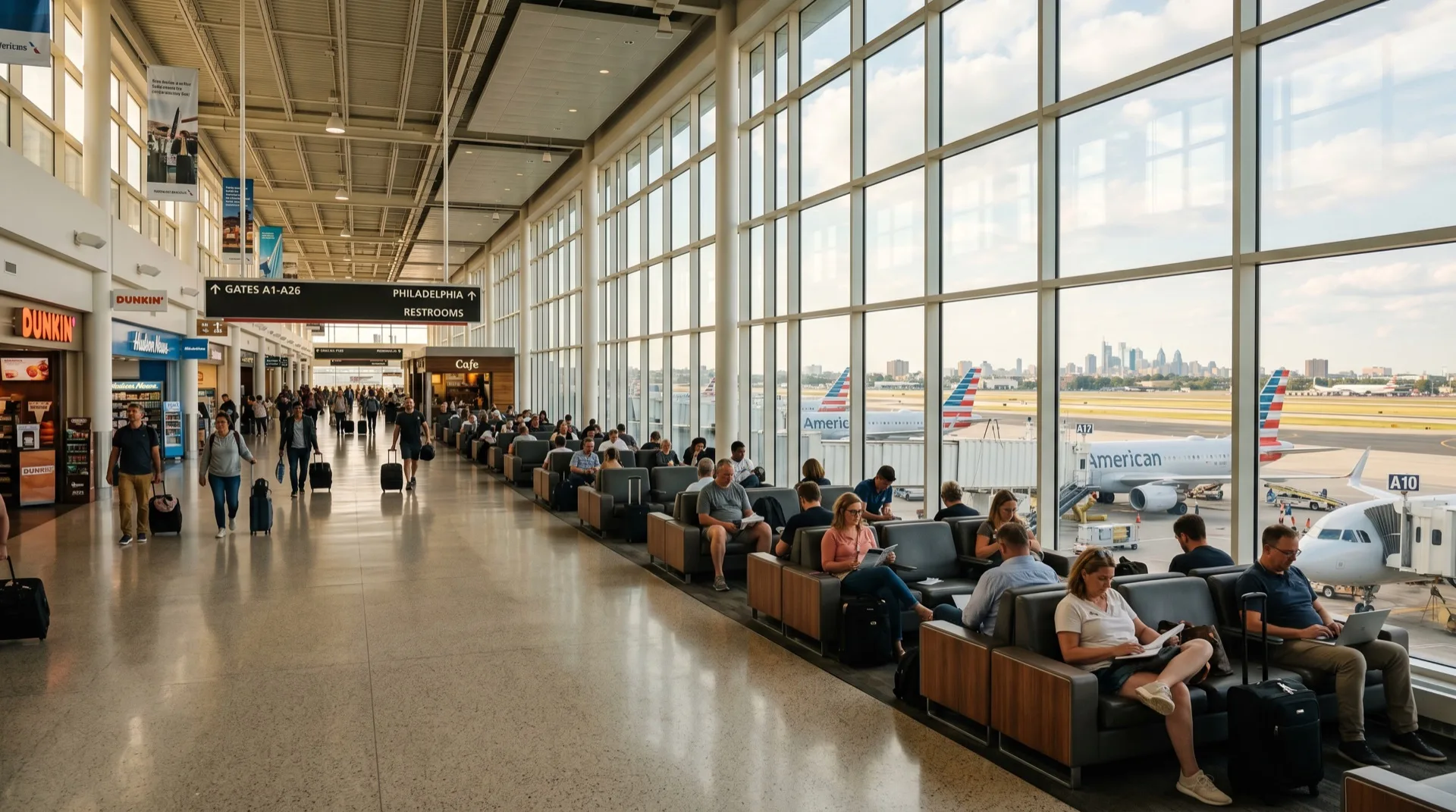
Solar Control Film. Passenger Comfort at Scale.
The workhorse of airport and transit window film. Solar control film blocks incoming solar heat before it reaches passengers — reducing HVAC load, eliminating hot spots in gate areas and waiting halls, and cutting energy costs across the full facility portfolio. Available across 3M Prestige, LLumar, Vista, and Solar Gard in spectrally selective, neutral, and reflective finishes.
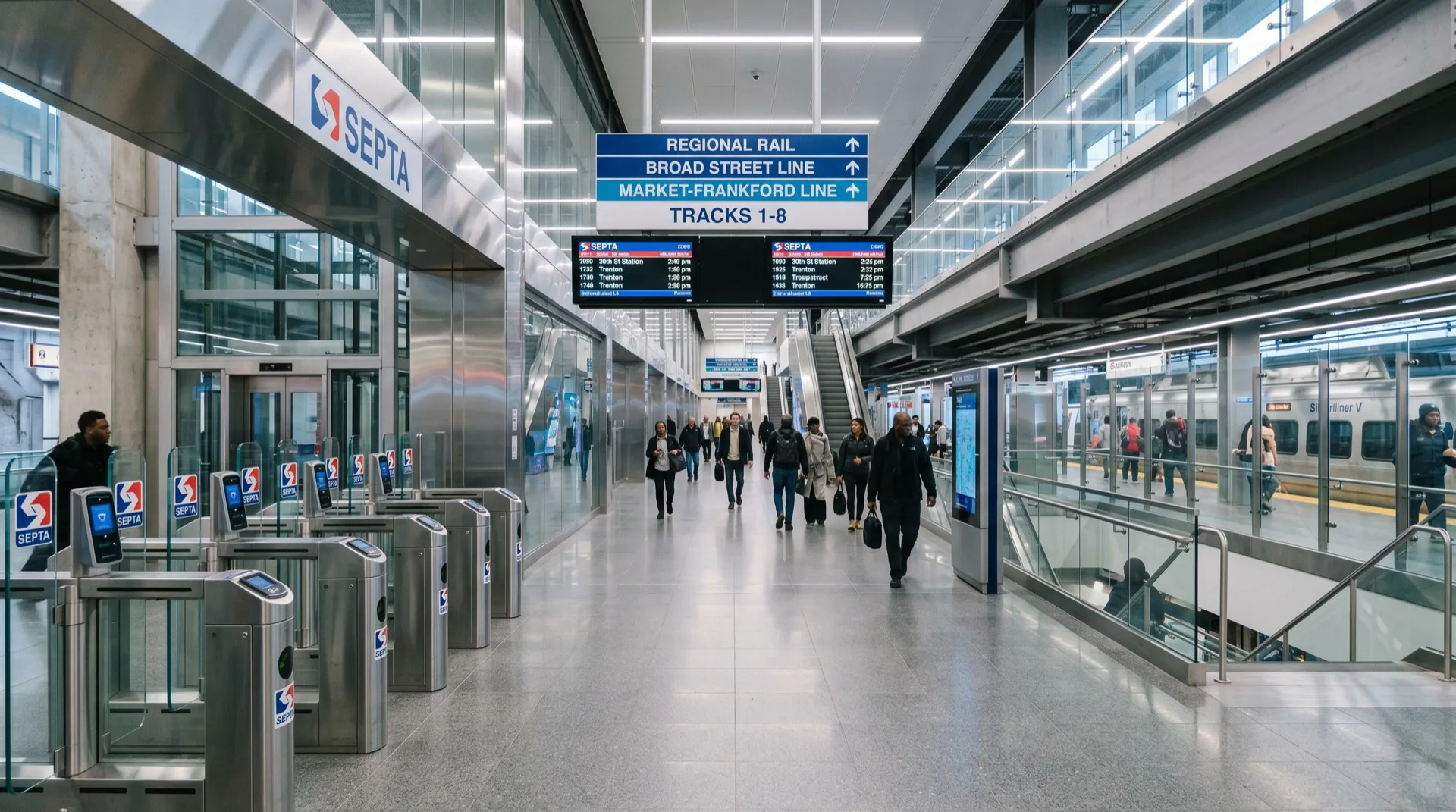
Anti-Graffiti Film. Protect. Peel. Replace.
Sacrificial anti-graffiti film is a clear protective layer that bonds to glass, stainless steel, mirrors, and architectural metal surfaces throughout transit stations. When tagged or etched, the film is peeled and replaced — not the surface underneath. For stations on high-vandalism corridors, it converts a reactive, unpredictable restoration budget into a predictable maintenance program.
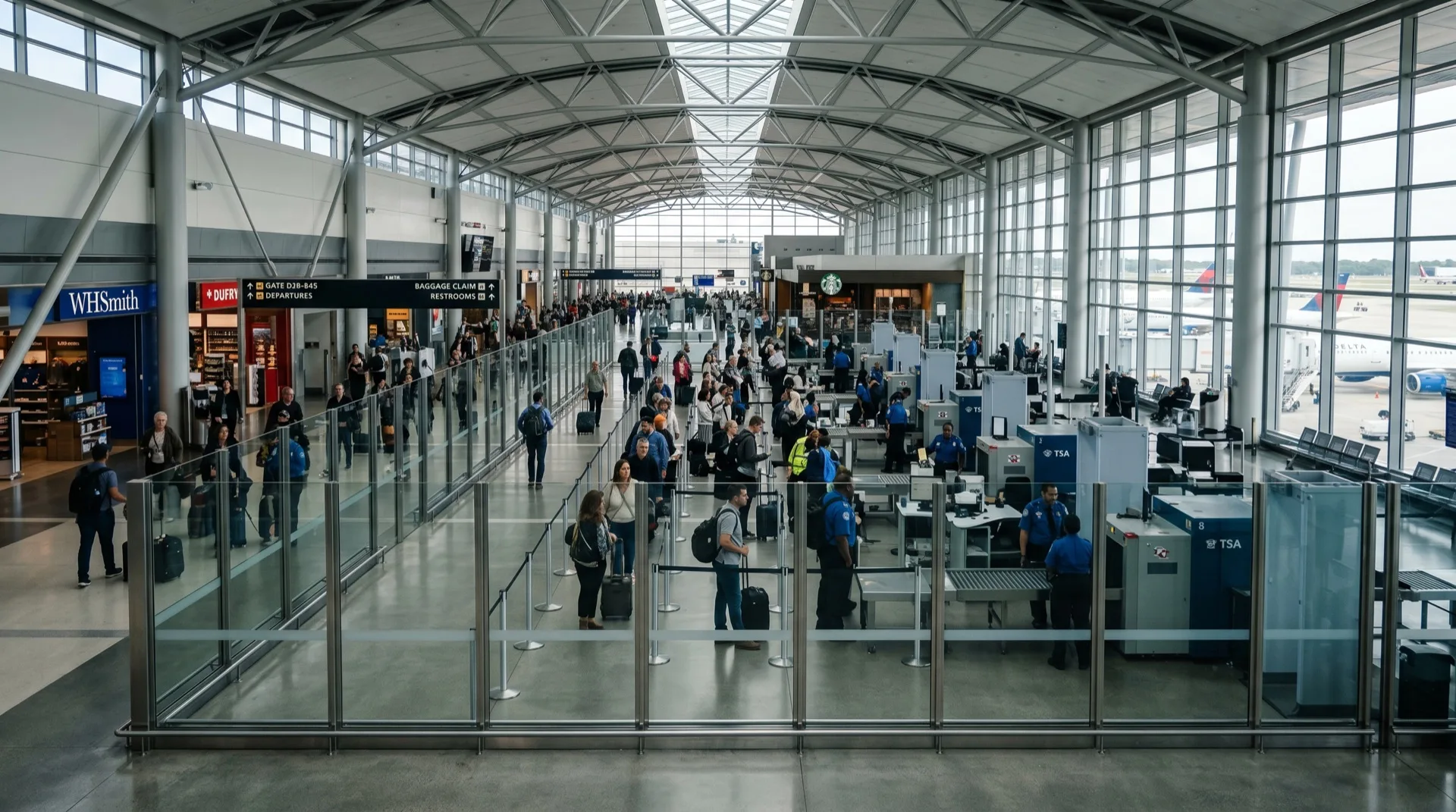
Safety & Security Film. Glass Stays. Danger Doesn't.
3M Scotchshield Ultra safety films hold glass fragments in place if breakage occurs — protecting passengers from flying shards regardless of the cause. Rated to ANSI Z97.1 and ASTM F1642, security film is the standard specification for public facility glass safety at airport terminals, SEPTA stations, and intercity rail hubs throughout Philadelphia.
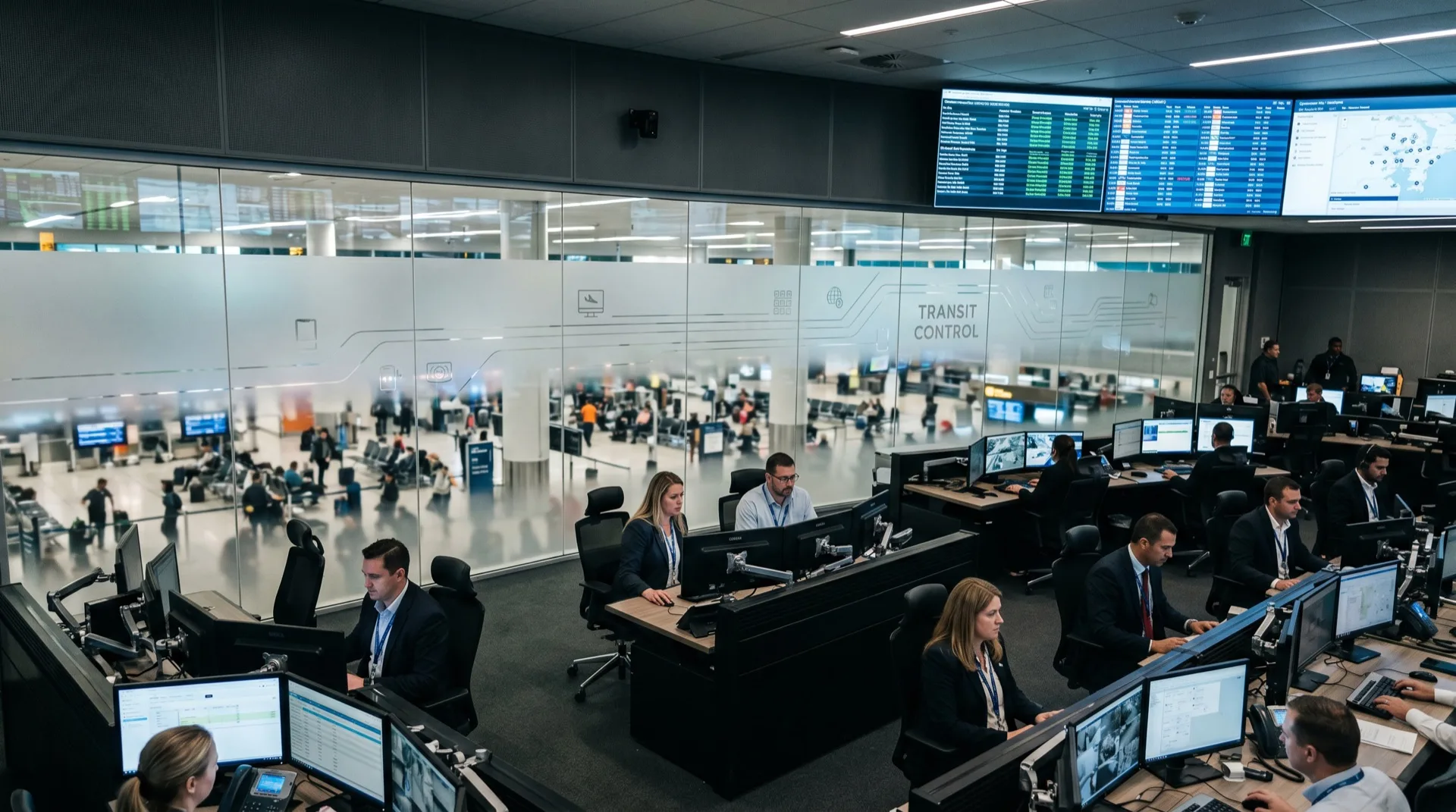
Decorative & Privacy Film. Operations. Wayfinding. Brand.
Frosted decorative and privacy film for transit operations centers, ticketing windows, and security glazing — plus printed graphic film for wayfinding, gate identification, and terminal artwork installations. 3M Fasara offers dozens of patterns from subtle linen to bold geometric, matched to your facility's design language.
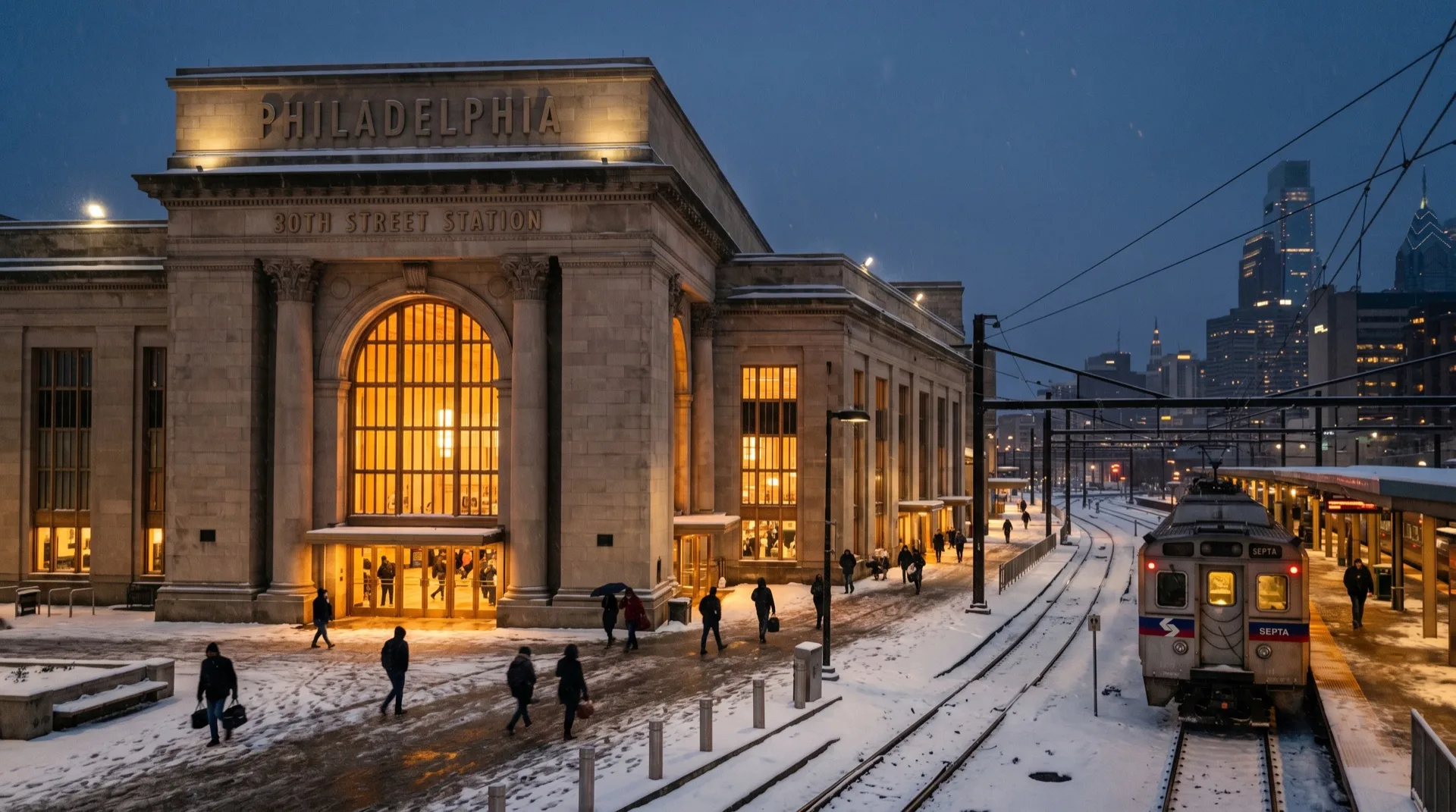
Low-E Climate Film. Warm in Winter. Cool in Summer.
Low-emissivity (Low-E) insulating film delivers year-round thermal performance for older Philadelphia station buildings — reflecting interior heat back into waiting areas in winter and blocking solar heat gain in summer. The 3M Thinsulate CC75 is the benchmark specification for SEPTA and Amtrak facilities with original single-pane glazing.
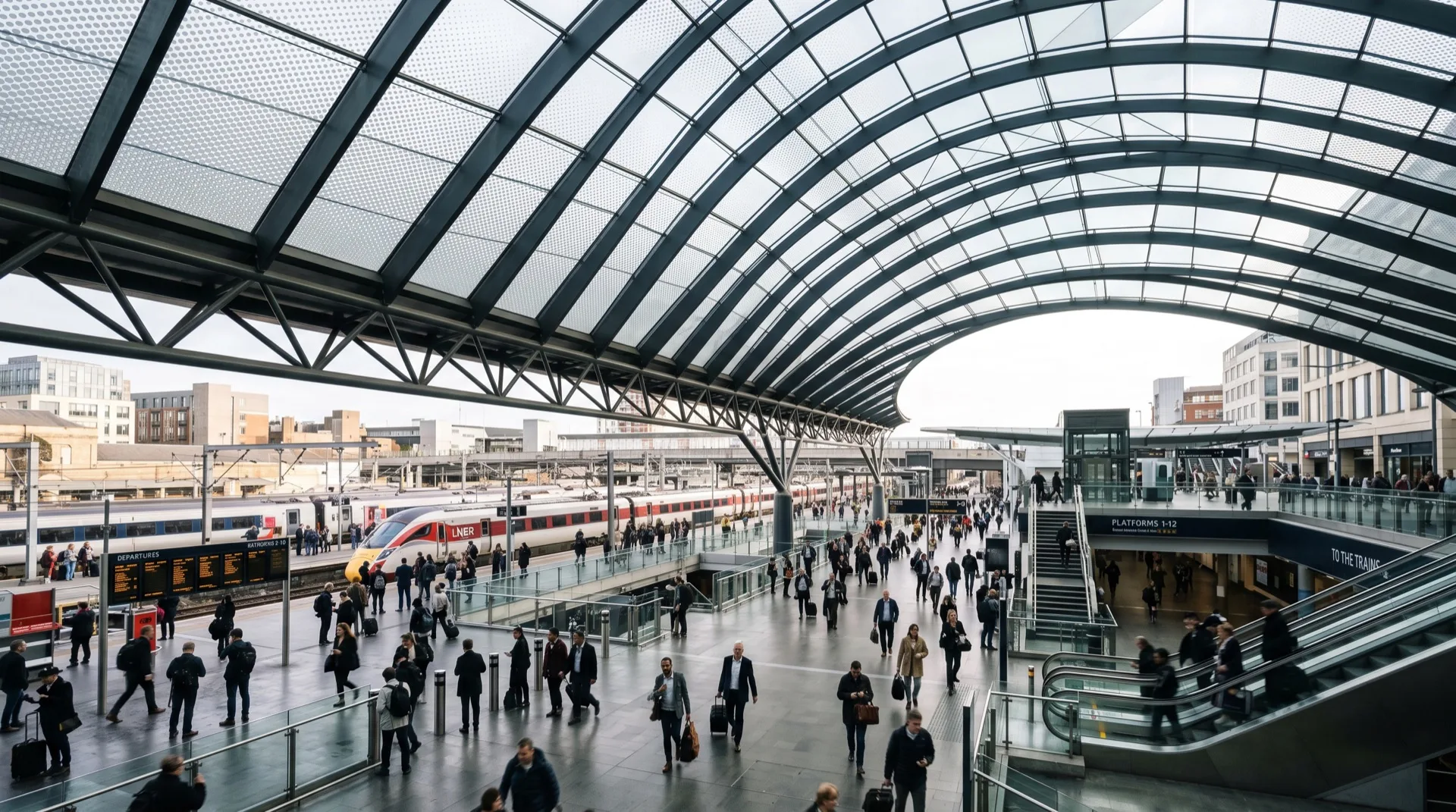
Exterior Film. Canopies. Skylights. Curtain Wall.
Exterior-mounted window film is UV-stabilized, scratch-resistant, and engineered for outdoor exposure — station canopy glazing, skylight panels, and external curtain wall sections where interior installation isn't accessible. Installed from outside the station with no disruption to interior operations or passenger flow.
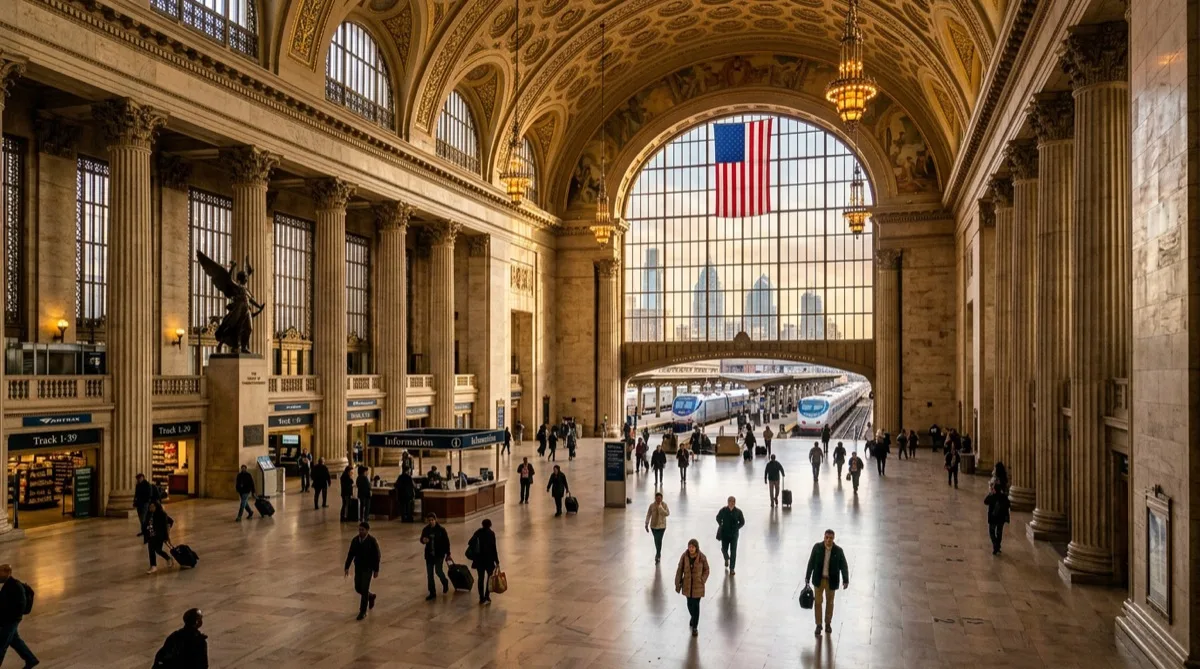
Philadelphia Rail Hub.
Solar Control + Anti-Graffiti.
Airport & Transit Film in Philadelphia
Mass Transit Window Film
Installed Across the Region
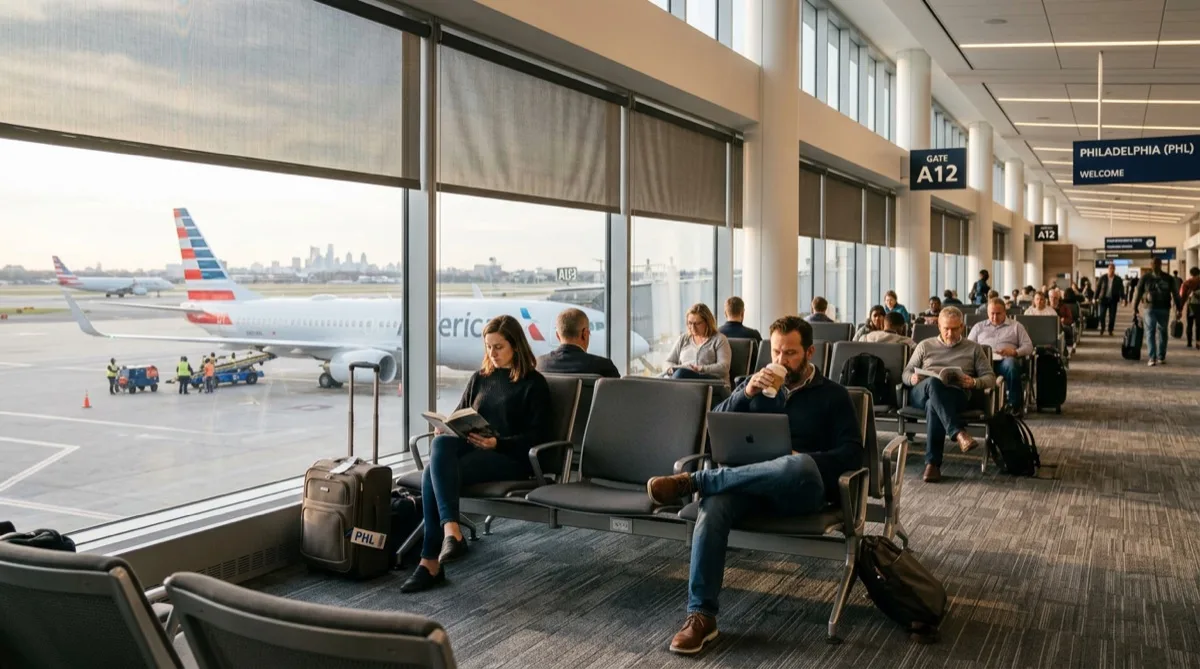
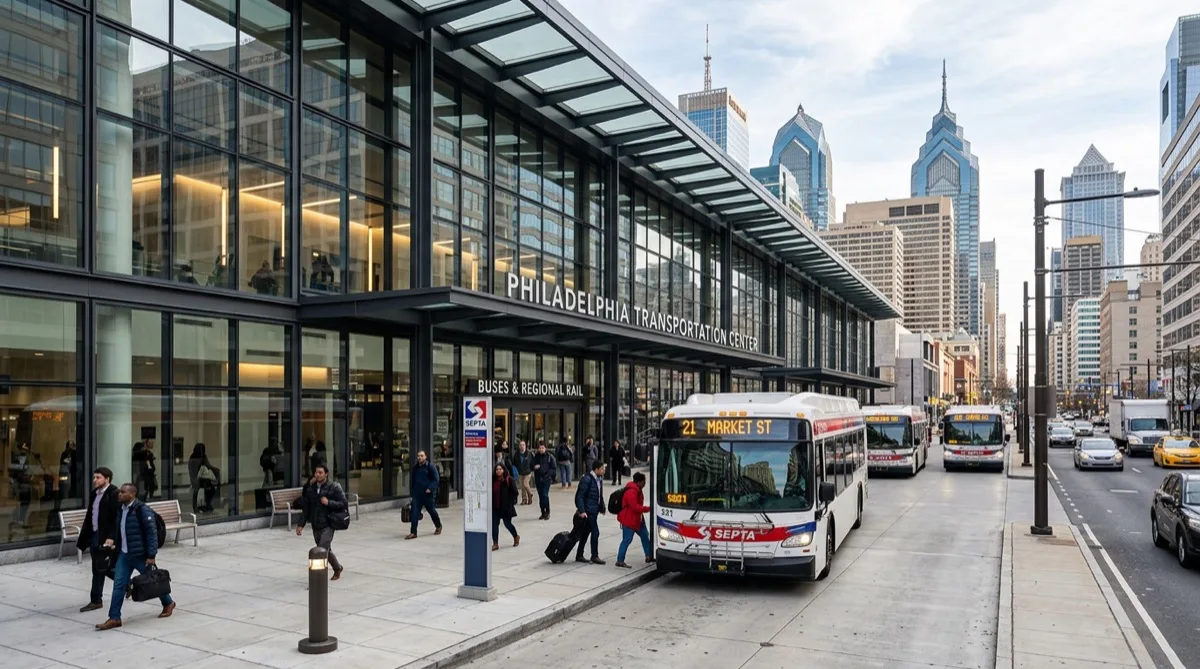
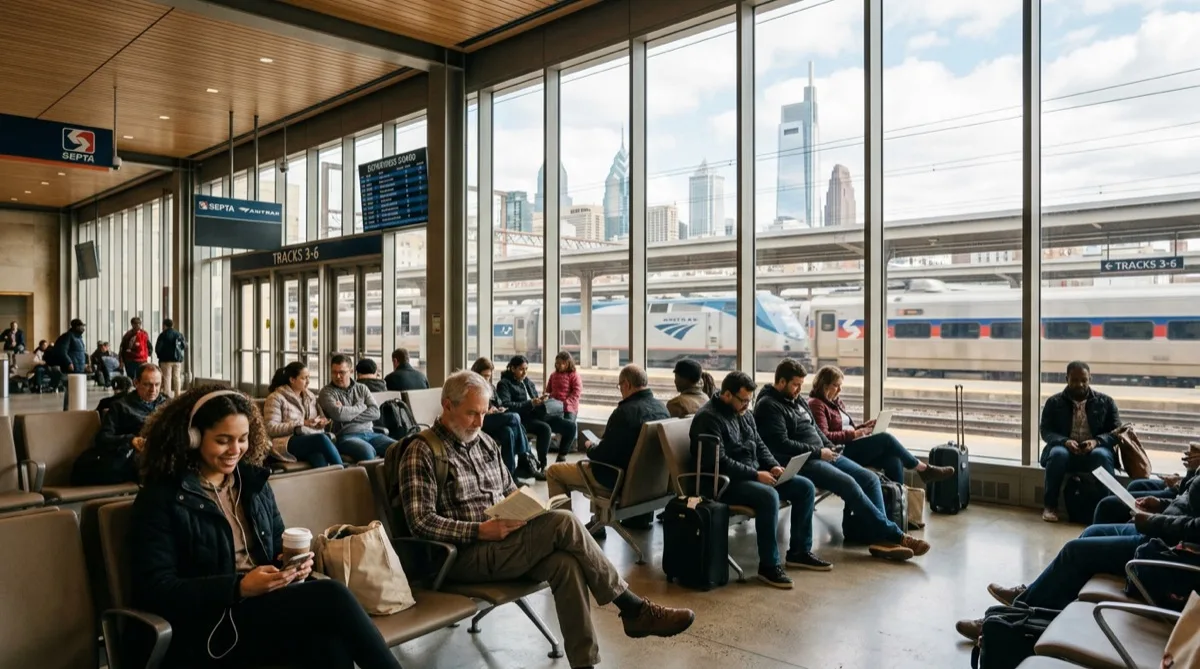
From PHL terminal concourses to SEPTA underground platforms — every installation is scoped, specified, and executed by our certified Philadelphia team.
All treated glazing
3M Prestige 70 spectrally selective
3M Scotchshield Ultra
Verified Google reviews
From First Call to Finished Installation
01 Facility Assessment +
We assess your transit facility's window orientation, passenger traffic patterns, vandalism exposure, and safety requirements to recommend the right airport window film in Philadelphia terminals and SEPTA stations. We evaluate glass type, surface inventory (glass, metal, mirrors), and identify any IGU compatibility or RF-sensitive zones before recommending a specification.
02 Off-Hours Scheduling +
All installation is scheduled around your operational calendar — early morning, overnight maintenance windows, or between service hours — with zero disruption to passengers or transit operations. Exterior applications access glass from outside the station with no interior impact. We coordinate directly with your facilities scheduler and operations team.
03 Compliant Installation & Documentation +
Our technicians deliver clean, efficient installation with full product documentation for your facilities records, including ANSI/ASTM compliance sheets and warranty documentation. Every installation is backed by manufacturer warranties of up to 15 years and our own labor warranty. We provide written specification records for procurement and compliance files.
What Transit Facilities Managers Say
Real results from Philadelphia-area transit and airport facilities teams.
"We rolled out anti-graffiti film across six stations. The maintenance savings in the first year alone exceeded the installation cost. Nothing beats peeling off a tagged panel instead of calling a glass restoration crew."

"Passenger comfort complaints near the west-facing gate windows dropped significantly after we applied the film. It was barely noticeable — passengers had no idea it was there."

"The main hall seating near the south windows used to be unusable in July. Now it's some of the most popular seating in the station. The solar film made a real difference for our passengers."
Airport & Transit Window Film Across Philadelphia
Our installation crews are Philadelphia-based. We serve transit facilities, airports, and transportation hubs throughout the city and surrounding region.

Manufacturer Resources
Airport & Transit Window Film — Case Studies & Spec Data
Download official case studies and technical data sheets from 3M. These documents contain verified performance data, transportation infrastructure case studies, and product specifications for the transit-grade films we install at Philadelphia airport and transit facilities.
- 3M Silver 20 Window Film — Commercial Branding & Transportation Spec Sheet
- 3M Energy Efficiency Brochure — Commercial Window Film Energy Savings Data
- 3M Scotchshield Ultra S800 — Safety & Security Film Technical Data Sheet
- Vista SpectraSelect — Solar Control + Safety Film Performance Specifications
- LLumar Anti-Graffiti Window Film — Architectural Guide Specification (CSI 08 87 26)
- Solar Gard Safety & Security 14 Mil — CSI Section 08 87 23 Specification
- Solar Gard Safety & Security 8 Mil — CSI Section 08 87 23 Specification
Airport & Mass Transit Window Film FAQ
Honest answers about airport and transit window film in Philadelphia from specialists with transit and airport facility experience.
Talk to a SpecialistAirport window film for Philadelphia is professionally applied polyester film that bonds to glass, metal, and mirror surfaces in high-traffic transit infrastructure. It provides solar heat reduction, UV blocking, safety fragment retention, anti-graffiti protection, and decorative options — addressing the specific operational and safety challenges of airport terminals, SEPTA stations, Amtrak hubs, and bus terminals across Philadelphia.
Sacrificial anti-graffiti film bonds directly to glass, stainless steel, and mirror surfaces as a removable protective layer. When a surface is tagged or etched, the film is peeled and replaced — not the surface underneath. Replacement is fast and low-cost compared to glass restoration or metal refinishing. For stations on high-vandalism corridors, it converts a reactive, unpredictable restoration budget into a predictable maintenance program.
Yes. 3M Scotchshield Ultra safety films are rated to ANSI Z97.1 (safety glazing) and ASTM F1642 (blast resistance) — the key standards for public facility glass safety. These films hold glass fragments in place on breakage, protecting passengers from flying shards regardless of the cause: accident, structural stress, severe weather, or a security incident. Full compliance documentation is provided with every installation.
Yes. Airport and transit facilities are among the most energy-intensive building types in the built environment, and their expansive glass is a primary driver of uncontrolled solar heat gain. Solar control film reduces heat transmission through glass by up to 79%, directly cutting the HVAC load across gate areas, concourses, and station waiting halls. Low-E film adds winter thermal performance for older single-pane glazing common in historic Philadelphia stations.
The most common specifications for Philadelphia transit facilities are: (1) sacrificial anti-graffiti film for vandalism-exposed surfaces; (2) 3M Scotchshield Ultra safety film for passenger-area glazing; (3) high-VLT solar control film like 3M Prestige 70 for passenger comfort in gate and waiting areas; and (4) Low-E Thinsulate film for older single-pane station buildings. Many installations combine safety and solar functions in a single film application.
Anti-graffiti film is engineered for high-maintenance environments. It resists the industrial cleaning agents and pressure-washing protocols common in transit maintenance operations. In clean environments the film lasts 5–7 years before proactive replacement; on high-vandalism surfaces, replacement frequency depends on incident volume. We provide chemical compatibility documentation for your facilities team and can recommend film grades rated for specific cleaning protocols.
Standard flat polyester film is designed for flat glazing and can accommodate gentle curves within manufacturer tolerances. For significantly curved glass — such as barrel vault station roofs or specialty architectural glazing — we assess each application individually. In some cases, the glass geometry may require scored panel installation or alternative surface treatments. We'll identify this during the initial facility assessment.
Installation is scheduled around your operational calendar — early morning, overnight maintenance windows, or between service hours. Exterior applications access glass from outside the station with no disruption to interior operations. Interior applications in low-traffic areas can be sequenced by zone. Our team coordinates with your facilities scheduler to deliver zero operational impact during active passenger hours.
Metallic Low-E films can attenuate some RF signals, which is a consideration for transit control and communications facilities. Where RF transparency is required, we specify non-metallic spectrally selective films — like 3M Prestige series — that deliver equivalent solar performance without a metallic layer. We identify RF-sensitive zones during the facility assessment and specify accordingly.
Contact us for a free facility assessment. We work with airport operations teams, SEPTA facilities staff, Amtrak station managers, and transit authority procurement departments. We'll assess your facility's specific glass inventory, vandalism exposure, solar orientation, and safety requirements — then provide a detailed specification and scope of work that fits your procurement and operational timeline.
Ready to Protect Philadelphia's Transit Infrastructure?
From PHL terminal concourses to SEPTA underground stations — we work with airport operations teams, transit authority facilities staff, and station managers to deliver the right film specification for every surface. Schedule a facility assessment.