







Serving Philadelphia, Main Line, Cherry Hill, South Jersey & surrounding areas

OUR PROCESS

Window film installation in Philadelphia, done right.

From free consultation to final walkthrough — a simple, proven process trusted by Philadelphia homeowners and businesses.

TRUSTED BY LEADING PHILADELPHIA BUSINESSES

How it works

From your first call to final inspection — a straightforward process, done with precision.

1

Free Consultation

We meet you on-site, assess your glass, understand your goals, and take exact measurements — then schedule at a time that works for you.

2

Precision Preparation

Film is pre-cut by plotter for a perfect fit and zero waste. We clean every pane and apply C-Bond primer before the film goes on.

3

Professional Installation

Film is applied to the prepared glass, C-Bond adhesive is squeegeed out, edges are cleaned, and every pane is inspected for defects.

4

Cure & Warranty

With C-Bond, adhesive typically sets in 24–72 hours. We walk you through care instructions and warranty coverage before we leave.

THE INSTALLATION IN DETAIL

Your installation, step by step

Three stages, each with its own discipline. Here's what our crew does at each point in your project — what you'll see while they're on your property, what they're checking for, and why each step is done the way it is.

01 Step One

The consultation: we learn before we recommend

We arrive at your property with nothing to sell and everything to learn. Before a single measurement is taken, we walk the space with you and ask questions. What's bothering you about the glass? Afternoon heat on the west side? Glare on a specific floor? Street-level privacy concerns? A security situation? The conversation matters because the wrong film — even a high-quality film — applied to the wrong glass for the wrong reason is a waste of your money and ours.

We assess every pane individually. Glass type, age, condition, any existing coatings, frame material, and orientation all factor into which film performs best on that specific window. Older glass can have compatibility requirements. Certain frame types won't accept certain installation methods. A window facing southwest behaves completely differently from one facing north. We account for all of it.

From that assessment we draft a specification: exactly what film goes on what glass, why we selected it, and what you can realistically expect it to do. We explain the tradeoffs — visibility vs. privacy, heat rejection vs. light transmission — so you understand what you're getting before anything is ordered. Then we schedule your free window film installation consultation at a time that works for you, including early mornings, evenings, and weekends if your property requires it.

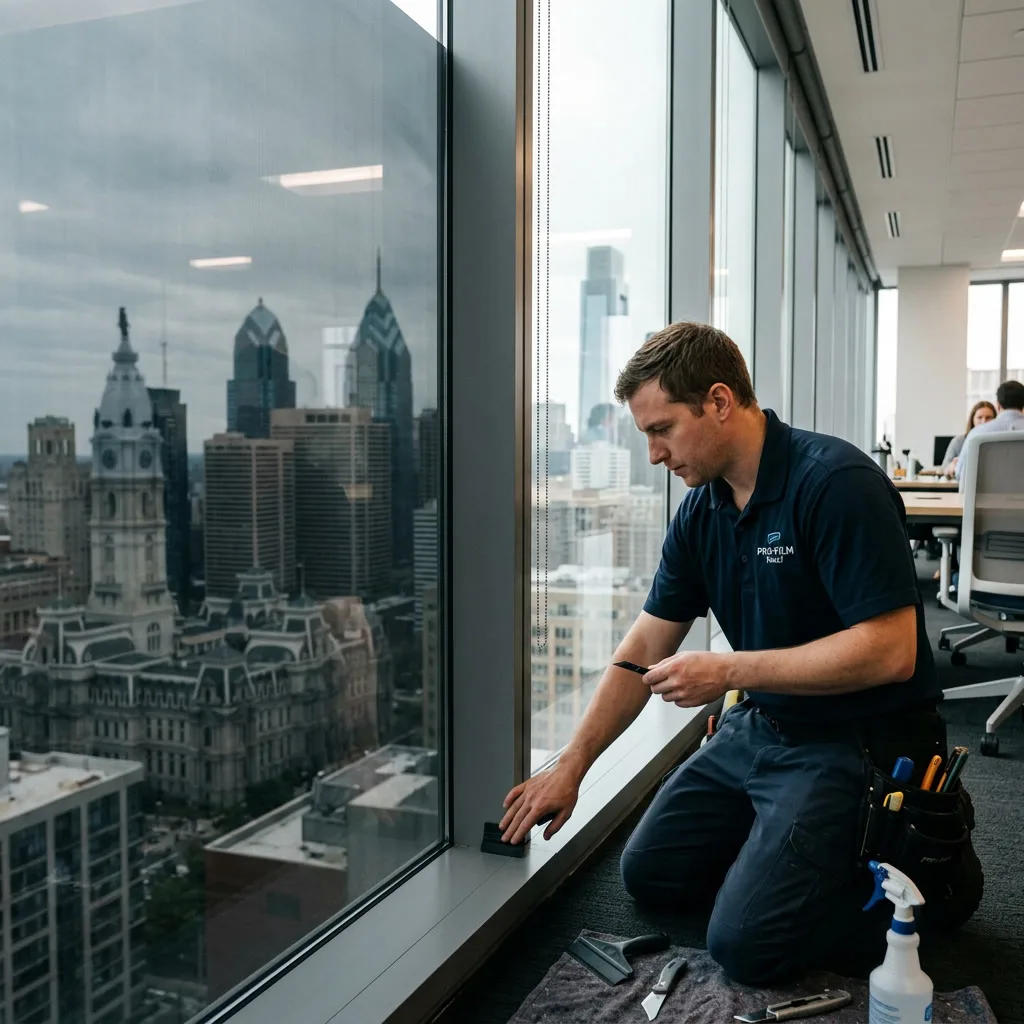
Window film consultant assessing windows in a Philadelphia office
02 Step Two

Preparation and application: precision from the start

Before we arrive at your property, the film is already cut. We take your measurements back to our shop and run them through a precision plotter — a computer-controlled cutter that sizes every piece to your exact pane dimensions. Nothing is eyeballed or trimmed by hand on-site. The result is a cleaner edge, faster installation, and no material waste.

On installation day, we start with the glass itself. Every pane is cleaned thoroughly — frame, sill, and glass surface — before anything is applied. Surface contamination beneath the film creates permanent imperfections, so this step isn't rushed. Once the glass is clean, we apply C-Bond primer. This is where our process differs from a standard installation: we're not just cleaning the glass, we're preparing it at a molecular level to accept a superior bond.

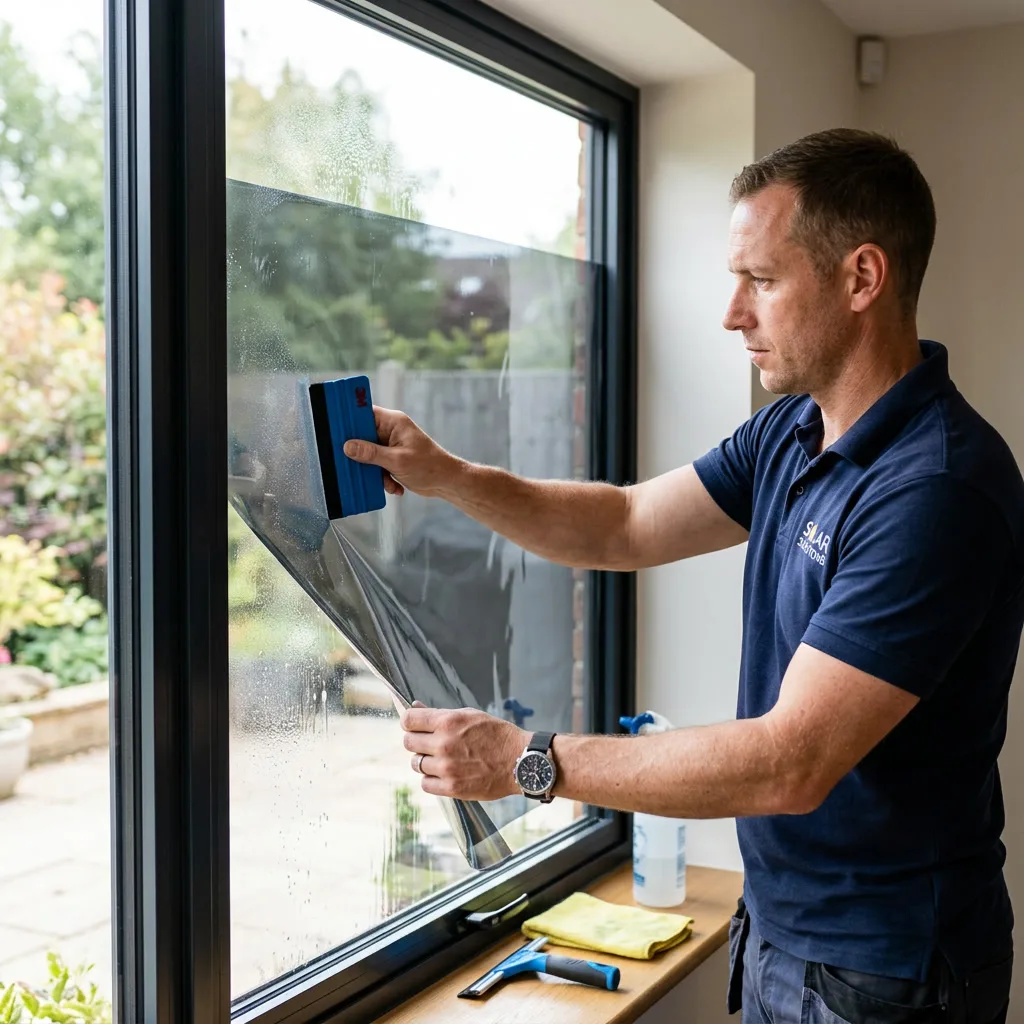
The film goes on prepared glass, not raw glass. Each piece is positioned carefully, then worked from center outward using professional squeegees to move water and air to the edges in a clean, controlled sequence. Edges are trimmed to a precise clearance, cleaned, and inspected. We don't move to the next pane until the current one meets spec. Our window film services for Philadelphia homes and businesses cover every film type — solar control, security, decorative, and anti-graffiti.

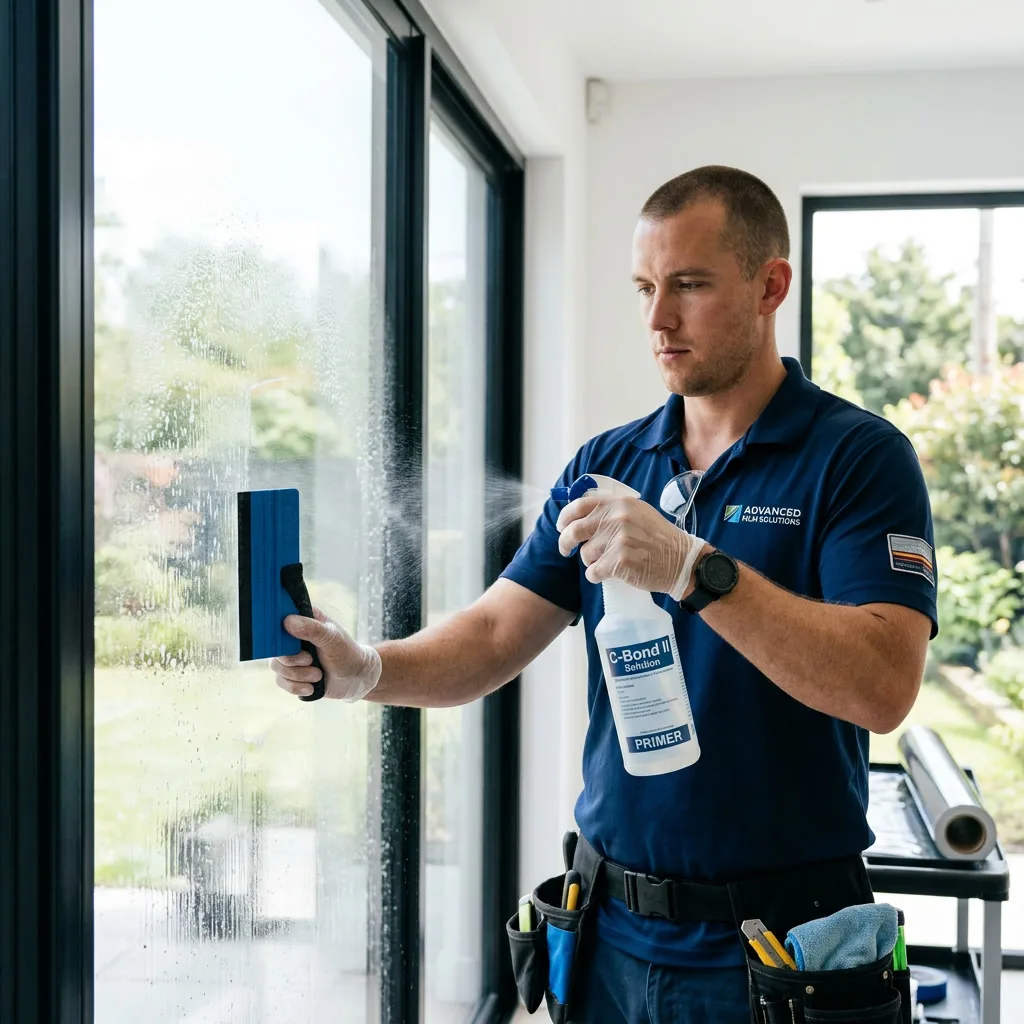
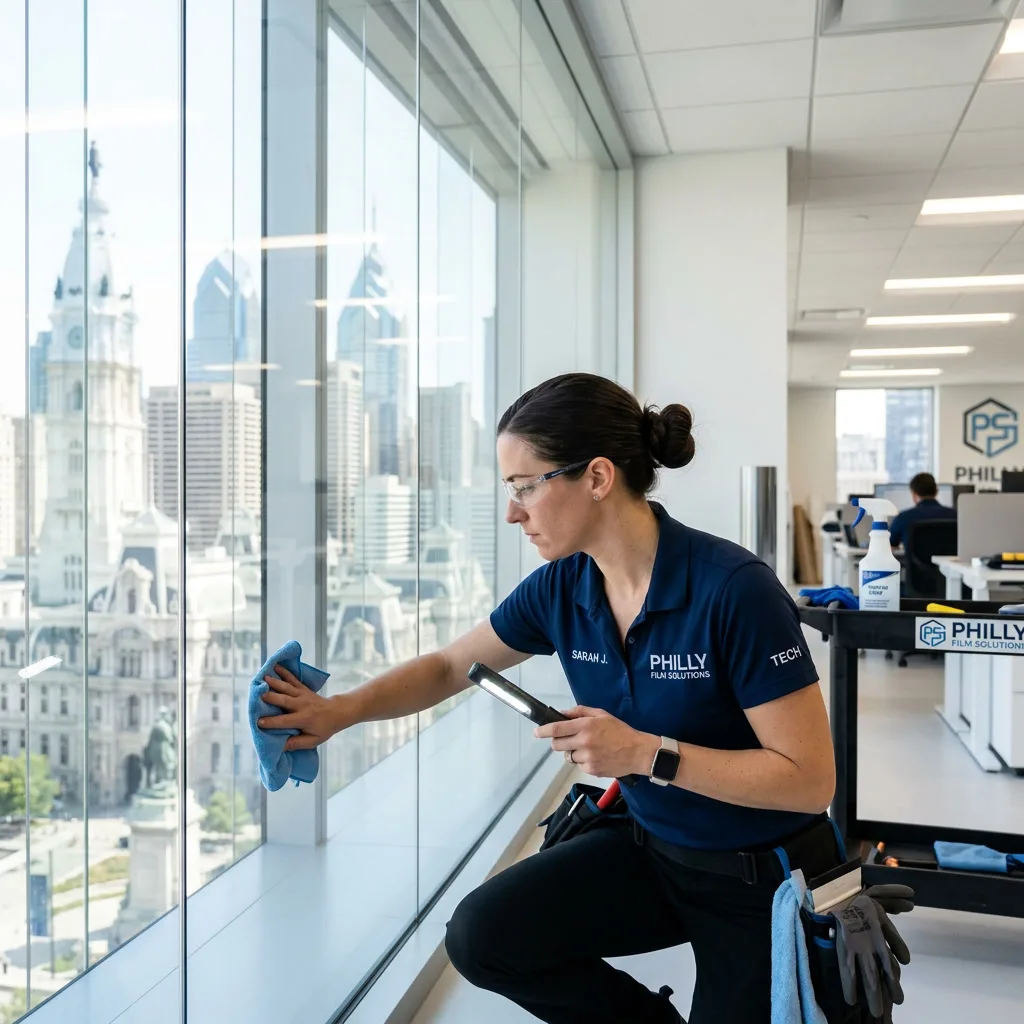
Professional installer applying window film with a squeegee
03 Step Three

Inspection and walkthrough: nothing left to chance

Once the film is applied to every pane, we inspect all of it before we pack up. We're checking for anything that won't resolve on its own during the cure window: edge gaps, contamination beneath the film, installation marks, or air pockets that are too large to cure out. If we find anything that doesn't meet our standard, we address it before leaving the property. You shouldn't have to call us back for something we could have caught ourselves.

We then do a full walkthrough with you. You see every window. We point out what was applied where, what it's designed to do, and what you'll notice in the days ahead — including what's normal. The slight haziness during the cure window, the small water pockets that appear and disappear, the way the light quality changes as the adhesive sets — none of this should be a surprise, and it won't be.

Before we leave, we hand you a written care card covering the 30-day cure period: what to avoid, how to clean after cure is complete, which products are safe for your specific film, and how to reach us directly if anything doesn't look right. Every installation we complete meets the International Window Film Association's installation standards — the industry benchmark for professional window film work. The job isn't done when the film is on. It's done when you're confident it's working exactly as described.

Installer inspecting completed window film installation on large office windows

WHY WE USE C-BOND

The difference between a good install and a great one

Most window film installers still prep glass with soap and water — a method that eliminates visible imperfections but does nothing for the glass itself. We use C-Bond primer on every project. It works at the molecular level to permanently strengthen the glass and create a superior bond between film and surface.

C-Bond works at the molecular level — it doesn't just sit on the glass surface, it bonds with it. The result is a substrate that's at least 100% stronger than untreated glass, giving the film a foundation that holds under real-world stress.

Crystal-clear architectural glass with light refracting through it

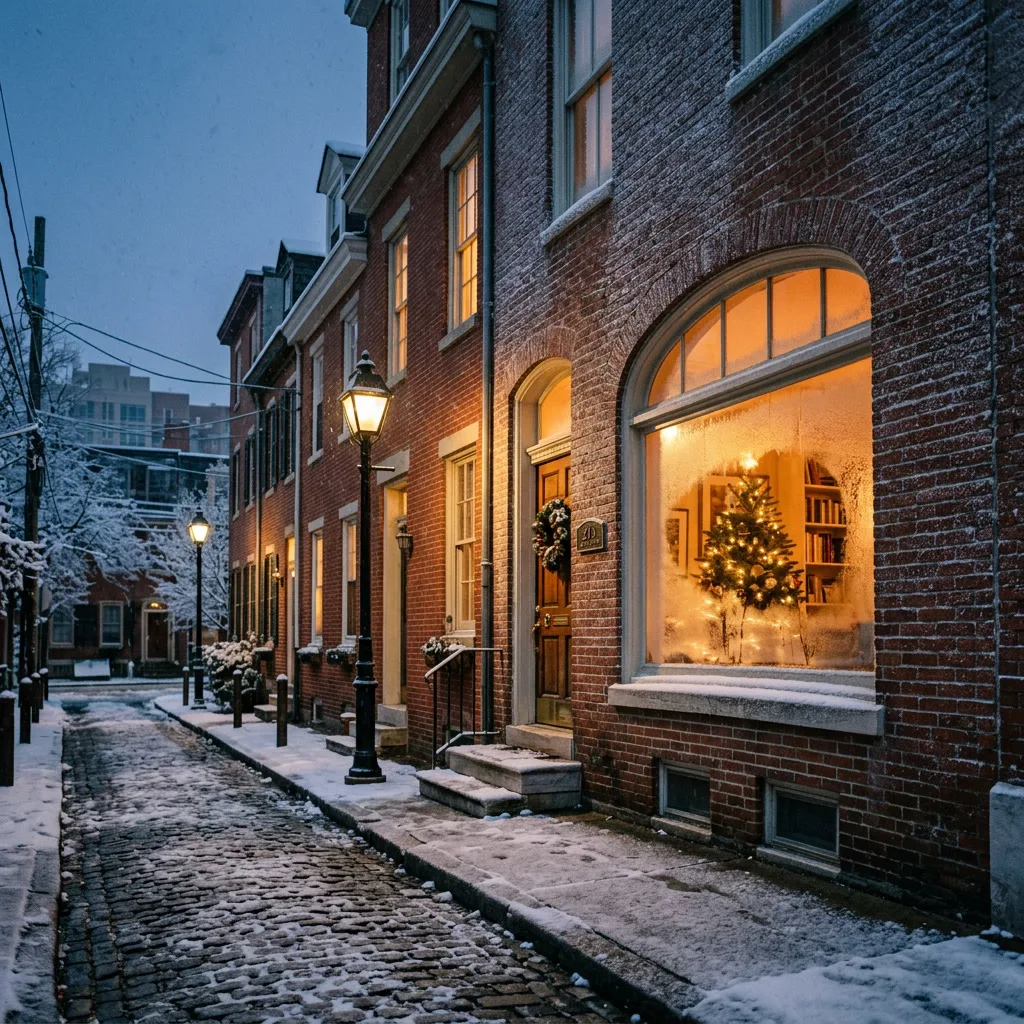
Philadelphia's freeze-thaw cycles put real stress on glass — temperature swings between winter lows and summer heat cause glass to expand and contract repeatedly. C-Bond reinforces the glass against that stress, preventing the micro-fractures that lead to early failure.

Philadelphia rowhouse window with frost on glass, warm light inside

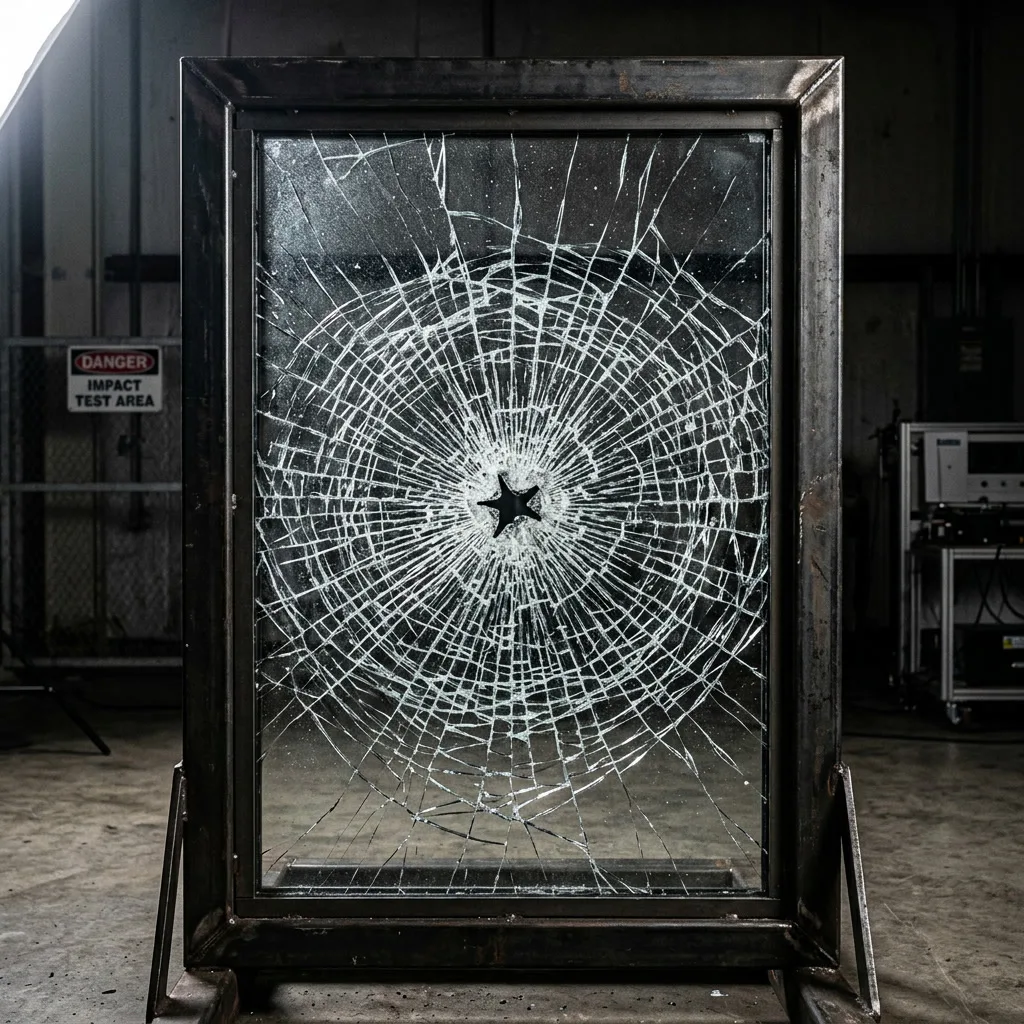
From hailstorms to windblown debris, C-Bond-treated glass holds up where untreated glass gives way. The primer creates a stronger bond between film and glass, so when impact happens the film stays in place — keeping broken fragments together and protecting the people inside.

Safety glass after impact showing film holding shattered glass intact

Traditional installations using soap and water can take up to four weeks to fully cure — and in shaded or sunless rooms, adhesion problems can develop before curing is complete. With C-Bond, the adhesive sets in 24 to 72 hours. Your windows are clear, stable, and fully bonded in days, not weeks.

Installer inspecting freshly applied window film in a Philadelphia office

Soap and water can trap micro-bubbles beneath the film that cloud the glass during and after installation. C-Bond eliminates that. It improves clarity at the molecular level during application, so the finished result is genuinely clear — the kind of result you notice every time you look through the glass.

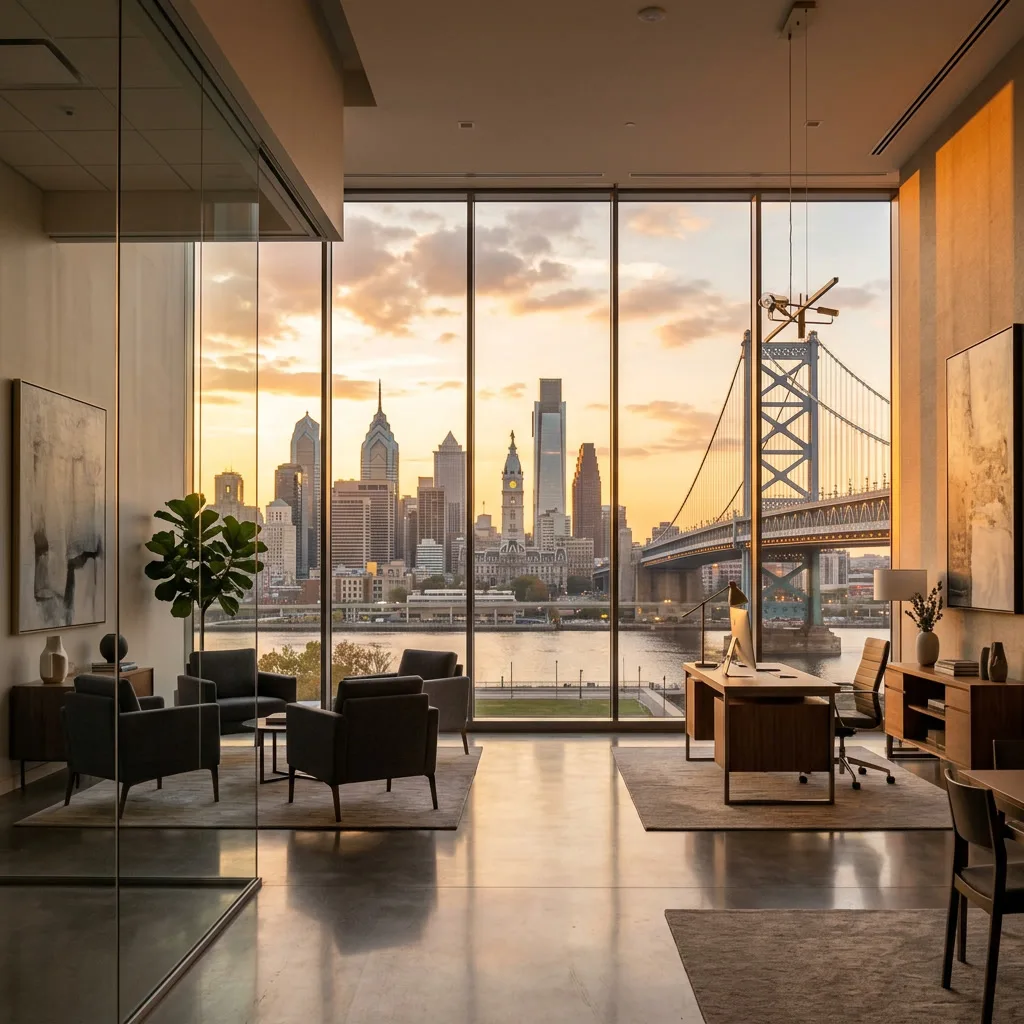
Crystal-clear floor-to-ceiling window with Philadelphia skyline view
Crystal-clear architectural glass with light refracting through itPhiladelphia rowhouse window with frost on glass, warm light insideSafety glass after impact showing film holding shattered glass intactInstaller inspecting freshly applied window film in a Philadelphia officeCrystal-clear floor-to-ceiling window with Philadelphia skyline view

AFTER YOUR INSTALLATION

What to expect once we leave

Window film doesn't finish working the moment our team packs up. Here's exactly what happens over the days and weeks after installation — and what you need to do (and not do) to get the best result.

01

The first 24–72 hours

If your project used C-Bond primer — which all of our installations do — the adhesive typically reaches full bond strength within 24 to 72 hours. During this window you may notice a slight haziness to the glass or small water pockets beneath the film. Both are completely normal and not a sign of a problem.

The haze and any minor bubbling are part of the curing process. As moisture works its way out of the adhesive layer and through the film, the glass gradually clears. Most clients see noticeable improvement within the first day and full clarity within a few days.

During this period, leave the film alone. Don't touch it, press it, or try to smooth out any bubbles — they'll resolve on their own, and disturbing the film during cure can affect the final result.

02

The first 30 days

The first 30 days are the care window. Even after the initial 24–72 hour cure, the adhesive continues building full bond strength throughout the first month. The film is stable and doing its job — it just needs to be treated with a little extra care while it finishes bonding.

Avoid cleaning the film-treated glass during this period. No window sprays, no cloth wiping, no squeegees. If something gets on the glass, a very gentle dry wipe is fine, but hold off on any wet cleaning until the cure window has passed.

We'll leave you a printed care card after every installation that covers this period in detail — including specific products to avoid (anything ammonia-based), what to do if you notice something that doesn't look right, and how to reach us.

03

Month 1 and beyond

Once the 30-day cure window has passed, your film-treated glass can be cleaned exactly like any other window — with one note. Use a soft, non-abrasive cloth and avoid ammonia-based cleaners. Most standard window cleaning solutions are fine; we'll confirm the right products for your specific film during the final walkthrough.

Beyond cleaning, professional-grade window film is designed to be maintenance-free. There's no retreating, no re-sealing, no annual service. The film works quietly every day — blocking UV, managing heat, maintaining privacy or security — without any action on your part.

Every installation includes manufacturer and workmanship warranty coverage — the specific terms vary by film product and project scope. We walk every client through their coverage at the end of the project and leave written documentation so you know exactly what's included.

THE TRANSFORMATION

See the difference for yourself

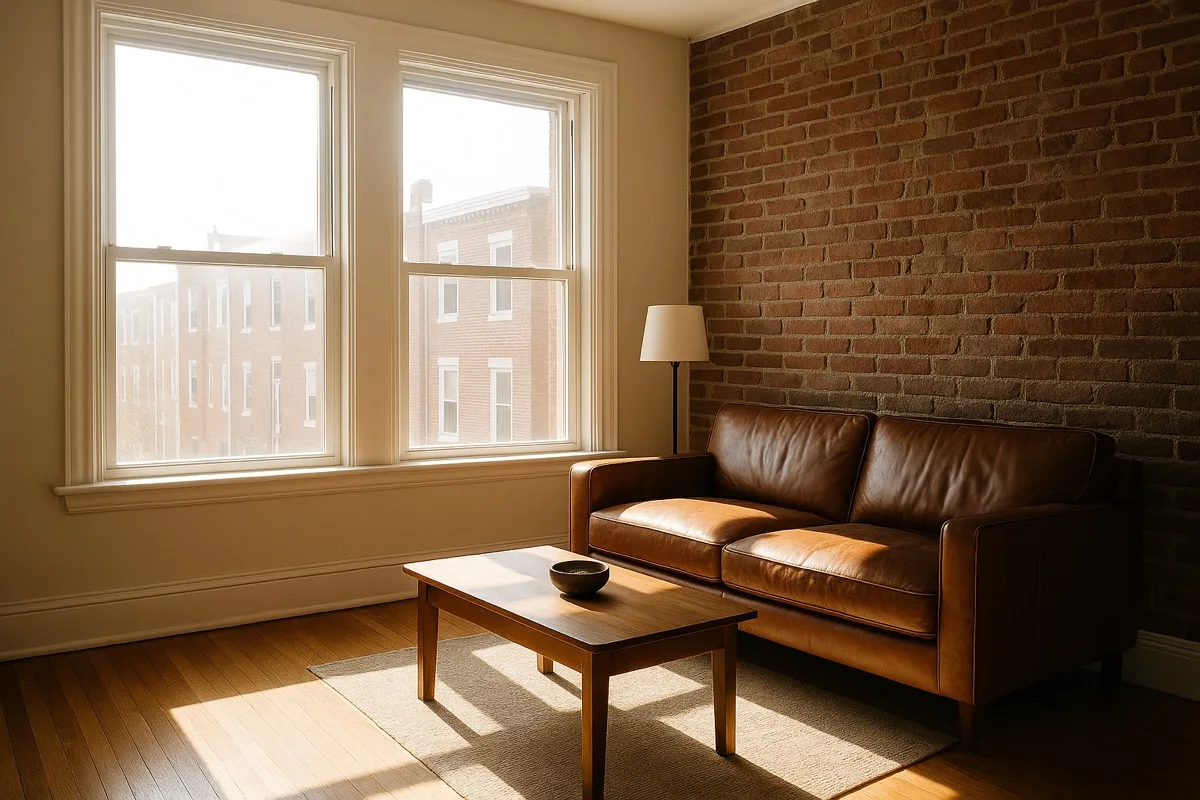
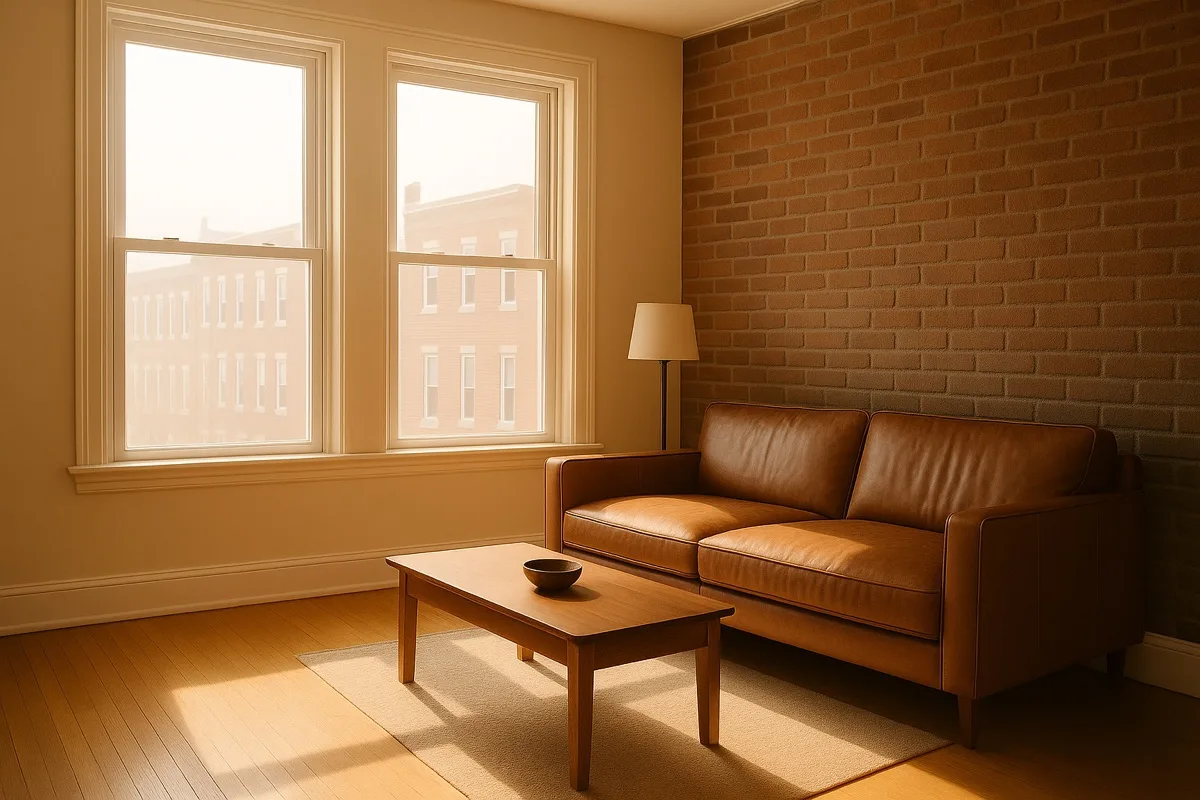
Drag the handle to compare a Philadelphia home before and after window film installation. Same room. Same windows. Completely different experience.

Philadelphia rowhouse living room without window film — harsh glare and overexposed windows
Same Philadelphia living room after window film installation — soft even light, no glare, comfortable atmosphere
Without film With film

HAVE QUESTIONS?

Frequently asked questions

Everything you need to know about our installation process, C-Bond technology, and what to expect after your project is complete.

Soap and water has been the traditional prep method for window film installation for decades. It eliminates visible surface imperfections, but it does nothing for the glass itself. C-Bond works at the molecular level — it bonds with the glass surface and increases its strength by at least 100%. The result is a stronger substrate, better film adhesion, faster cure times, and improved optical clarity. We use C-Bond on every project because it produces a genuinely better installation, not just a cleaner-looking one.

On C-Bond projects — which covers all of our installations — the adhesive typically reaches full bond strength within 24 to 72 hours. During that window you may notice slight haziness or small water pockets beneath the film; both are a normal part of the curing process and resolve on their own. Projects not using C-Bond can take up to four weeks to fully cure, and in shaded or sunless rooms adhesion problems can develop before the film bonds completely — which is one of the reasons we use C-Bond as standard.

For the first 30 days, avoid cleaning the film-treated glass. No window sprays, no wiping, no squeegeeing. If something gets on the glass, a very gentle dry wipe is fine, but wet cleaning should wait until the cure window has closed. Don't press on the film, try to smooth out bubbles, or apply anything adhesive to the glass surface. The film is doing its job — it just needs time to finish bonding. We'll leave a care card after every installation with the specific do's and don'ts for your film type.

After the 30-day cure window, film-treated glass can be cleaned like any other window — with two considerations. Use a soft, non-abrasive cloth rather than anything scratchy, and avoid ammonia-based cleaners. Most standard window-cleaning solutions are fine. We'll confirm the right products for your specific film during the final walkthrough, and the care card we leave behind covers this in detail.

Yes. We understand that having a crew in a home or operating business during the day isn't always practical. We can schedule installations during evenings, early mornings, or weekends depending on project scope and crew availability. Just let us know your constraints during the consultation and we'll work around them.

Before we arrive at your property, we cut all the film using a precision plotter — a computer-controlled cutting system. This does two things: it speeds up the on-site installation significantly because the film is already sized to each pane before we touch the glass, and it minimizes waste because cuts are made to exact measurements rather than trimmed by hand. The result is a cleaner install, less time on your property, and no offcuts left behind.

An attachment system is an edge-bonding method used with security film to bond the film to the window frame rather than just the glass surface. Without it, security film holds broken glass together — but the whole sheet can separate from the frame under sustained impact. With an attachment system (typically Dow 995 silicone or a mechanical option applied around the perimeter), the film stays connected to the frame even when glass is broken, creating a significantly stronger barrier. We recommend attachment systems on security film applications where forced-entry resistance is the primary goal.

It depends on the film. Some films — like darker reflective or tinted films — do reduce visible light noticeably. Others, particularly spectrally selective films, are nearly clear and reject heat and UV without making the room feel darker at all. The right film for your space depends on your glass orientation, what you're trying to solve, and how much you care about maintaining the current look. We go through all of this during the consultation so you know exactly what to expect before anything goes on your glass.

Yes. Window film is not permanent. Our team can safely remove film from any glass surface — the process involves carefully peeling the film and then cleaning the adhesive residue from the glass. The glass itself is not damaged by removal when it's done correctly. Some clients remove old or outdated film and replace it with a new solution; others remove it entirely. Either way, we handle the full process.

C-Bond I is the primer we use on all standard window film applications. It strengthens the glass, improves film adhesion, speeds curing, and enhances optical clarity — it's the foundation of every installation we do. C-Bond II is a specialized system applied when multiple layers of film are installed in a single application to build a high-defense barrier — including applications designed to provide ballistic resistance. C-Bond II is reserved for specific security applications; we'll advise during consultation whether it's appropriate for your project.

Philadelphia Window Film Professionals

Ready to transform your glass?

Schedule a free on-site consultation. We assess your windows, explain your options, and give you a detailed quote — no pressure, no obligation.

Book your free consultation
Philadelphia · Main Line · Cherry Hill NJ · South Jersey · Montgomery County · Bucks County · Delaware County · Chester County · Wilmington DE · Princeton NJ · Voorhees NJ · Marlton NJ · Haverford · Ardmore · Wayne · Bryn Mawr · Radnor · Newtown Square · Media · Lansdowne · Norristown · Abington · Jenkintown · Glenside · Ambler · Blue Bell · Horsham · Doylestown · Newtown PA · Langhorne · 
Have a question? Ask us →
Window Film Philadelphia
Typically replies in minutes
WF
Hi! 👋 Welcome to Window Film Philadelphia. I can help you with:

• Free consultation scheduling
• Service questions
• Pricing information
• Coverage areas

What can I help you with today?