
Hotel Window Film
for Philadelphia
Your guests deserve better than overheated guest roomsafternoon glareUV-faded furnishingsstreet-level exposurewasted energy .
Better reviews. Lower energy bills. Furnishings that last. Window film solves the glass problems Philadelphia hotels have been working around for years — installed around your guests, without replacing a pane.
Trusted by 500+ Philadelphia businesses — hotels, boutique inns, property managers, and hospitality groups











Better Guest Stays.
Same Glass.
Hotel window film is a professionally installed polyester or multi-layer film bonded directly to existing glass surfaces. Unlike window replacement — which can cost $500–$1,200 per panel and require weeks of scheduling — window film installs in hours, needs no structural changes, and carries manufacturer warranties of 10–15 years. Guests continue checking in. Housekeeping runs its normal schedule. The building looks the same from outside.
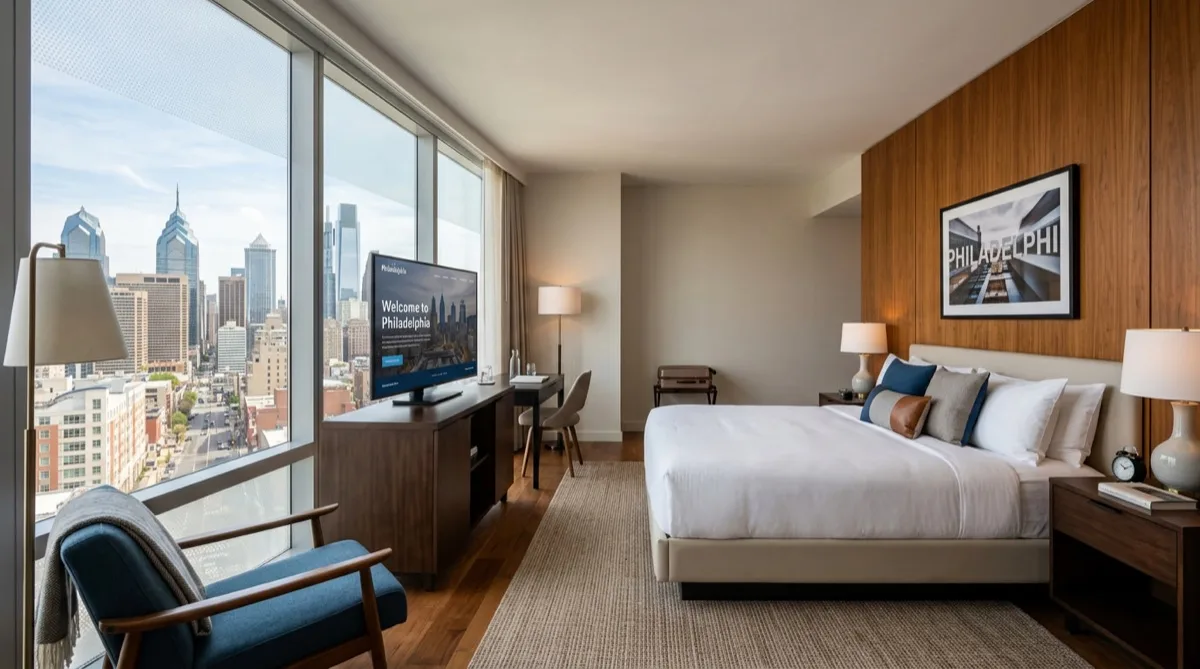
Philadelphia hotels face a specific challenge: older Center City properties with large historic windows, convention-adjacent towers with floor-to-ceiling curtain wall glass, and boutique properties where every interior detail is considered. Window film solves the solar heat, UV, and glare problem without touching the architecture, the view, or the aesthetic your guests chose you for. Learn more about our energy-saving window film solutions for Philadelphia buildings.
Every Hot Guest Room Is a Review You Did Not Write — But Your Guests Will
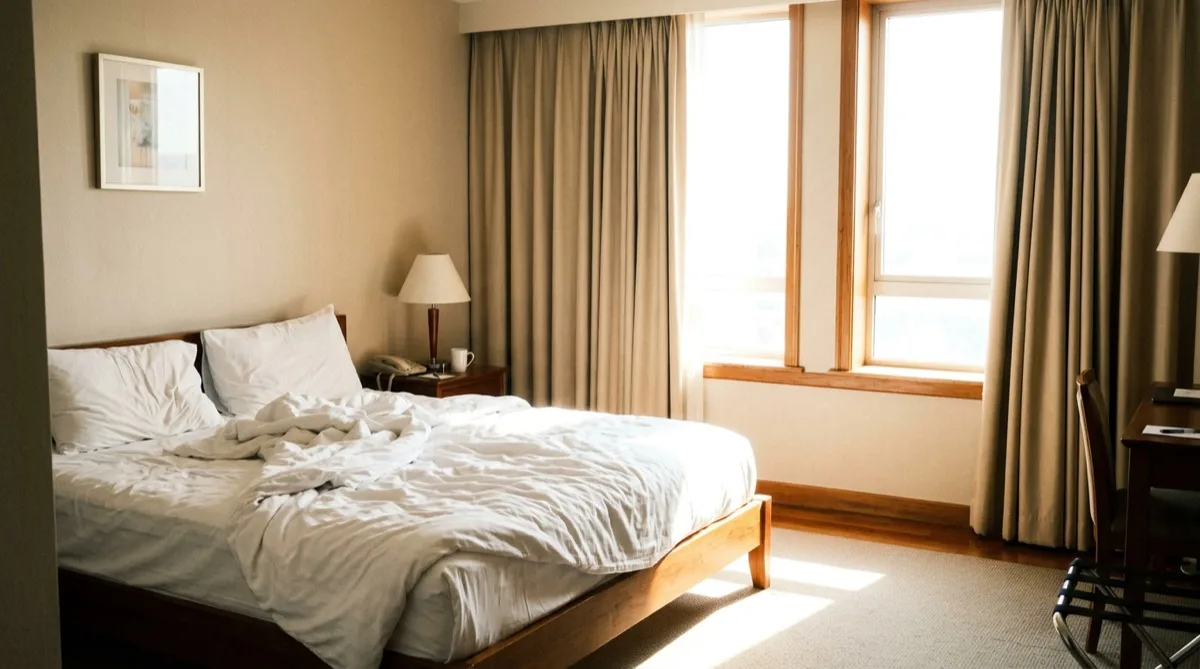
Untreated hotel glass works against your P&L in three directions simultaneously. Your HVAC is fighting solar heat gain that accounts for 25–35% of wasted building energy (U.S. Department of Energy) — and in a hotel, that fight runs 24 hours a day because guests are sleeping in those rooms, not just working in them. Your housekeeping team fields room-move requests from guests on south-facing floors every summer afternoon. And your purchasing department is on a shortened replacement cycle for the carpets, drapery, and upholstery in those same rooms — because UV radiation fades premium furnishings in a fraction of the time they should last.
- South- and west-facing rooms generate a disproportionate share of comfort complaints on online review platforms — the ones future guests read before booking.
- Hotels spend $3,000–$20,000+ per room on furnishings; UV-exposed rooms can require refurnishing every 2–3 years instead of every 7–10.
- Guests who close their blackout drapes against afternoon sun never see the city view they paid a premium to access.
- Window film addresses all three problems from a single installation — at a fraction of the cost of window replacement.
The Right Film for Every Part of Your Hotel
Different spaces in a Philadelphia hotel have different performance requirements. Here's how hotel window film is specified for each area of your property.
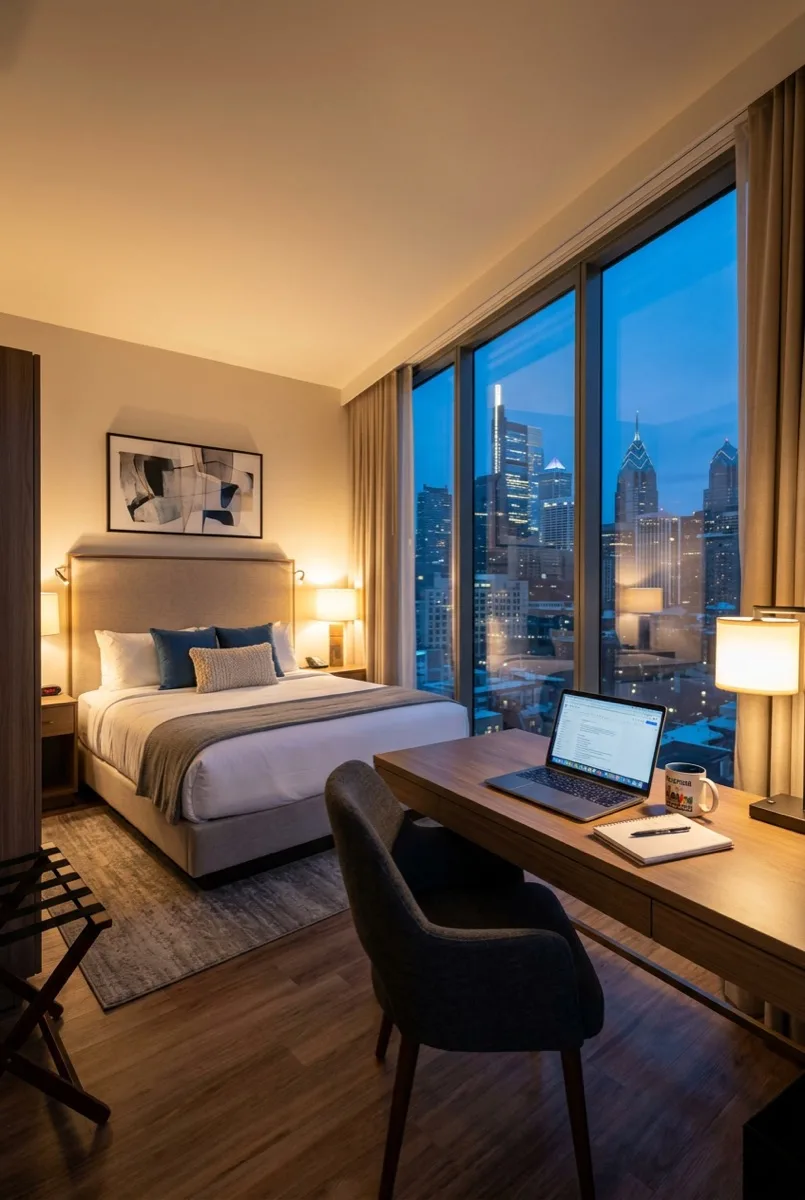
Guest Rooms
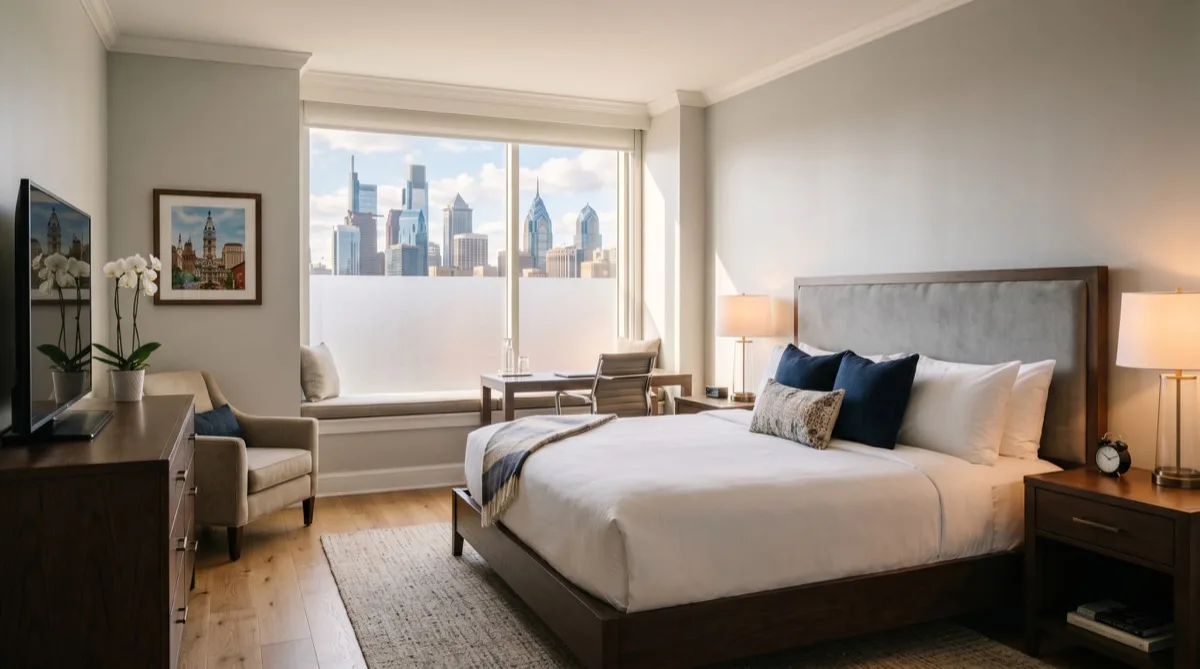
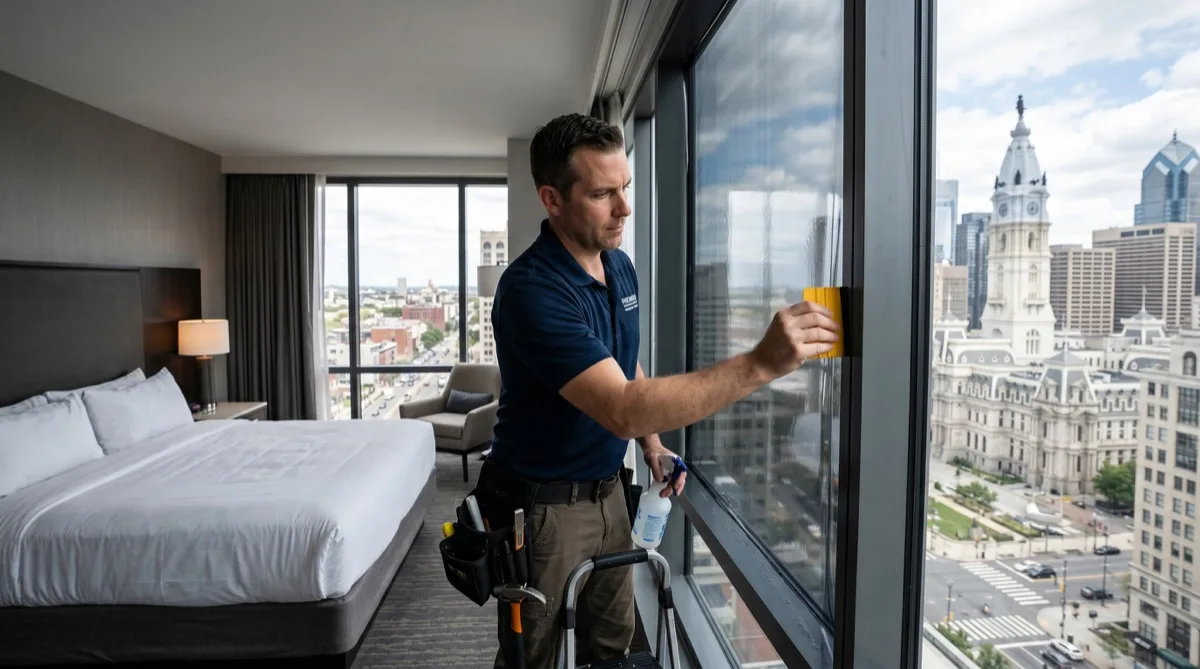
South- and west-facing rooms are the biggest problem area in most Philadelphia hotels. Solar control film cuts heat gain by up to 38%, eliminating the hot-room complaints that hurt review scores. UV blocking protects mattresses, drapery, and furniture from premature fading.
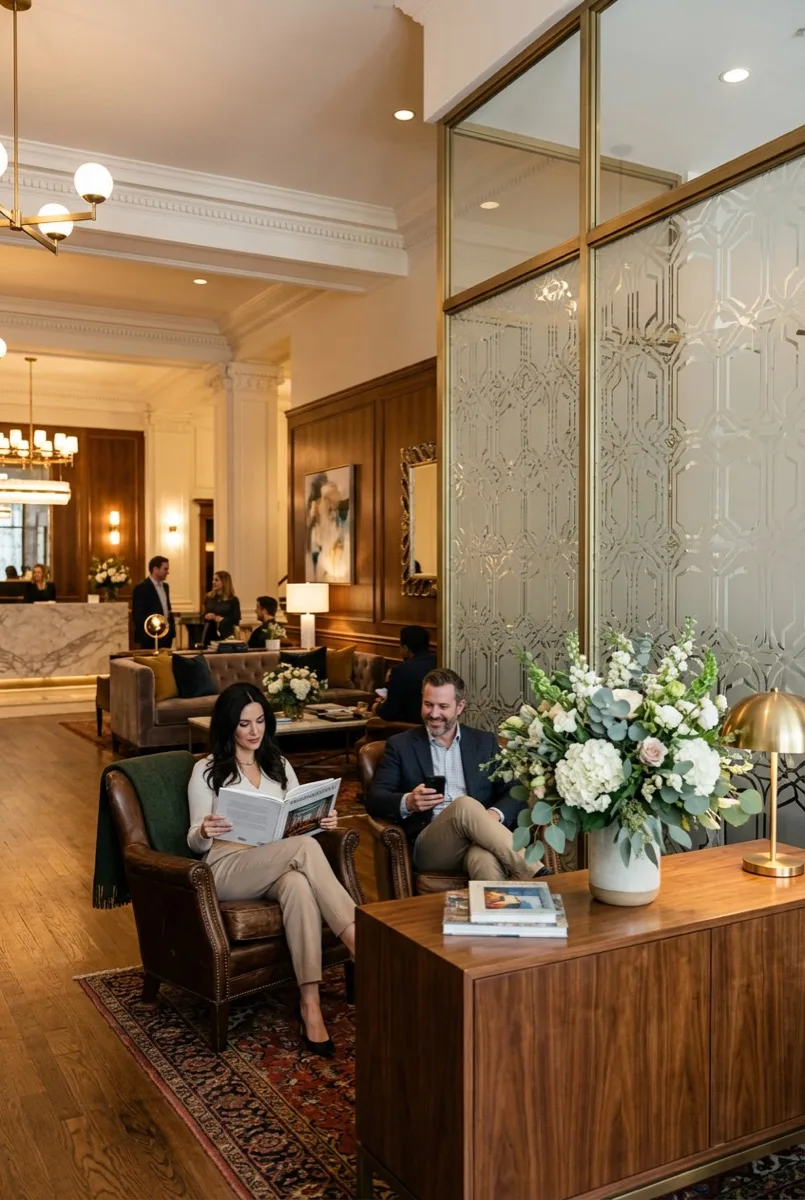
Lobby & Entrance
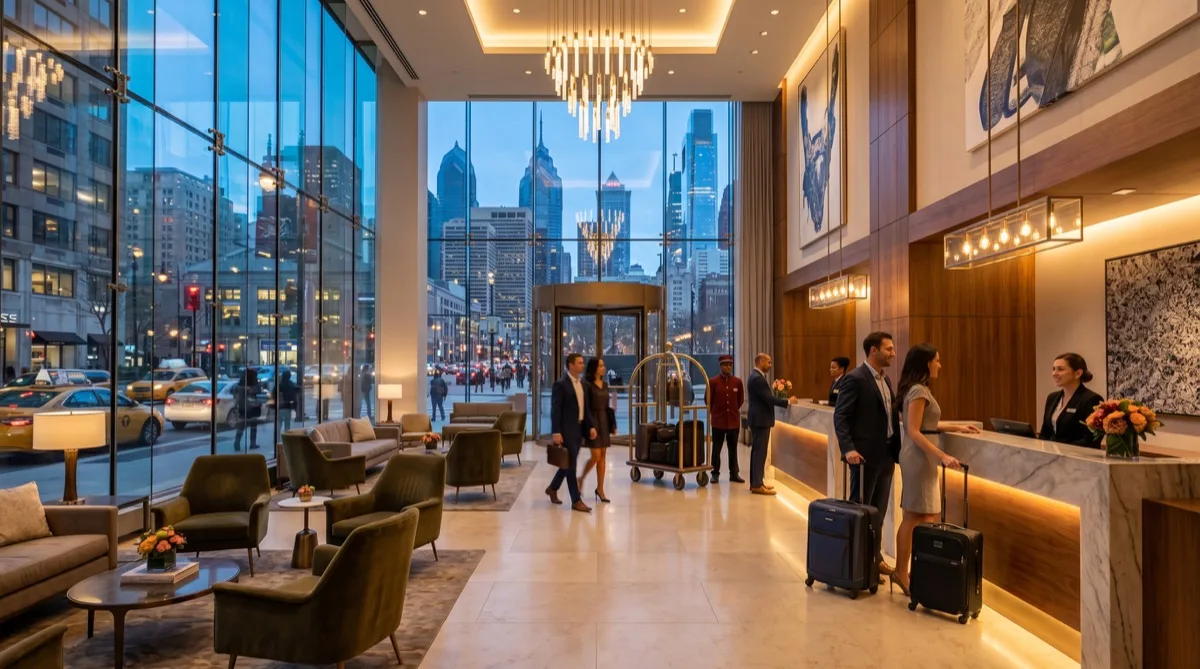
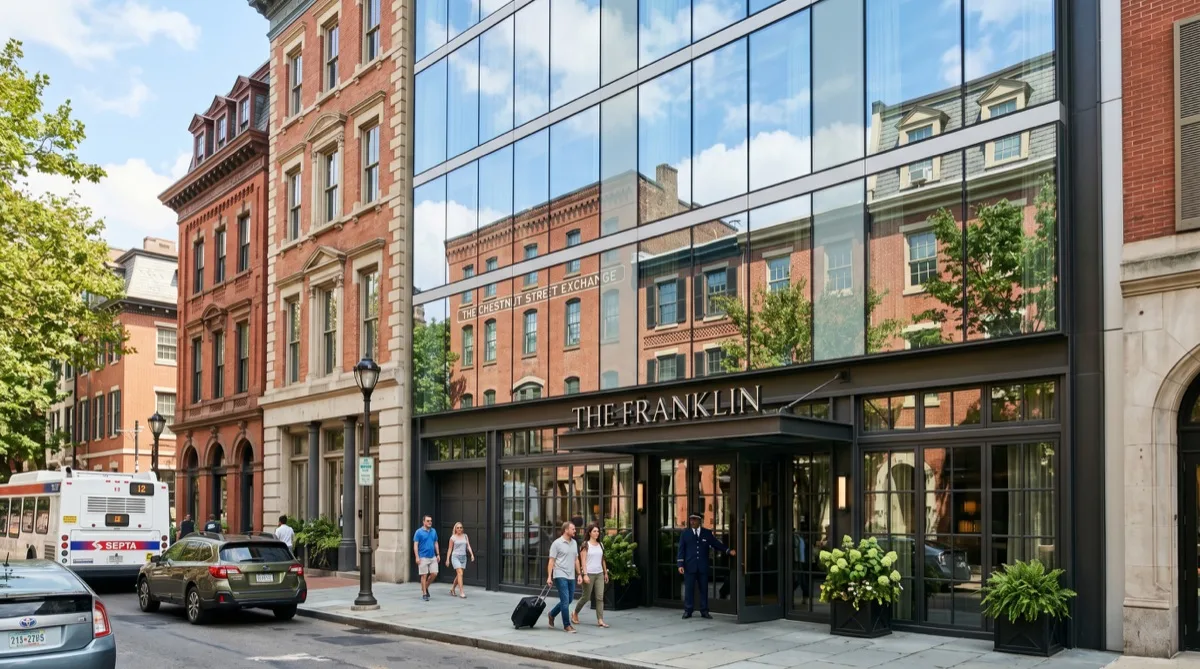
Floor-to-ceiling lobby glass makes a dramatic first impression — but it also creates a solar heat and glare problem your HVAC was never designed to handle alone. Solar control film maintains the open, light-filled aesthetic while dramatically reducing cooling demand at check-in peak hours.
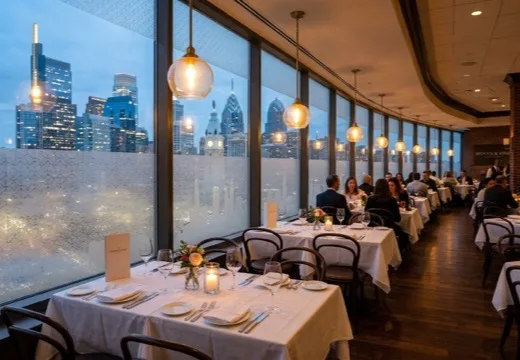
Restaurant & Bar
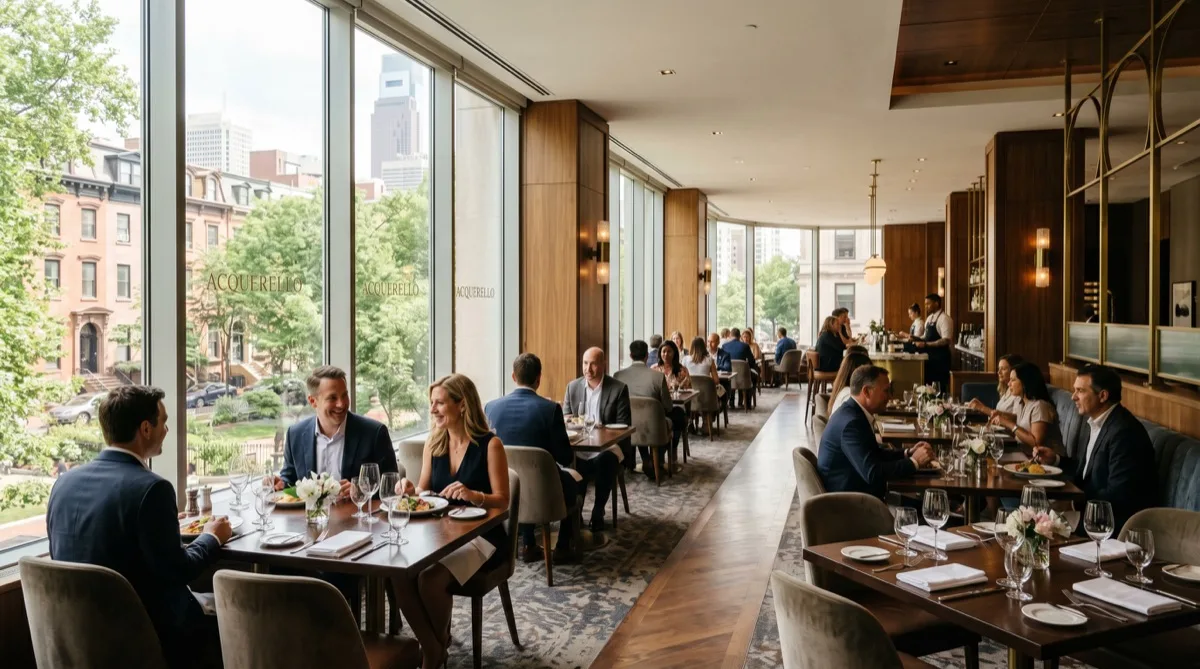
Afternoon dining and happy hour are peak revenue windows — and peak solar intrusion hours. Glare on tables and heat buildup near glass walls creates uncomfortable conditions that guests notice. Solar control and glare-reduction film keeps the atmosphere right without blocking the view your guests came for.
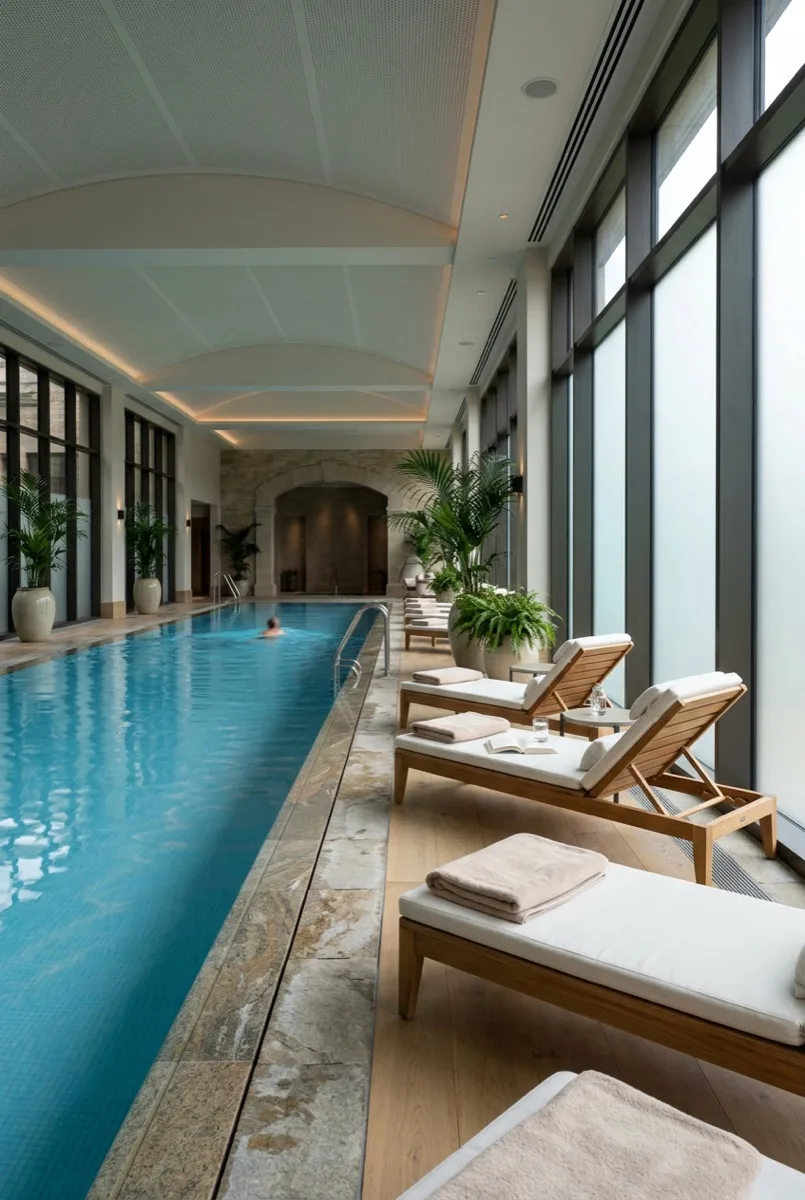
Pool, Spa & Fitness
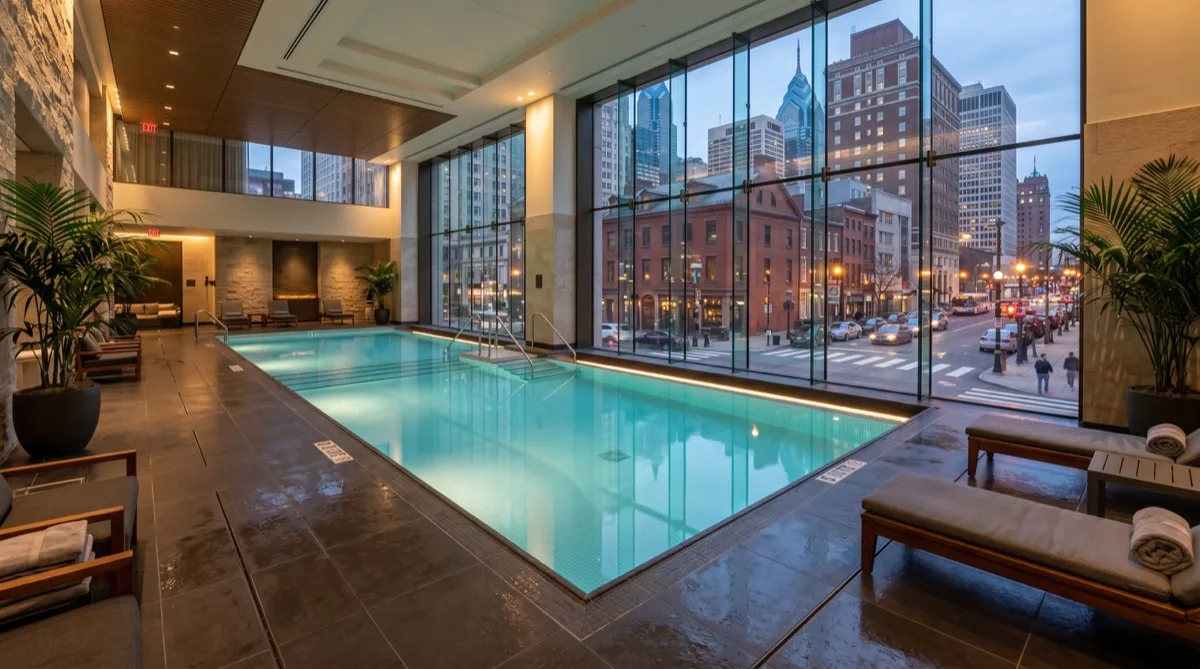
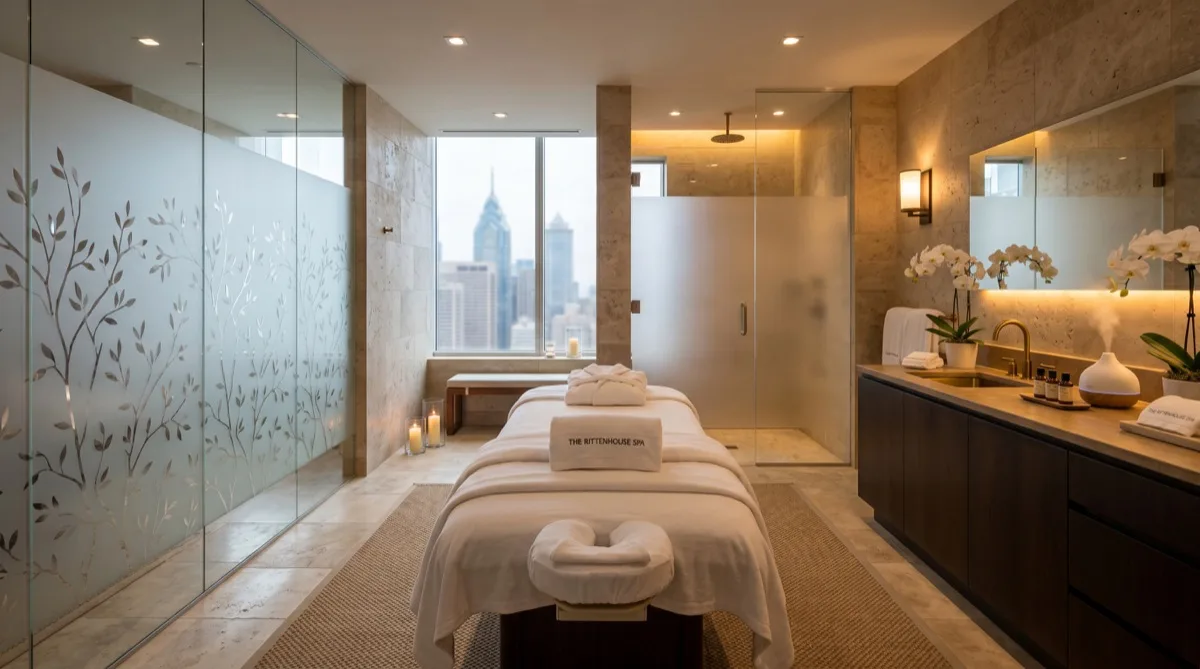
Glass-enclosed pool and spa spaces trap heat quickly and create privacy challenges. UV blocking protects guests using the space from cumulative UV exposure. Frosted and decorative film adds privacy for spa treatment rooms and changing areas without making the space feel enclosed.
Why do Philadelphia hotel managers install window film?
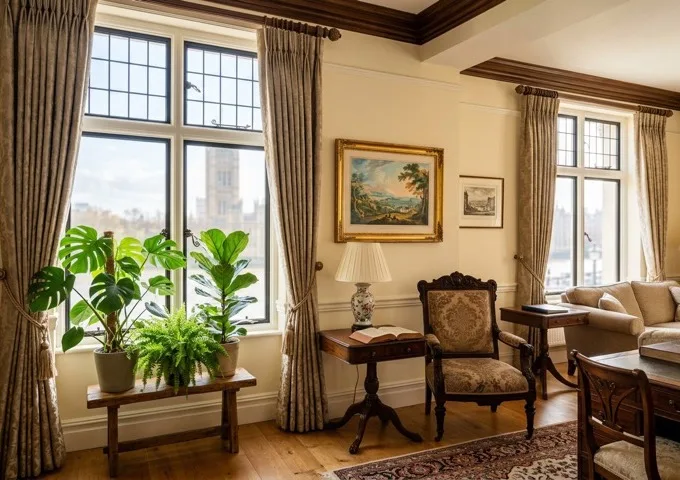
Stop replacing furnishings early — 99% UV blocked from day one
A south-facing suite outfitted with premium carpet, custom drapery, and upholstery can represent $10,000–$20,000 in furnishing investment. Standard architectural glass blocks almost no UV radiation. In high-sun rooms, that investment visibly fades in 2–3 years instead of the 7–10 year cycle north-facing rooms enjoy. UV-blocking window film stops 99.9% of UV from day one — bringing those rooms back in line with the rest of your inventory and eliminating the shortened replacement cycle that quietly drains your maintenance budget.
- Returns sun-facing rooms to the same 7–10 year furnishing replacement cycle as north-facing inventory
- Protects lobby artwork, restaurant furniture, and historic architectural elements too
- Reduces cumulative UV exposure for guests on multi-night stays in sun-facing rooms
- No visible change to room appearance — natural light stays; UV damage stops
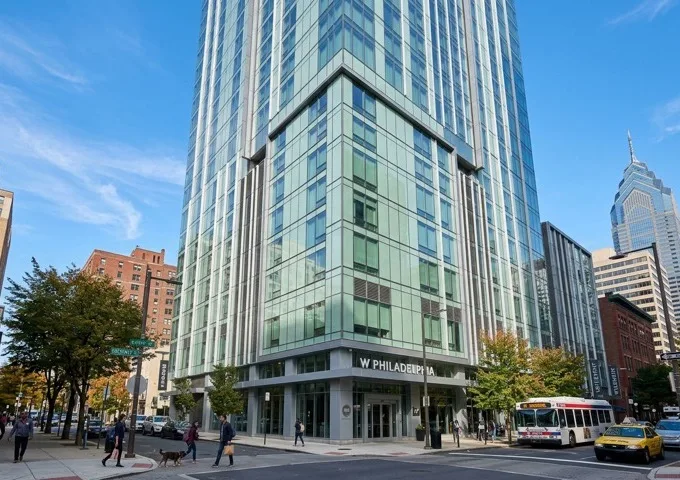
Cut the heat at the glass — not the thermostat.
An office can dial down its HVAC at 6pm and recover overnight. A hotel cannot — guest rooms run climate control around the clock. A west-facing room that absorbs solar heat all afternoon is still radiating at 9pm when a guest checks in. The HVAC has been running since noon. Solar control film stops the problem at the glass: 3M Prestige 70 cuts heat gain 38% while maintaining 70% visible light — rooms stay bright, HVAC load drops, and the DOE-estimated 25–35% of energy lost through inefficient windows starts working in your favor instead of against it.
- DOE: 25–35% of hotel building energy is wasted through windows — film fixes the source, not the symptom
- 3M Prestige 70: 38% less solar heat gain at 70% visible light — no tint, no view impact
- Typical hotel payback: 2–4 seasons; savings continue for the film's full 15-year warranty life
- No mechanical rooms, refrigerants, or service contracts — film needs no ongoing maintenance

The blackout-curtain problem — guests pay for the view, then close the drapes
Guests who booked a city-view room and paid extra for it expect to enjoy that view. When afternoon sun makes the TV unwatchable and the room uncomfortable, they pull the blackout drapes and don't open them again. "Beautiful views we never got to enjoy" is a real phrase in hotel reviews. Glare-reduction window film — like the Vista SpectraSelect VS70 — filters the harsh wavelengths responsible for visual discomfort while maintaining 70% visible light. The room stays open and bright. Guests get the view they paid for. The same film eliminates the afternoon glare that empties your best window tables during peak F&B hours.
- Guests who paid for city-view rooms actually enjoy those views all afternoon
- 70% visible light maintained — bright, open rooms without the harsh afternoon edge
- Eliminates the afternoon "hot table" problem in F&B spaces that loses window seating revenue
- Remote-work guests stay productive without relocating away from the window
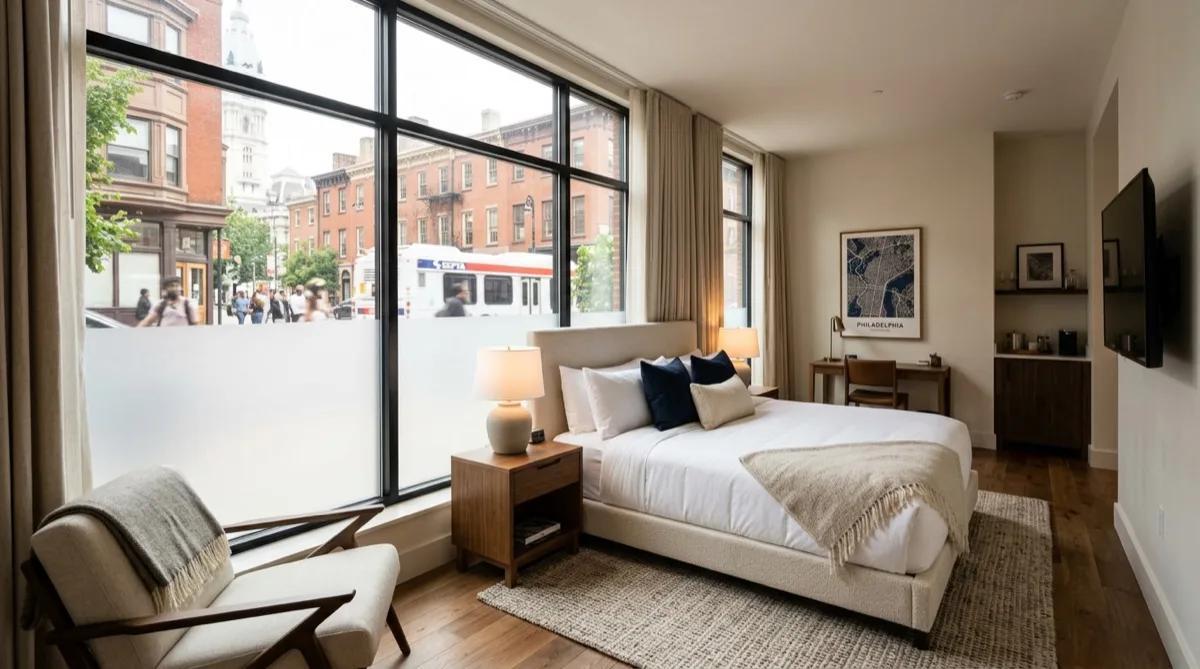
Keep the city view. Block the street-level stares.
Ground-floor guest rooms, street-level lobby glass, and poolside windows all share the same problem: visibility from outside creates a security and comfort issue that guests feel even when they can't articulate it. One-way mirror film provides exterior privacy during daylight hours while maintaining full outward views from inside. Frosted film provides all-day privacy for spa treatment rooms, changing areas, and street-level rooms on busy corridors.
- One-way mirror film: exterior privacy from street-level passersby, full outward views from inside
- Frosted film: all-day, all-night privacy for spa rooms, changing areas, and street-facing guest rooms
- Partial-panel frosting keeps the view intact while blocking street-level sightlines
- Decorative frosted patterns available to complement your hotel's aesthetic
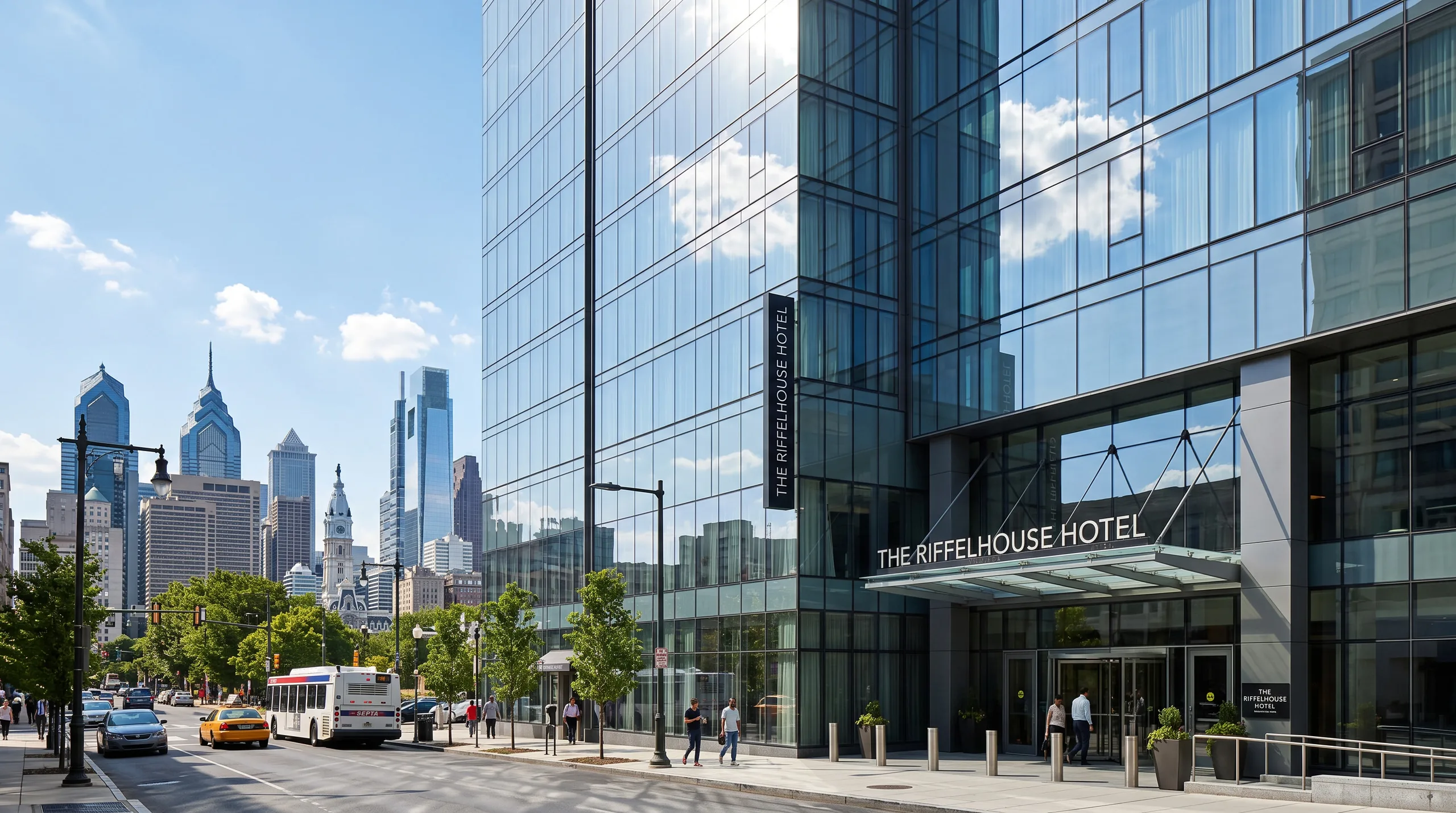
Solar Control Film. Keep Rooms Cool. Cut Energy Costs.
The south-facing suites that generate "too hot" reviews every summer. Solar control film stops the problem at the glass — blocking heat before it reaches the room so guests experience it the way it was designed to feel. 3M Prestige 70 and Vista SpectraSelect VS70 maintain 70%+ natural light. Guests notice the comfort. They don't notice the film.
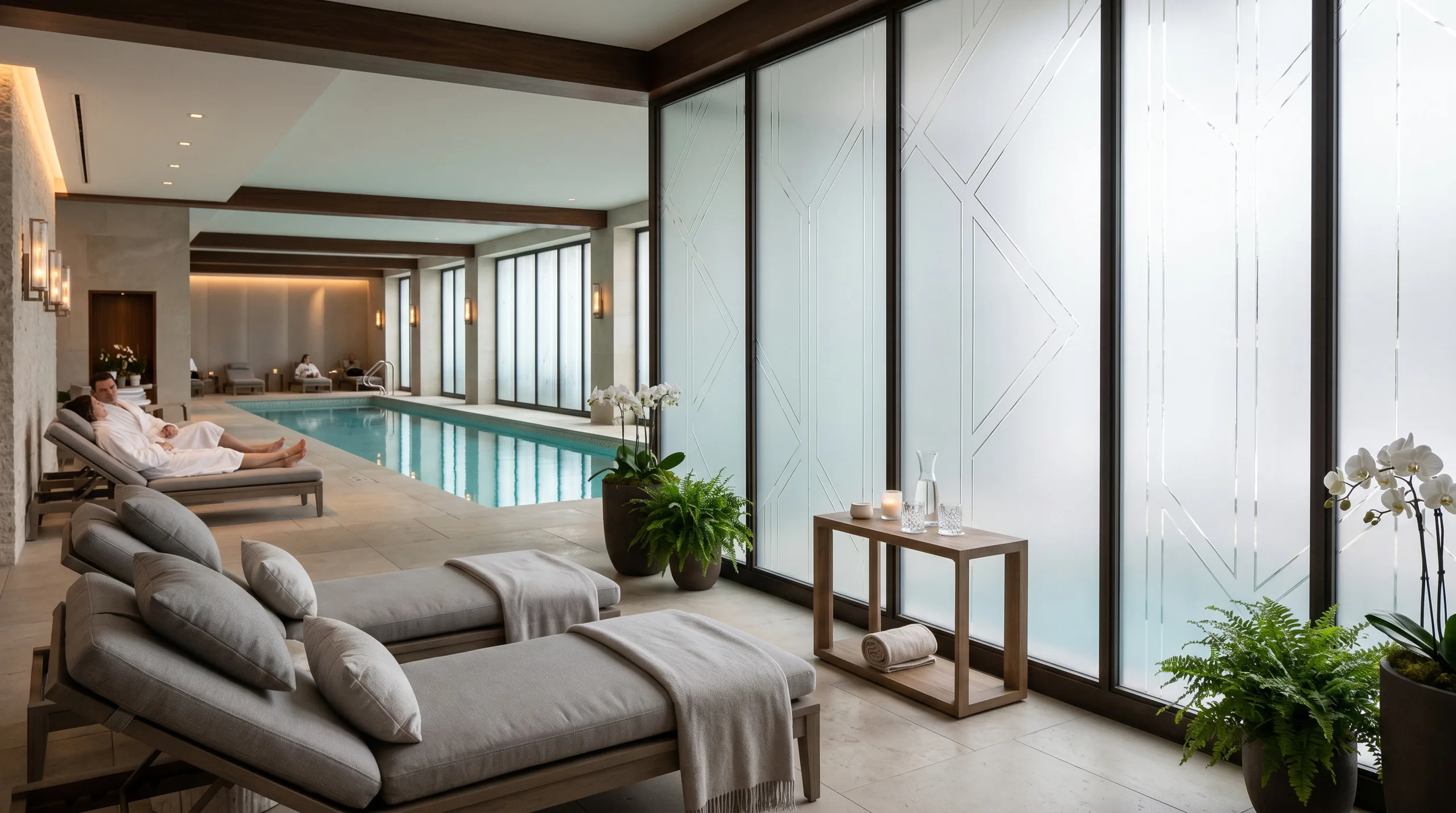
Privacy Film. Frosted. One-Way Mirror. Custom.
Frosted film provides all-day, all-night privacy for spa treatment rooms, changing areas, and ground-floor rooms on busy street corridors. One-way mirror film provides daytime privacy from outside while preserving outward views for guests inside. Decorative frosted patterns can match your brand aesthetic or complement historic architectural details.
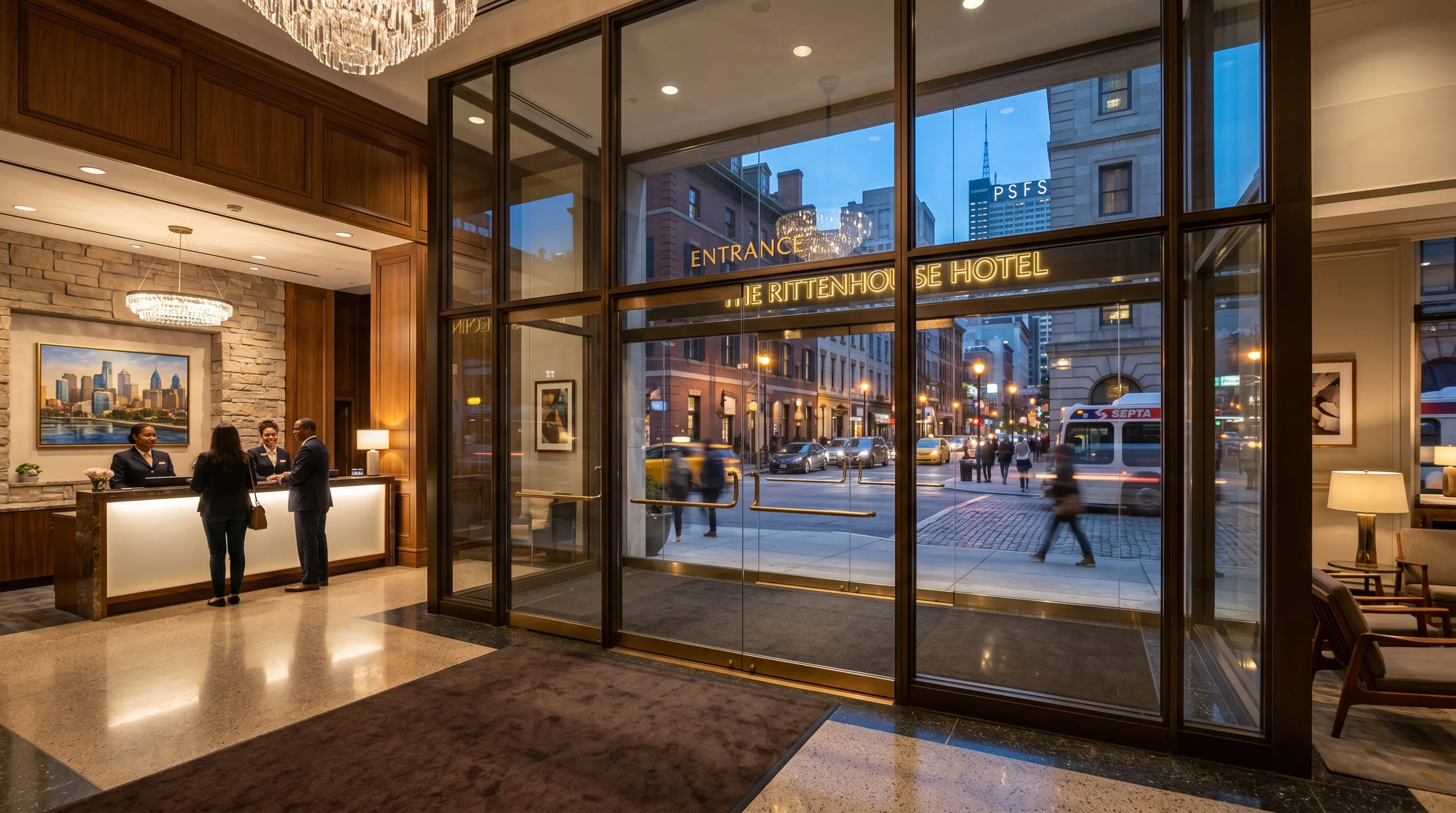
Security Film. Hold Glass Together When It Matters.
Security window film holds shattered glass in the frame on impact — dramatically reducing injury from flying fragments and slowing forced entry. The 3M ScotchShield Ultra S800 (8-mil micro-layered film) is certified to ANSI Z97.1 safety glazing standards and ASTM F1642. For Philadelphia hotels, it's most commonly applied to ground-floor guest room windows, lobby entrance glass, and stairwell glazing.
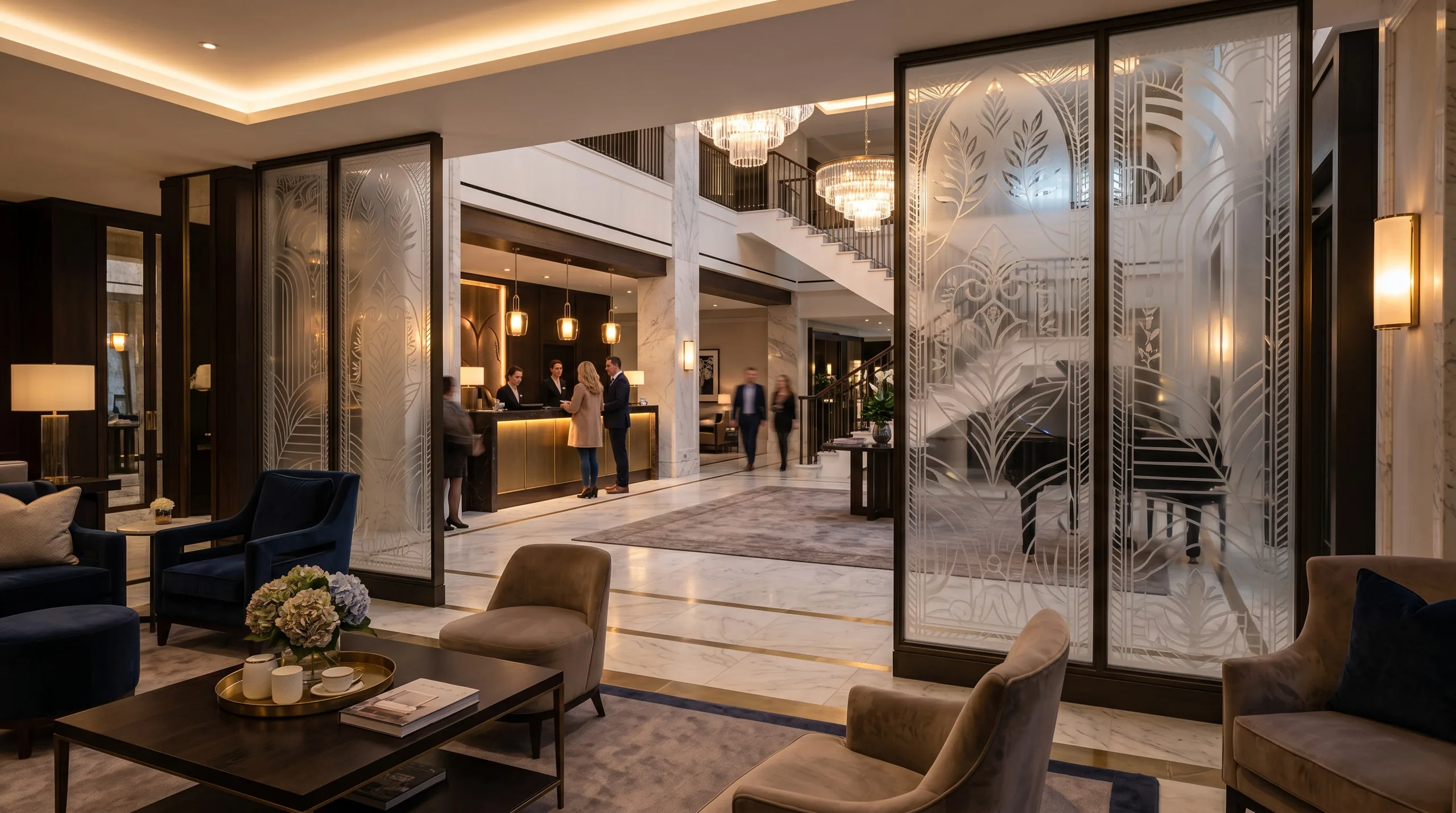
Decorative Film. Brand the Glass. Elevate the Space.
Lobby partitions, spa entrance panels, restaurant dividers, and elevator surrounds are all opportunities to reinforce your hotel's aesthetic. 3M FASARA and custom-cut decorative films turn plain glass into designed elements — no etching, no permanent modification, and fully removable when you renovate or rebrand.
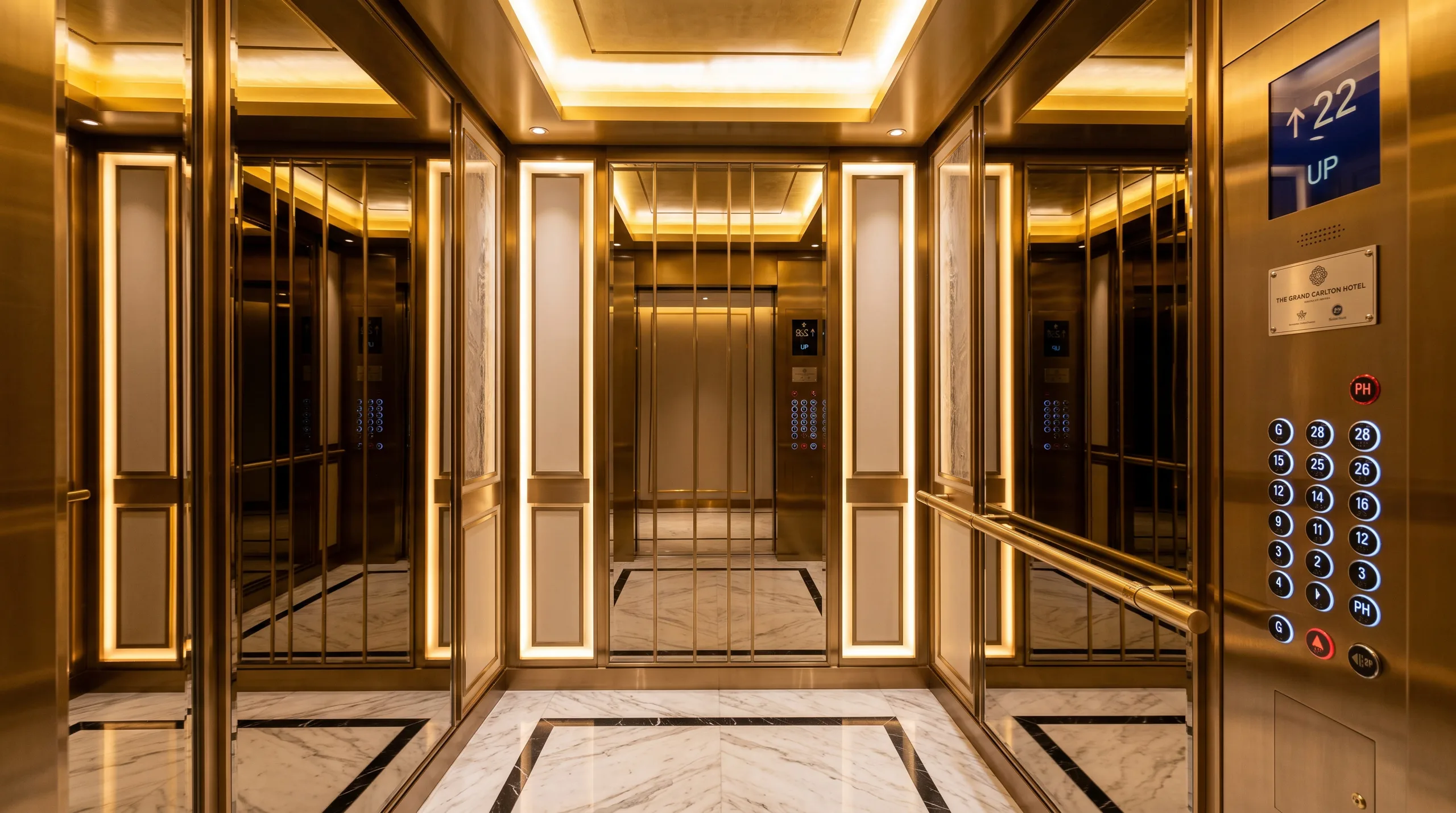
Anti-Graffiti Film. Sacrificial Layer. Instant Recovery.
Anti-graffiti film is a clear sacrificial layer applied to exterior glass surfaces — lobby entrances, street-level windows, mirrors, and elevator interiors. When scratched, etched, or tagged, you remove and replace only the film — not the glass. Replacement costs a fraction of new glass. Common in Center City Philadelphia hotels along Market and Chestnut streets.
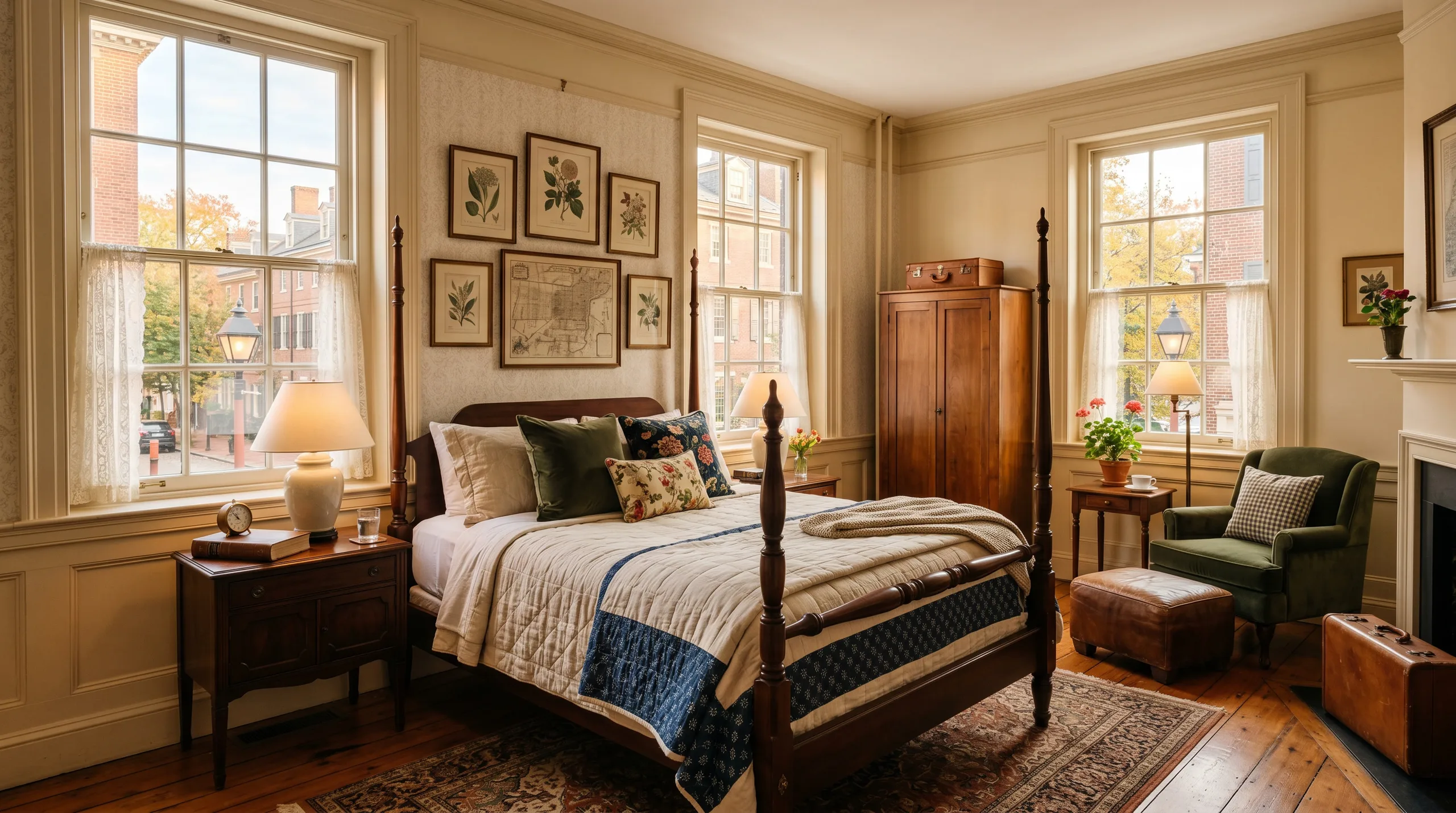
Low-E Film. Warm in Winter. Cool in Summer.
Old City, Society Hill, and Rittenhouse boutique hotels often sit in buildings with original single-pane windows — architecturally protected, thermally poor. Low-E film (3M Thinsulate CC75) fixes both problems: rejecting solar heat in summer and reflecting warmth back inside in winter. Essentially clear, no impact on the window's appearance, no structural work required.
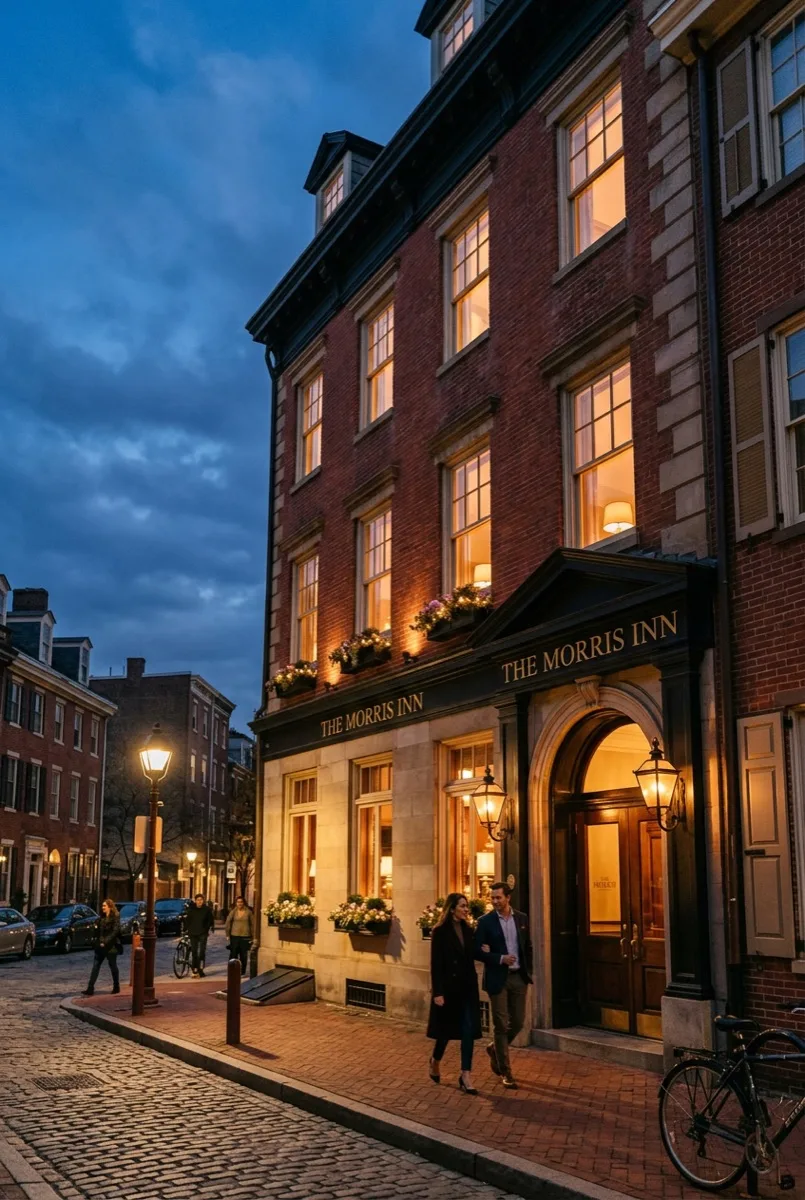
Center City Boutique Hotel.
Full-Property Solar Control.
Hotel Window Film Philadelphia — Our Work
Window Film Installed Across
Philadelphia Hotel Properties
From boutique Old City inns to full-service Center City properties — every hotel window film installation in Philadelphia is scoped, specified, and executed by our certified local team.
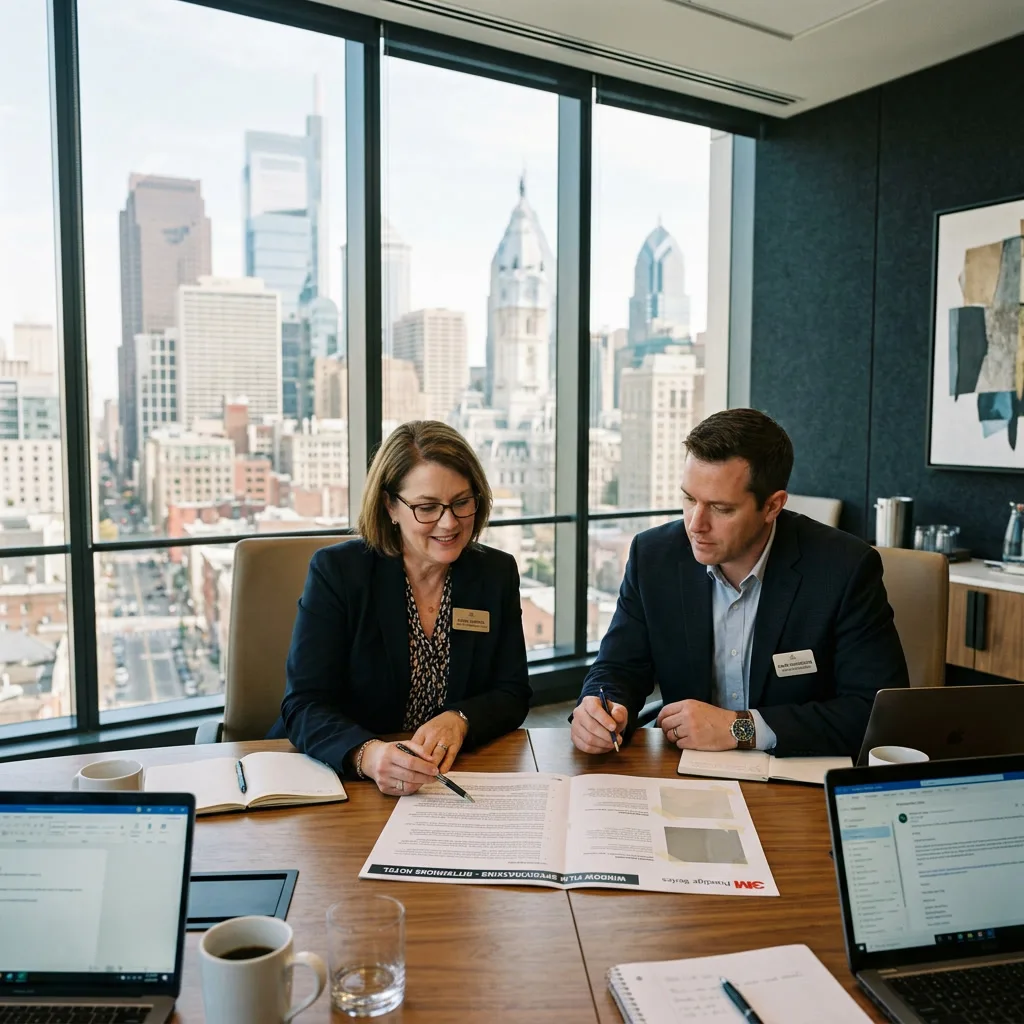
Manufacturer Resources
Hotel Window Film — Case Studies & Spec Data
Download official case studies, white papers, and technical data sheets from 3M, LLumar, and Vista — the window film brands we install in Philadelphia hotels. These documents contain verified performance data, energy savings measurements, UV and SHGC specifications, and real building case studies that you can share with ownership, facilities management, or your sustainability team.
- Solar Gard — Days Inn Hotel Window Film Case Study (energy savings & guest comfort results)
- LLumar — Resort Hotel Custom Window Film Case Study (decorative & solar control installation)
- 3M — Hotel Architectural Finishes Case Study (decorative film & surface renovation, Norm Air Fuji Hotel)
- 3M Commercial Window Film — Energy Efficiency for Hotels & Commercial Buildings (Brochure)
- LLumar Architectural Window Film — Solar Control Performance Data (VLT, SHGC, UV rejection specs)
- Vista SpectraSelect Architectural Window Film — Solar Control & Safety Specs (hotel guest room data)
From Philadelphia Hospitality Professionals

"We were getting comfort complaints in south-facing rooms every summer without fail. We tried everything — upgraded HVAC units, blackout shades, even rotating which rooms we assigned to guests who were staying multiple nights. The window film was the only thing that actually solved the root problem. First summer after installation, the complaints stopped."
"Our furnishings budget was being eaten alive by UV fading in the south tower. We were replacing drapery panels every two years in those rooms versus every five in the north-facing units. The window film paid for itself in avoided replacement costs within 18 months. That's before you count the energy savings, which are real and measurable."

"I was skeptical that window film could make a noticeable difference in an old building with single-pane windows. I was wrong. The rooms that used to require guests to close the blackout curtains by noon now stay comfortable with curtains open all afternoon. And the installation crew worked around our checkout schedule without a single complaint from housekeeping or guests."
Hotel Window Film Across Greater Philadelphia
Our installation crews are Philadelphia-based and experienced working in active hotel environments. We serve hospitality properties throughout the city and surrounding region — no travel surcharge within the standard service area.
Frequently Asked Questions
Honest answers about hotel window film for Philadelphia properties from specialists with over 15 years of hospitality installation experience.
Talk to a Specialist"Room was too hot" and "had to keep the curtains closed all day" are among the most common comfort complaints in hotel reviews — and they appear disproportionately from guests in south- and west-facing rooms in summer. Window film eliminates the source of those complaints: it makes those rooms comfortable at 2pm in July instead of forcing guests to choose between the view and a tolerable temperature. Clients have reported a measurable drop in heat-related room complaints the first summer after installation. Those are reviews that simply stop being written.
Our hospitality protocol works entirely around your occupancy. We install in rooms that are checked out that morning, coordinating directly with your front desk in real time. Checked-in rooms are skipped and rescheduled — no exceptions. Installation time per room varies depending on window size, quantity, and access. We provide a realistic project timeline in your site proposal. For lobbies and public areas we schedule during off-peak hours. We have completed full-hotel projects at active Philadelphia properties without a single guest complaint or room-move request.
A south- or west-facing room outfitted with premium carpet, drapery, and upholstery might represent $8,000–$20,000 in room furnishings. UV through untreated glass can visibly fade those materials in 2–3 years. The same furnishings in a north-facing room last 7–10 years on the same brand standard. For a 150-room hotel where 40 rooms face the problem exposure, the difference in replacement frequency is a significant budget line. Window film — which costs a fraction of one room refurnishing — returns sun-facing rooms to the same furnishing lifecycle as the rest of your inventory.
No — and this is the most common pre-installation concern from general managers. Modern spectrally selective films (3M Prestige 70, Vista SpectraSelect) are virtually invisible. No tint, no reflectivity change, no impact on the view. The room looks identical. It simply stays comfortable. The only way a guest would notice is if you told them the film was there — or if they noticed they could leave the curtains open all afternoon for the first time.
The U.S. Department of Energy estimates that 25–35% of wasted building energy is lost through inefficient windows. For a hotel, that loss compounds differently than in an office: guest rooms run HVAC 24/7. Solar control film addresses the problem at the glass rather than the thermostat. The 3M Prestige 70 reduces Solar Heat Gain Coefficient from 0.81 (untreated single-pane) to 0.50 — a 38% heat gain reduction. Typical payback for Philadelphia hotel properties is 2–4 years on the film investment.
3M, LLumar, and Solar Gard carry 10–15 year manufacturer warranties on commercial hotel films, covering delamination, bubbling, cracking, and significant color shift. We provide our own labor warranty on every installation and document each project with film type, specification sheet, installation date, and square footage so your maintenance records are complete for the full warranty period.
Yes — energy-performance improvements from solar control and Low-E window film are documentable and can contribute to energy management certifications. We provide written verification of each film's thermal specifications — SHGC, U-factor improvement, UV rejection percentage — suitable for energy audit submission or sustainability reporting packages. Some hotel flags and management companies have sustainability scorecards where these improvements count directly.
Yes — brand standards for glass tint, exterior reflectivity, and VLT range are factored in from day one. We have worked with properties where franchise agreements specify allowable VLT ranges or restrict dual-reflective finishes. We bring samples to site visits, review brand standards with your property team, and specify only films within approved parameters. For independent boutique hotels, we coordinate with your designer if appearance consistency across the property matters.
Solar control film is optimized for summer — it rejects incoming solar heat before it enters the room. Low-E film does both: rejects summer heat AND retains winter warmth by reflecting interior radiant heat back inside rather than letting it escape through the glass. For properties with newer double-pane glass, solar control is typically the right choice. For historic and boutique hotels with older single-pane windows, Low-E film (3M Thinsulate CC75) delivers a larger performance gain across both seasons — which matters in Philadelphia's Zone 4A climate.
The assessment is free. Duration depends on property size and complexity — we walk the property and assess each exposure, glass type, and space, noting window treatments, historic or brand constraints, and your priority problem areas. We then deliver a written proposal with specific film recommendations per zone, performance data (SHGC, VLT, UV rejection), and square footage. Most GMs use the proposal to compare the investment against current furnishing replacement costs or HVAC spend — and make the decision from there.
Ready to Transform Your Philadelphia Hotel?
Get a free hospitality site assessment — we'll assess your glass, your guest room exposure, and your energy goals, and give you a written proposal with verified performance data. No obligation, no pressure. We work around your schedule and your guests.