
Library & Museum Window Film
for Philadelphia Museums & Librariesfor Philadelphia Art Museumsfor Philadelphia Librariesfor Philadelphia's History Museumsfor Philadelphia University Archivesfor Philadelphia Science Centers
Museum window film for Philadelphia and library window film for Philadelphia institutions supports UV preservation, glare control for visitors, collection climate management, and security for the city's museums, libraries, archives, and science centers.
Trusted window film guidance for Philadelphia cultural, civic, educational, and public facilities




Philadelphia's Greatest Collections Face One Common Threat: Unprotected Glass
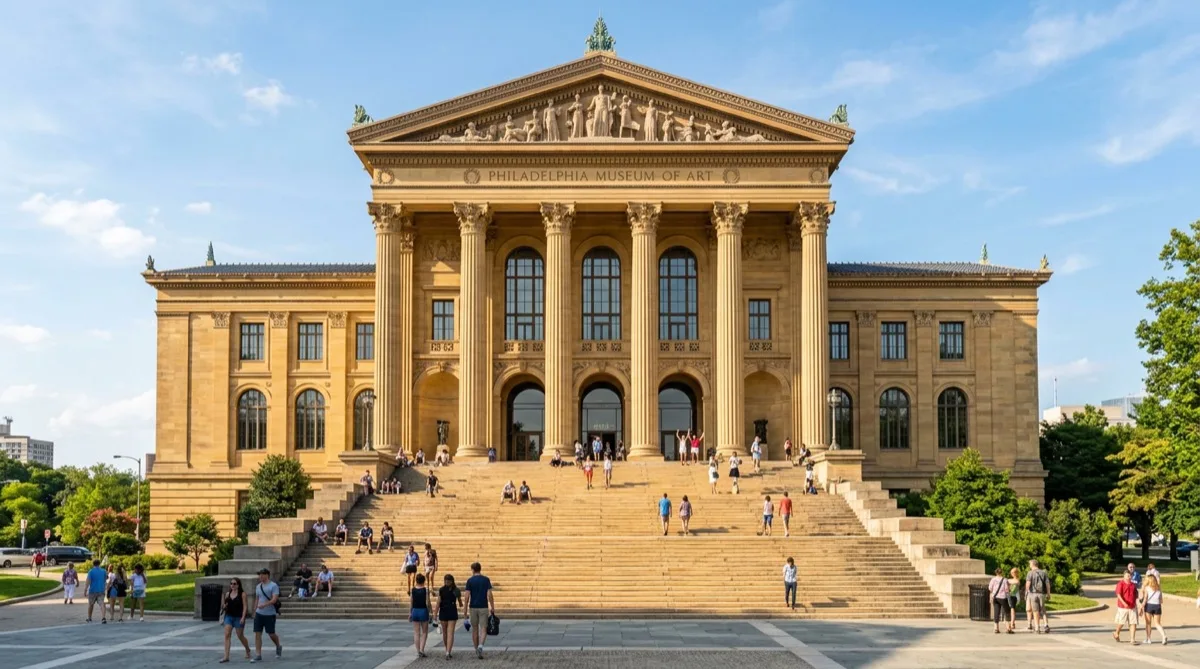
Philadelphia has one of the greatest museum concentrations in the United States, from the Barnes Foundation and Philadelphia Museum of Art to the Franklin Institute, Rodin Museum, and Penn Museum. These buildings welcome daylight, but untreated glass exposes artifacts, textiles, paper, photographs, and exhibit materials to cumulative damage.
The Free Library of Philadelphia operates 54 branches, each with its own mix of reading rooms, circulating collections, public computers, community spaces, and rare materials. Library window film for Philadelphia branches reduces glare for patrons, blocks damaging UV, and helps facilities teams manage solar heat through older and modern glazing alike.
UV damage to artifacts and collections is irreversible, which is why conservation teams reference American Institute for Conservation standards when evaluating daylight exposure. As a 3M Certified Dealer, we specify museum window film for Philadelphia institutions with documented UV rejection, visible light transmission, security, and energy performance data.
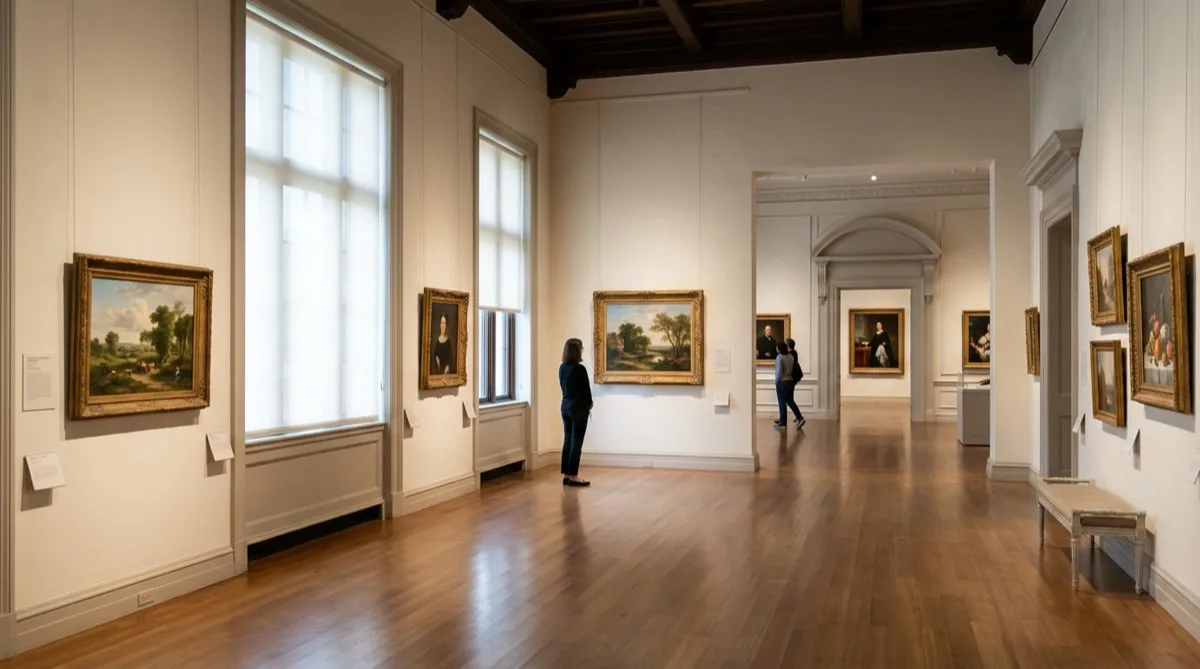
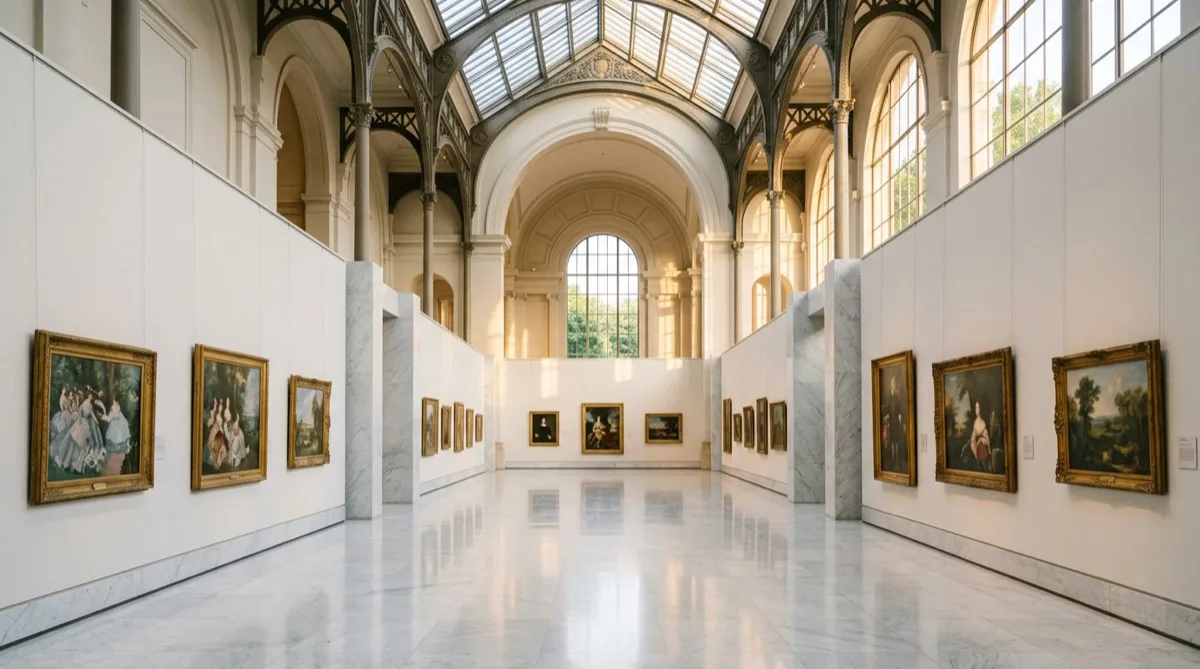
Sunlight Is the Invisible Threat Inside Philadelphia's Greatest Collections
UV radiation causes irreversible fading of pigments, textiles, paper, and organic materials. Even low-UV daylight creates cumulative exposure over years of display, storage, research, and public use. For institutions with large glass facades along the Parkway and throughout the city, the threat is built into the architecture.
- UV exposure breaks down pigments, dyes, lignin, binders, and organic materials that cannot be restored to original condition.
- Visible daylight and solar heat continue to stress collections even when glass blocks some UV by itself.
- Museums with broad glazed entrances and gallery-adjacent windows are particularly vulnerable to solar gain and washed-out exhibits.
- Library reading rooms with poor glare control become hard to use in afternoon light, especially at tables near south- and west-facing glass.
Conservation-Grade Performance for Philadelphia's Collections
One glass upgrade can support preservation, visitor comfort, facility performance, and security.
99% UV Blocked
Meets AIC conservation standards for artifact protection and long-term collection care.
Glare Eliminated
Visitors can view artwork, read labels, study, and use public computers without eye strain.
3M Certified Dealer
Only certified installer serving Philadelphia museums with documented product specifications.
20-30% Energy Savings
Typical cooling cost reduction for large glazed institutions using solar control film.
Window Film for Every Philadelphia Museum and Library
Different collections, buildings, and public spaces need different combinations of UV rejection, glare control, energy performance, privacy, and security.
Art Museums & Galleries
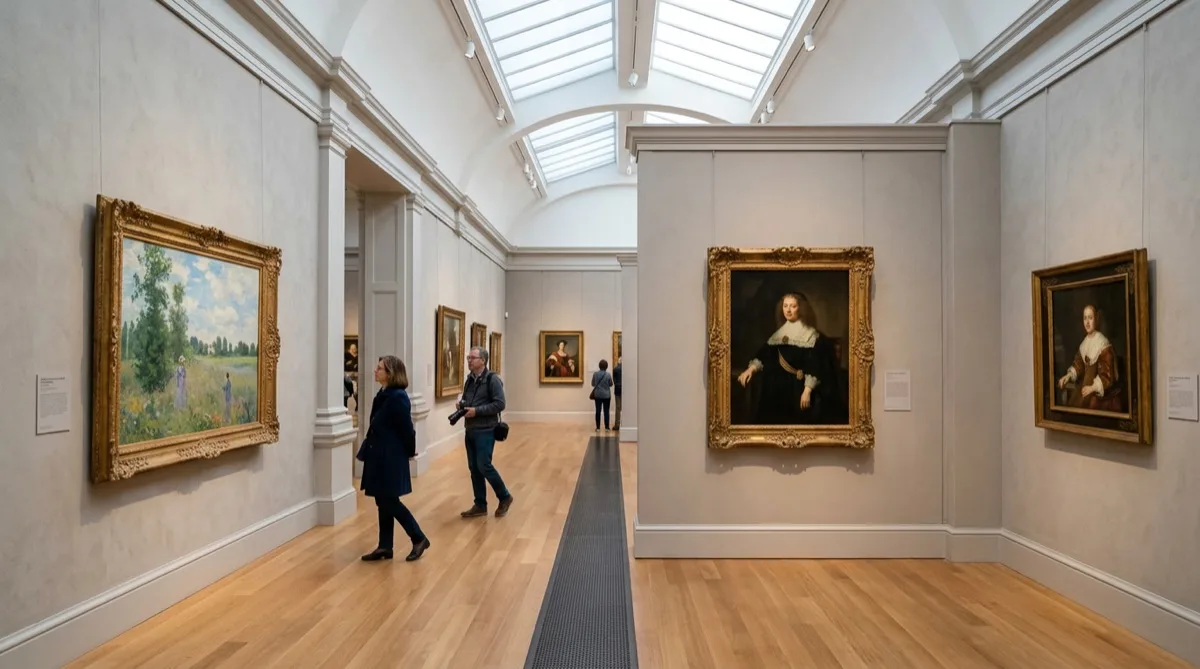
Gallery windows are the primary UV risk for permanent collections. Conservation-grade UV film blocks 99% of ultraviolet radiation — the threshold recommended by the American Institute for Conservation — while glare reduction film eliminates the wash-out that makes artwork hard to view. Both can be specified in a single coordinated installation.
Public & Branch Libraries
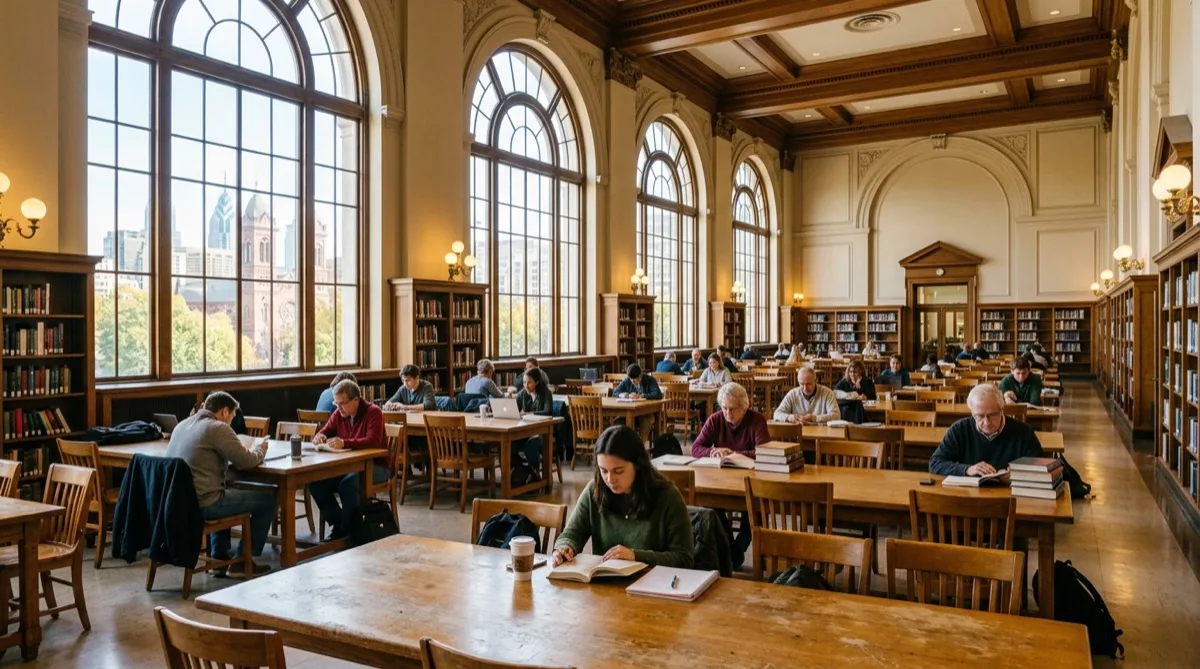
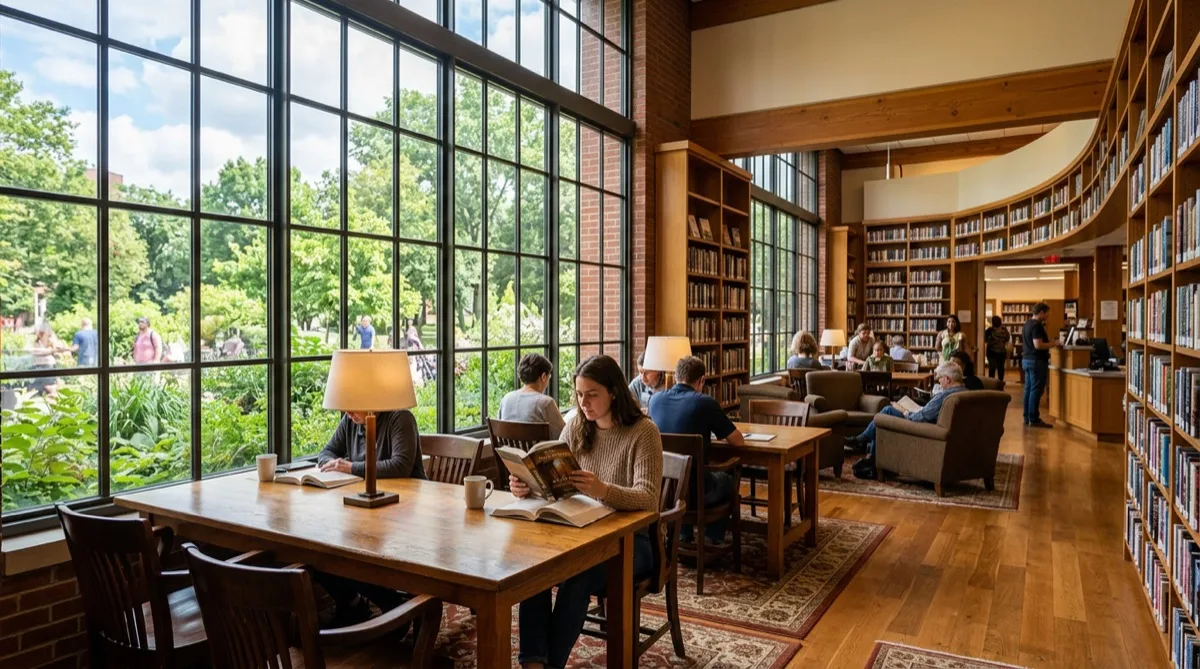
Afternoon glare on reading tables and computer screens is the most common complaint — glare reduction film reclaims those spaces without darkening the room.
History & Science Museums
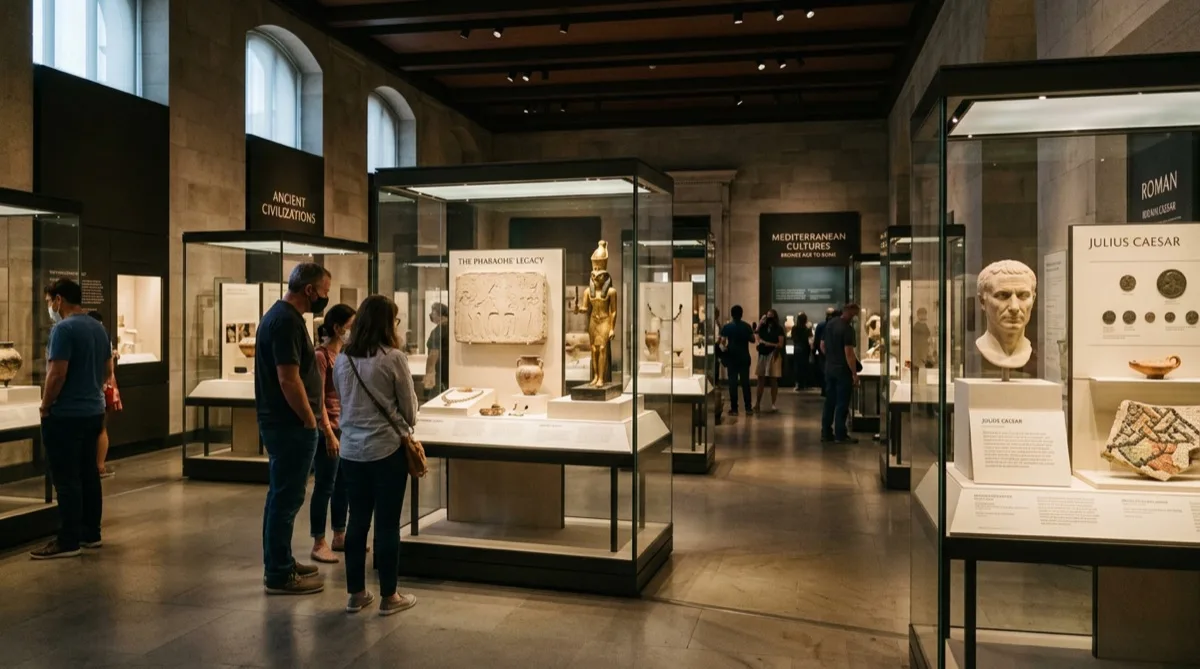
Organic artifacts — textiles, paper, leather, natural specimens — are especially vulnerable to UV. Conservation film protects exhibits without altering gallery light quality.
University Libraries & Research Collections
Research libraries face a distinct challenge: faculty and graduate students need natural light for long work sessions, but rare book and manuscript collections near windows require strict UV control. We specify different films for reading and collection zones in the same installation.
Science Centers & Planetariums
Interactive science exhibits and planetarium lobbies require controlled daylight. Solar control film reduces glare on interactive screens and exhibit panels while maintaining the bright, energetic atmosphere that engages visitors of all ages.
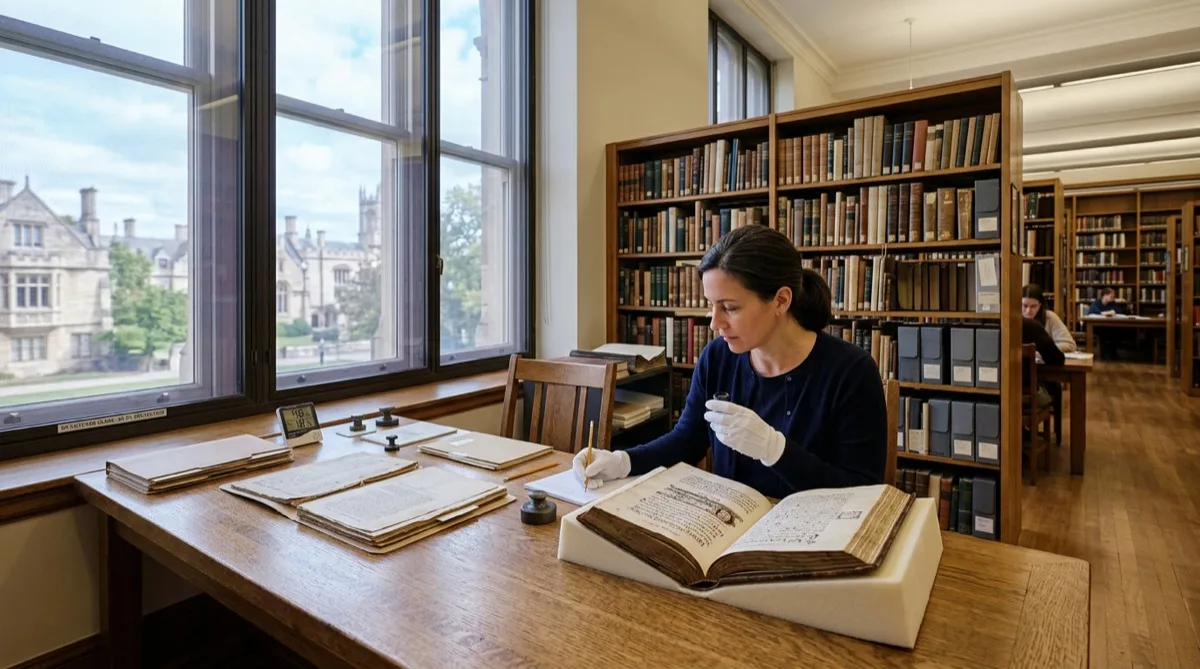
Archives & Special Collections
AIC-referenced UV performance documentation, reversible installation for landmark buildings, and full compliance records for collection care and preservation review.
How does window film solve what costly glass replacements cannot?
Museum window film for Philadelphia institutions and library window film for Philadelphia branches solve preservation, visitor comfort, energy, and security problems inside the existing glass.
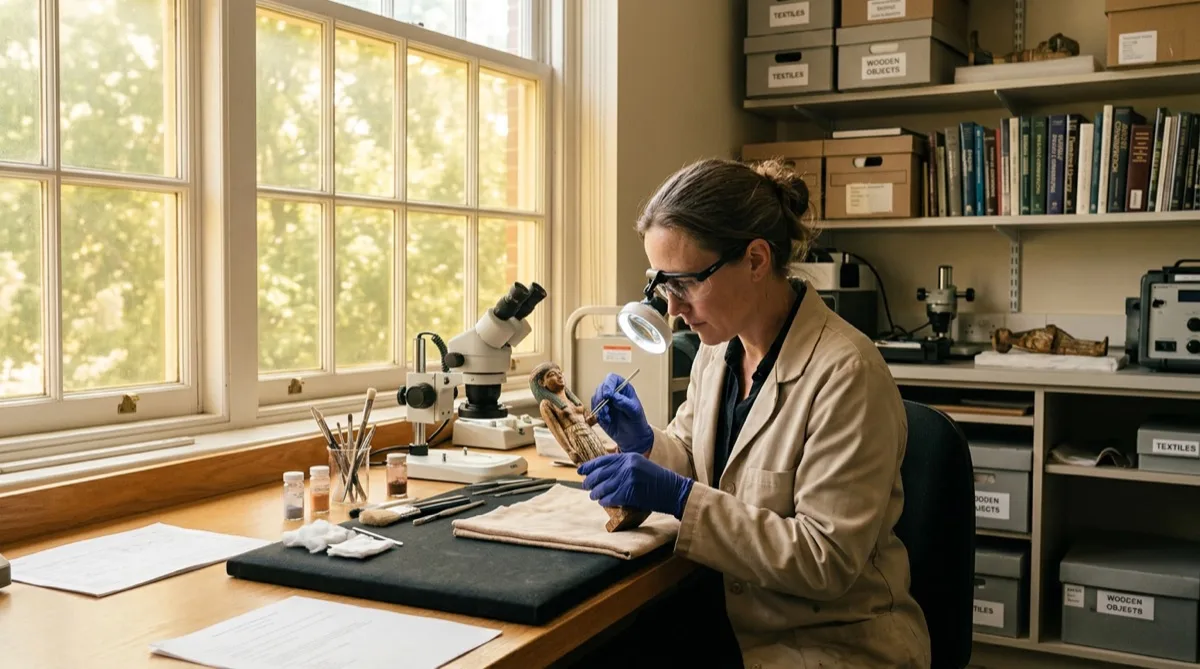
Block 99% of UV Radiation to Meet AIC Conservation Standards
UV radiation is the primary cause of irreversible fading in museum collections. The American Institute for Conservation recommends UV exposure below 75 lux and UV radiation below 10 uW/lm for sensitive artifacts, textiles, paper, photographs, and organic materials.
Window film achieves 99% UV rejection, making it the most cost-effective path to AIC-referenced compliance without replacing windows. Learn more about UV-blocking window film in Philadelphia and review conservation guidance from the American Institute for Conservation.
- Protects pigments, textiles, paper, photographs, and organic materials.
- Clear films preserve visible appearance while blocking damaging ultraviolet radiation.
- Documentation supports collection care, facilities, and preservation review.
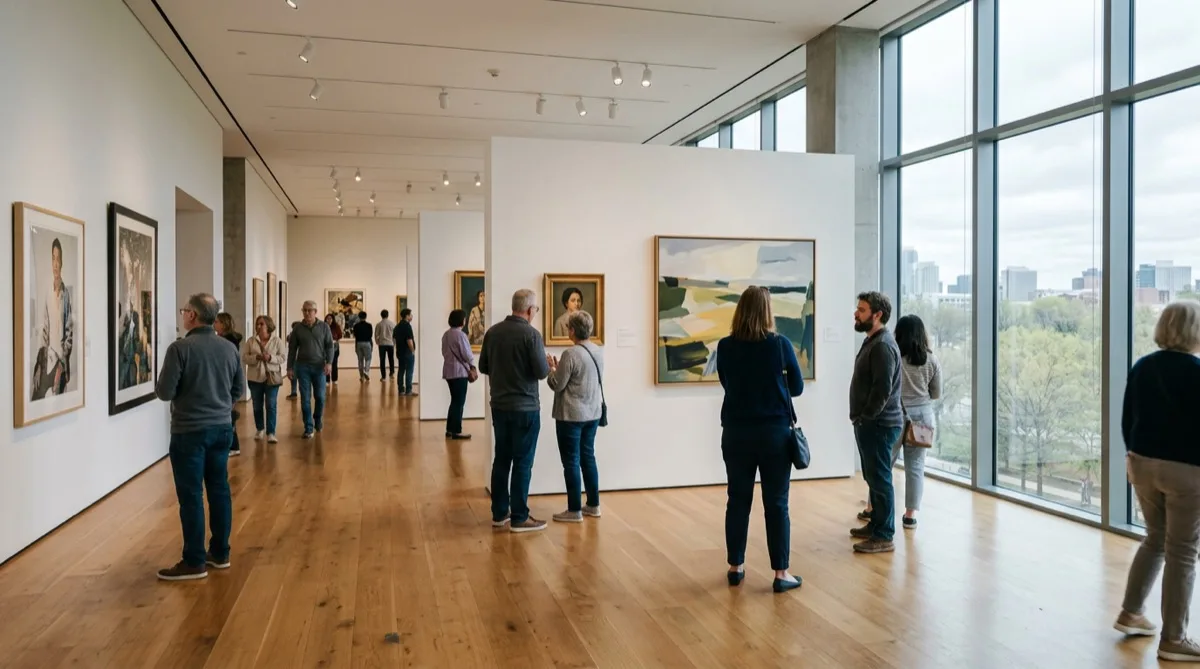
Eliminate Glare Without Losing the Natural Light That Makes Collections Come Alive
Glare from uncontrolled sunlight washes out artwork, exhibit labels, display screens, and reading tables. In public libraries, afternoon light can make study areas unusable just when patron demand is high.
Glare reduction film cuts visible glare by 70-90% while maintaining the color quality visitors need to appreciate collections. Museum directors report measurable improvement in dwell time when gallery glare is resolved; the room stays daylit, just without the harshness.
- Improves artwork viewing, label reading, research tables, and public computer areas.
- No blackout effect; natural light remains part of the visitor experience.
- Useful in galleries, reading rooms, classrooms, lobbies, and exhibit halls.
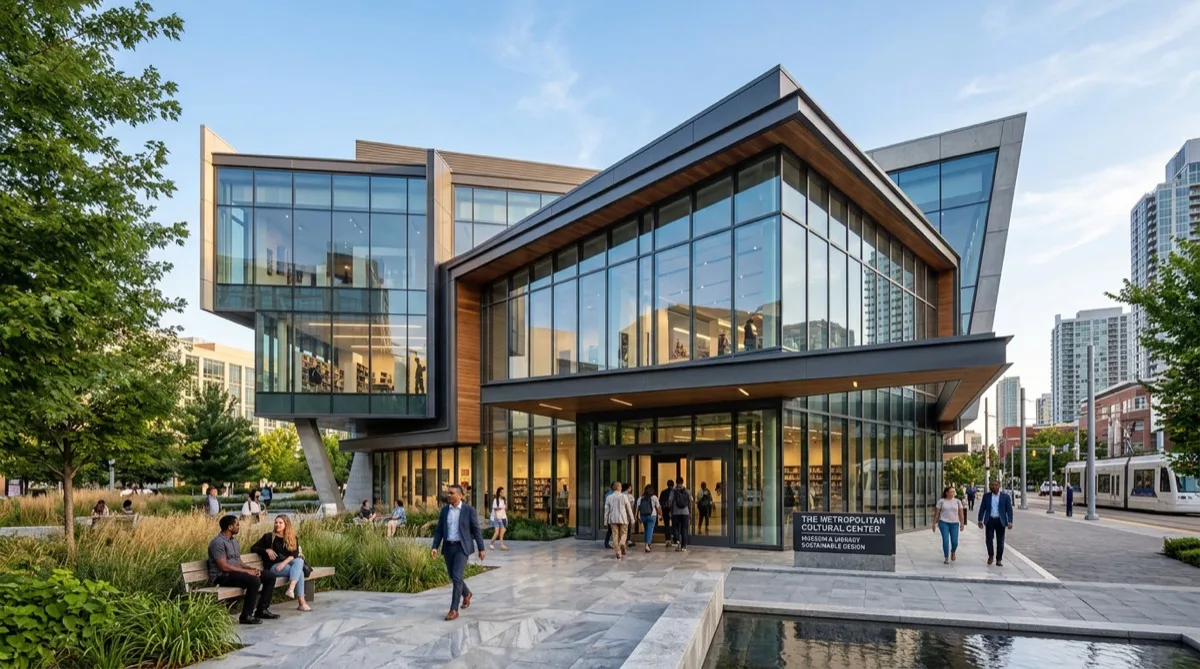
Reduce the HVAC Loads That Strain Collection Climate Control Systems
Museums and libraries run HVAC continuously to maintain collection-safe humidity and temperature ranges, often 68-72°F and 45-55% RH. Solar heat gain through large glass facades directly stresses those systems and makes localized hot zones harder to control.
Solar control film rejects up to 86% of solar heat gain before it enters the building, reducing HVAC load and energy costs. Many institutions see payback within 3-5 years; review energy-saving window film options and IMLS guidance on sustainable library facilities.
- Supports temperature and humidity stability near glazed facades.
- Reduces solar heat at the glass before it becomes an HVAC load.
- Useful for large glazed lobbies, reading rooms, atriums, and gallery-adjacent windows.
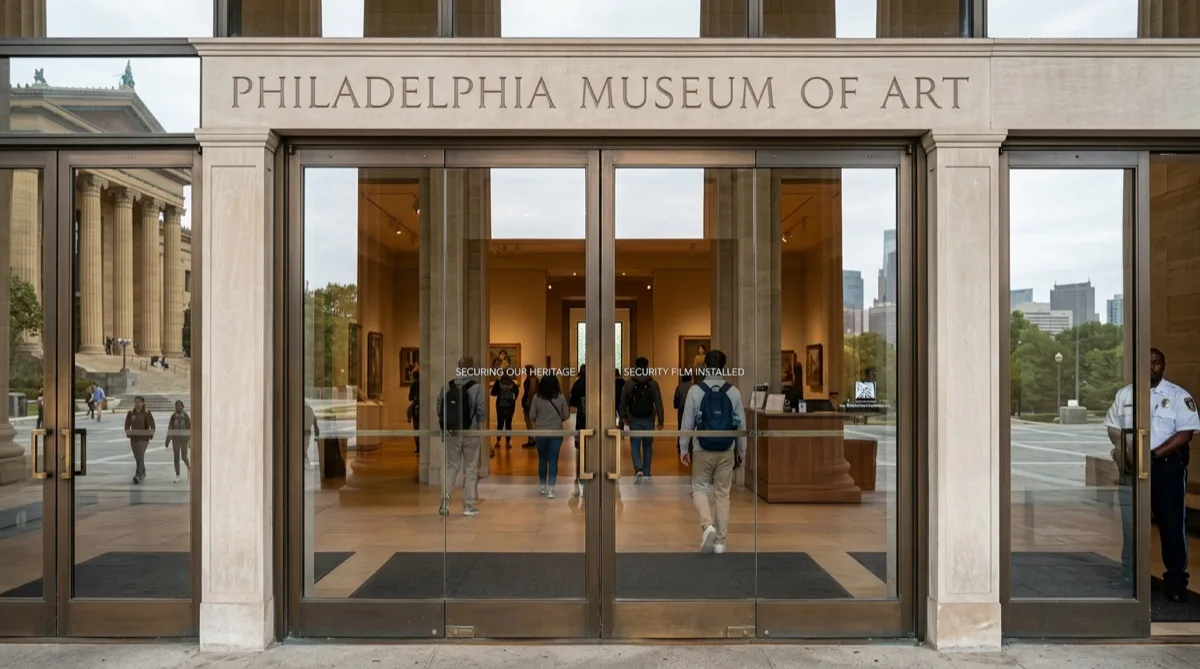
Security Film That Protects Collections and Visitors at Every Entry Point
Museums and libraries face smash-and-grab theft, vandalism, and forced entry risks, especially at street-level entry glass, ground-floor windows, and glass-enclosed special collections. Security film holds shattered glass together, delaying entry and reducing flying shards.
For display cases, staff areas, and public-facing glass, safety and security window film provides an additional protective layer while maintaining visibility. Film can be specified alongside UV conservation goals for a single coordinated glass protection package.
- Helps delay forced entry at doors, storefront glass, and vulnerable windows.
- Reduces injury risk from flying glass fragments in public areas.
- Coordinates with UV, solar, and privacy requirements for institution-wide specifications.
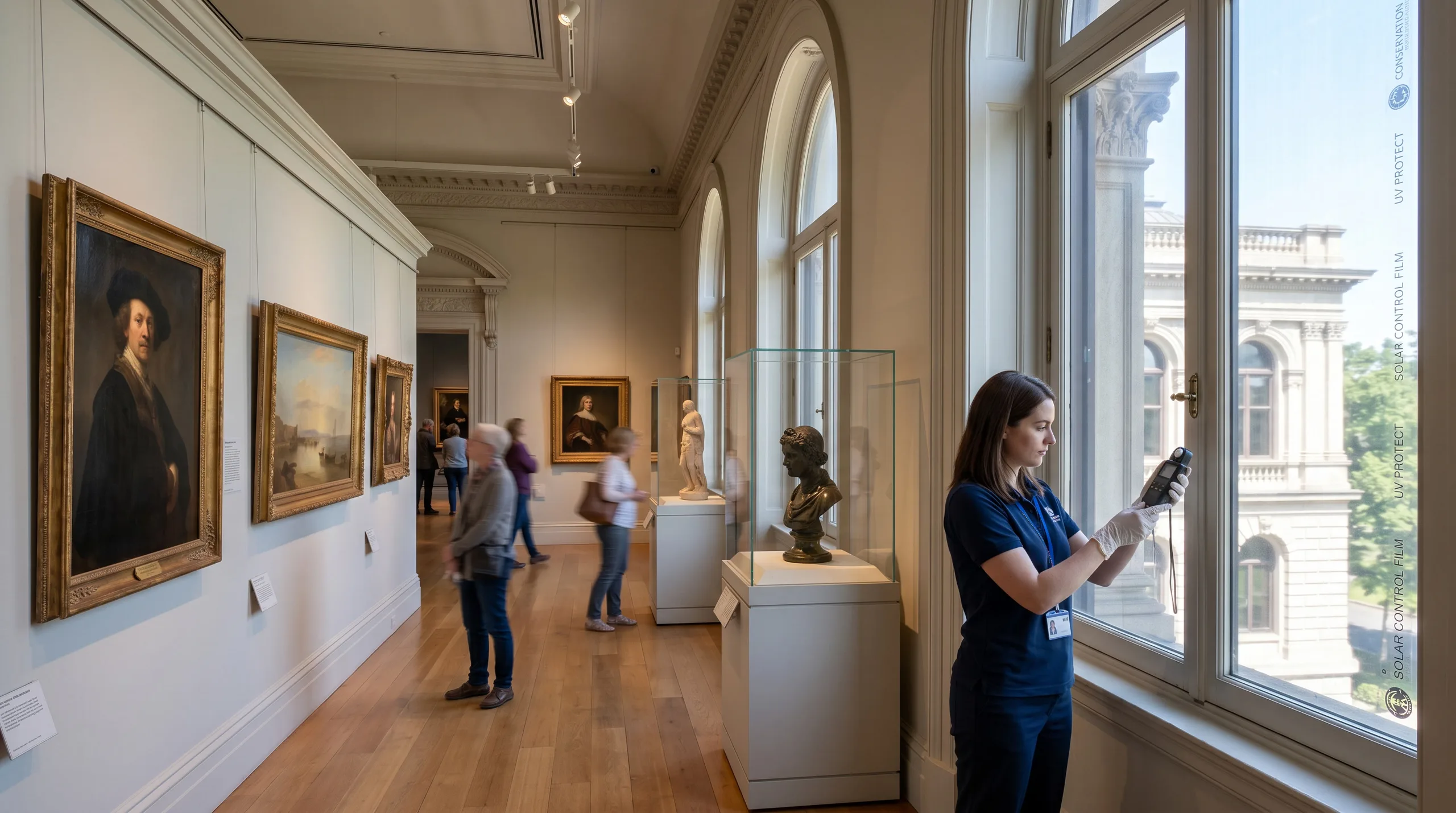
UV Conservation Film. AIC-Referenced Protection.
Optically clear UV conservation film blocks 99% of ultraviolet radiation for permanent collections, rare books, archives, textiles, photographs, and organic materials.
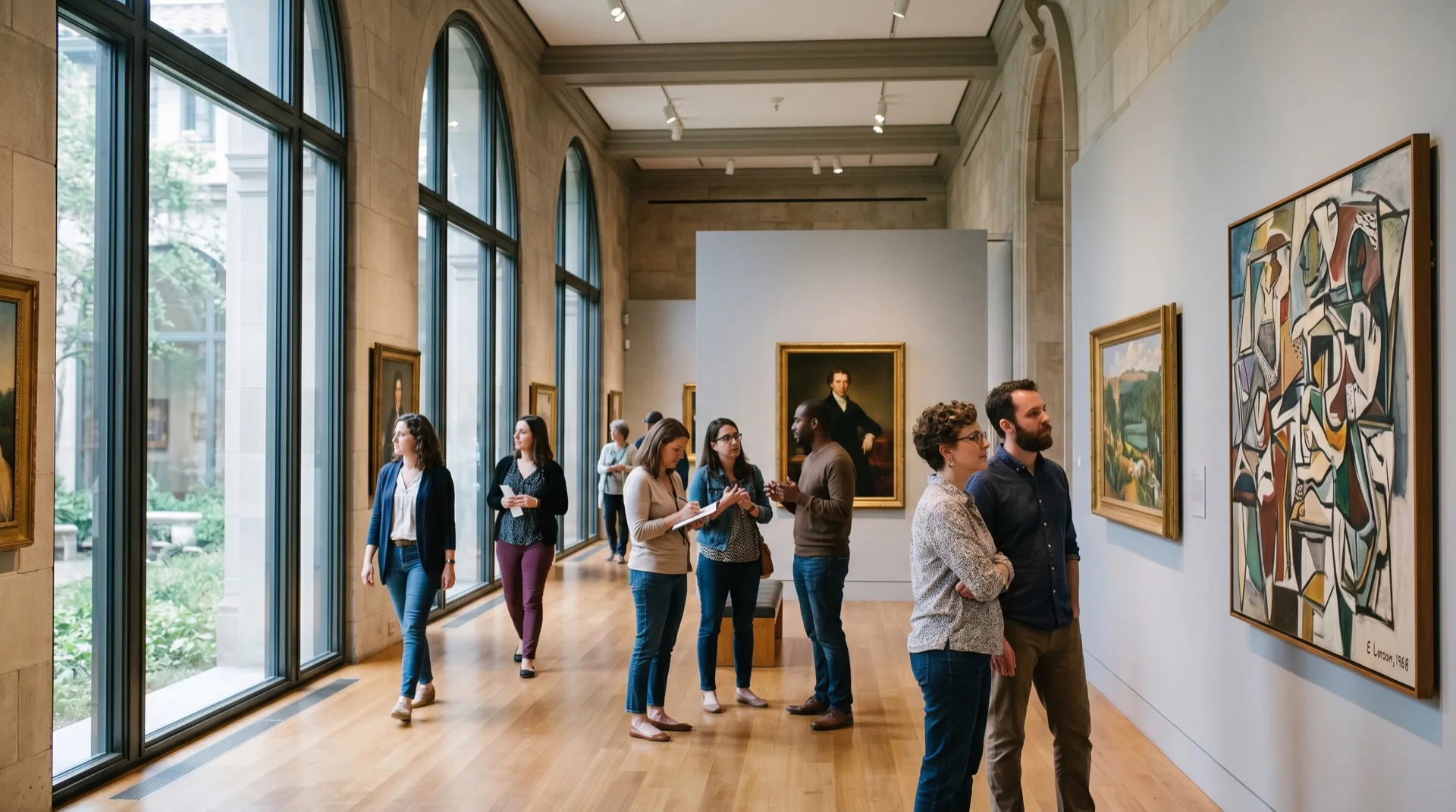
Glare Reduction Film. Clear Views, Comfortable Rooms.
Glare reduction film preserves daylight while reducing harsh brightness that washes out artwork, exhibit labels, reading rooms, and public computer areas.
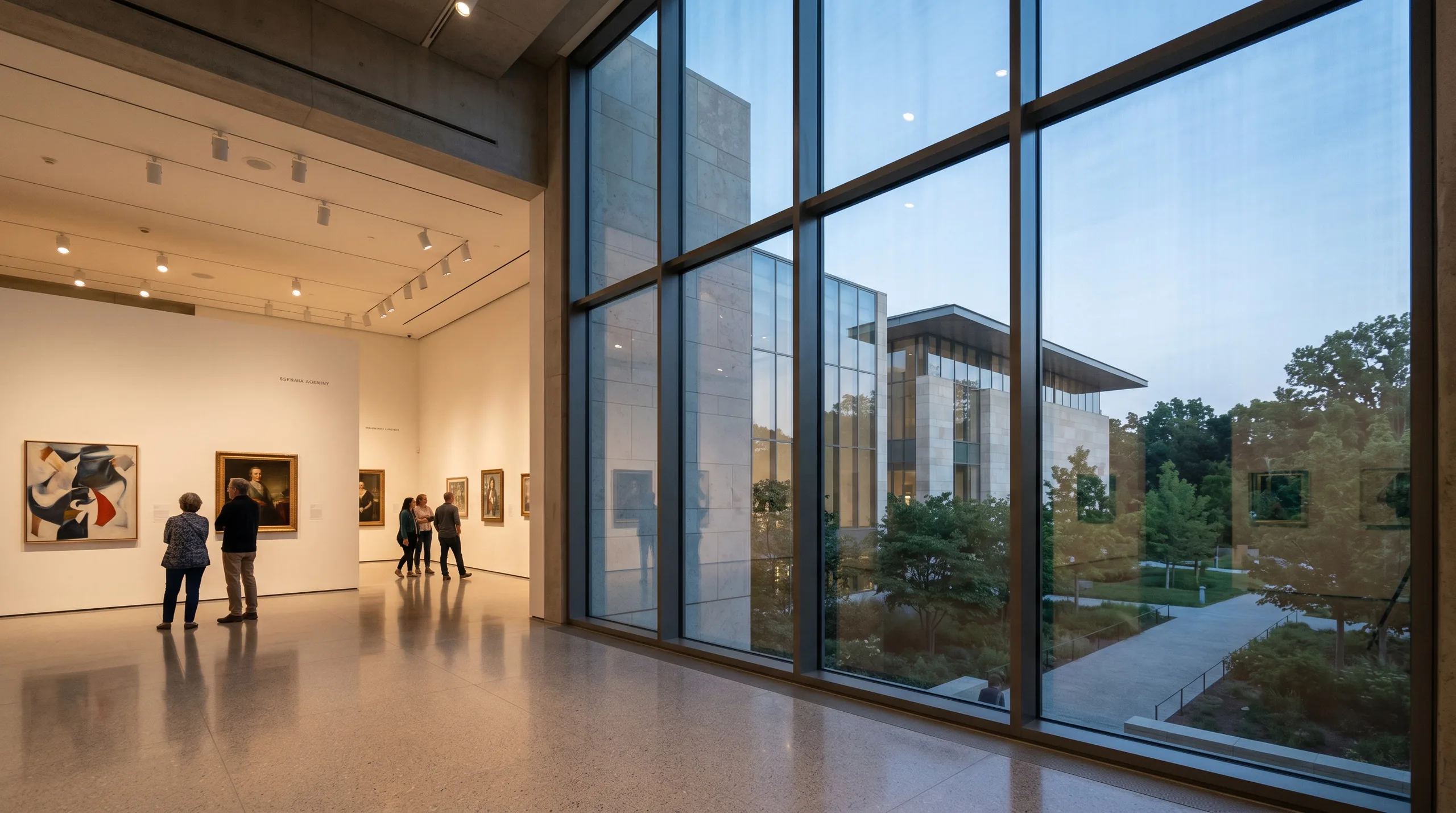
Solar Control & Energy Film. Less Load on Climate Systems.
Solar control film rejects heat before it enters glazed museum and library spaces, supporting collection climate management and reducing cooling demand.
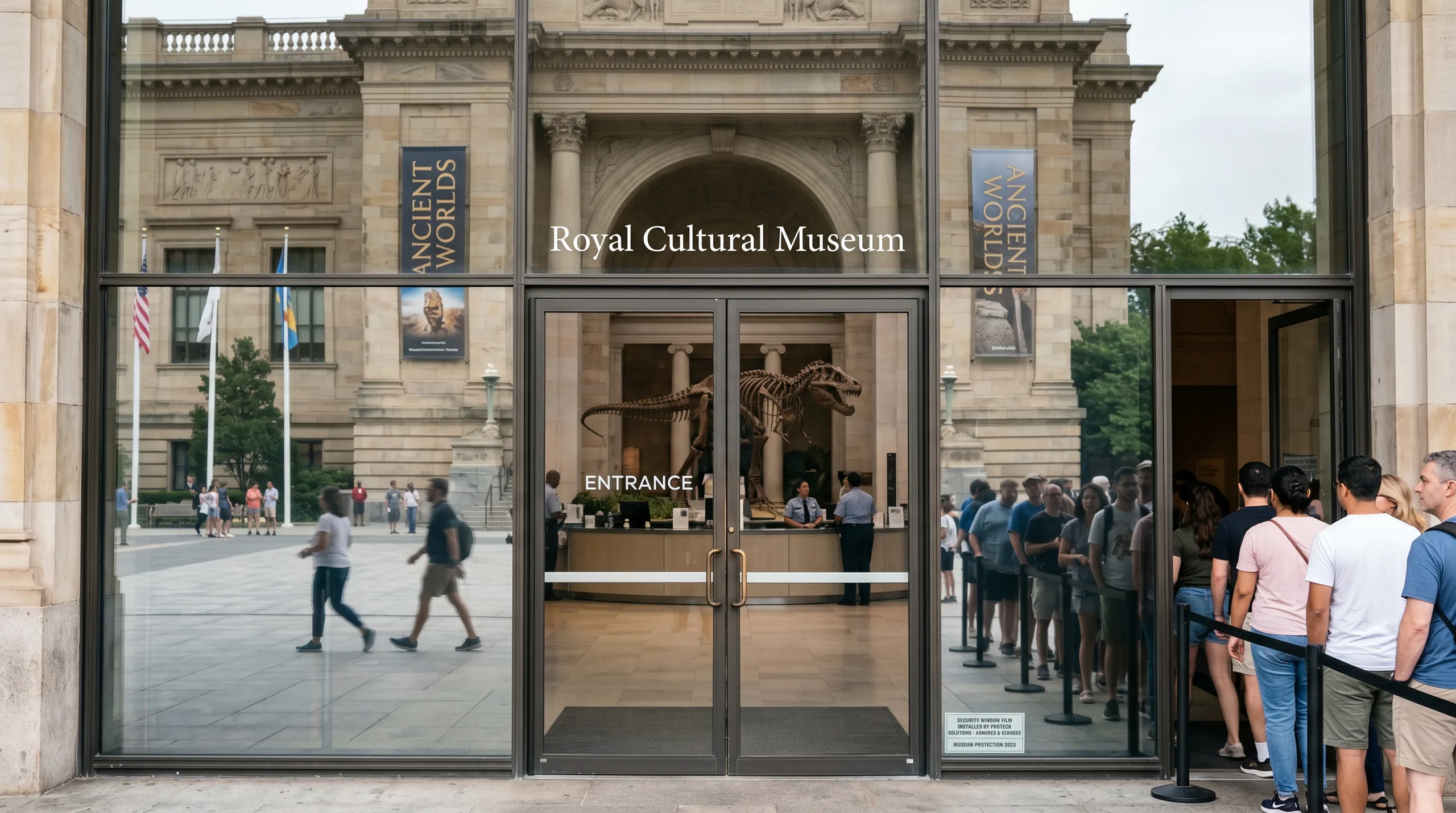
Security & Anti-Intrusion Film. Delay Entry, Hold Glass.
Security film reinforces vulnerable glass by holding shattered panes together after impact, helping protect collections, visitors, staff, and public-facing entries.
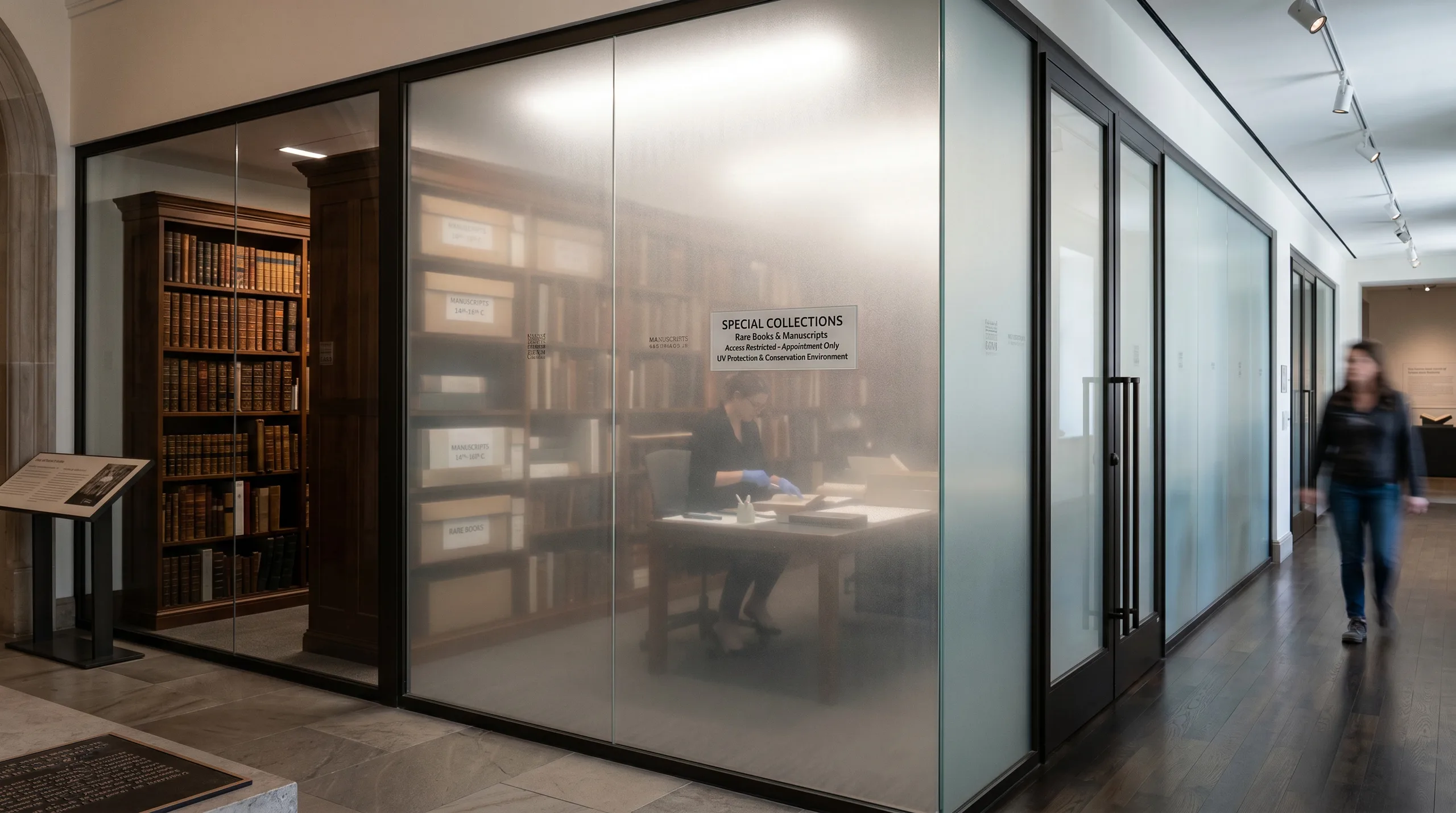
Privacy Film. Control Sensitive Views.
Frosted, gradient, and one-way privacy films protect special collections areas, staff-only rooms, offices, research spaces, and back-of-house glass.
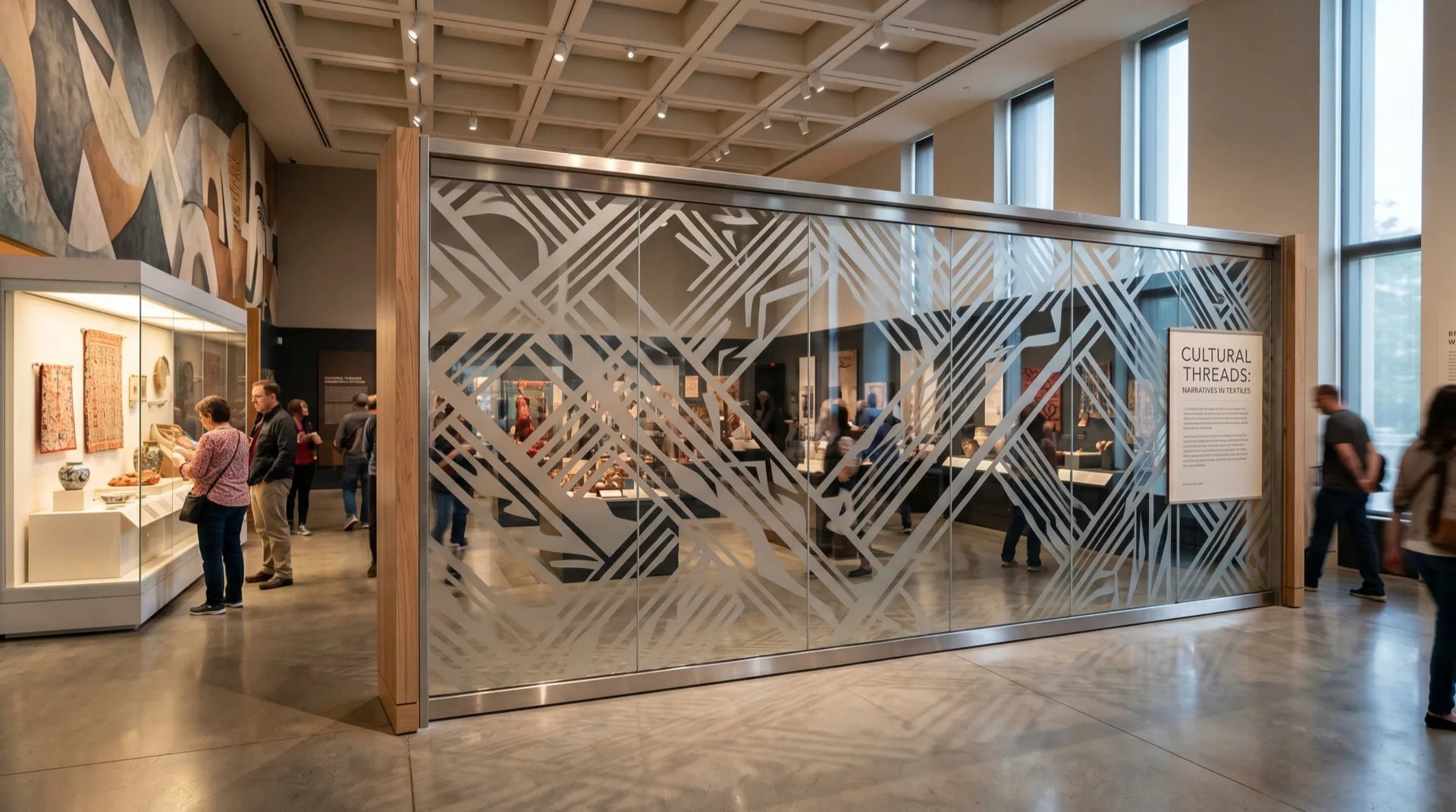
Decorative Film. Exhibits, Donors, Wayfinding.
Decorative film turns glass into an exhibit, donor, or wayfinding surface without permanent etched glass or full replacement.
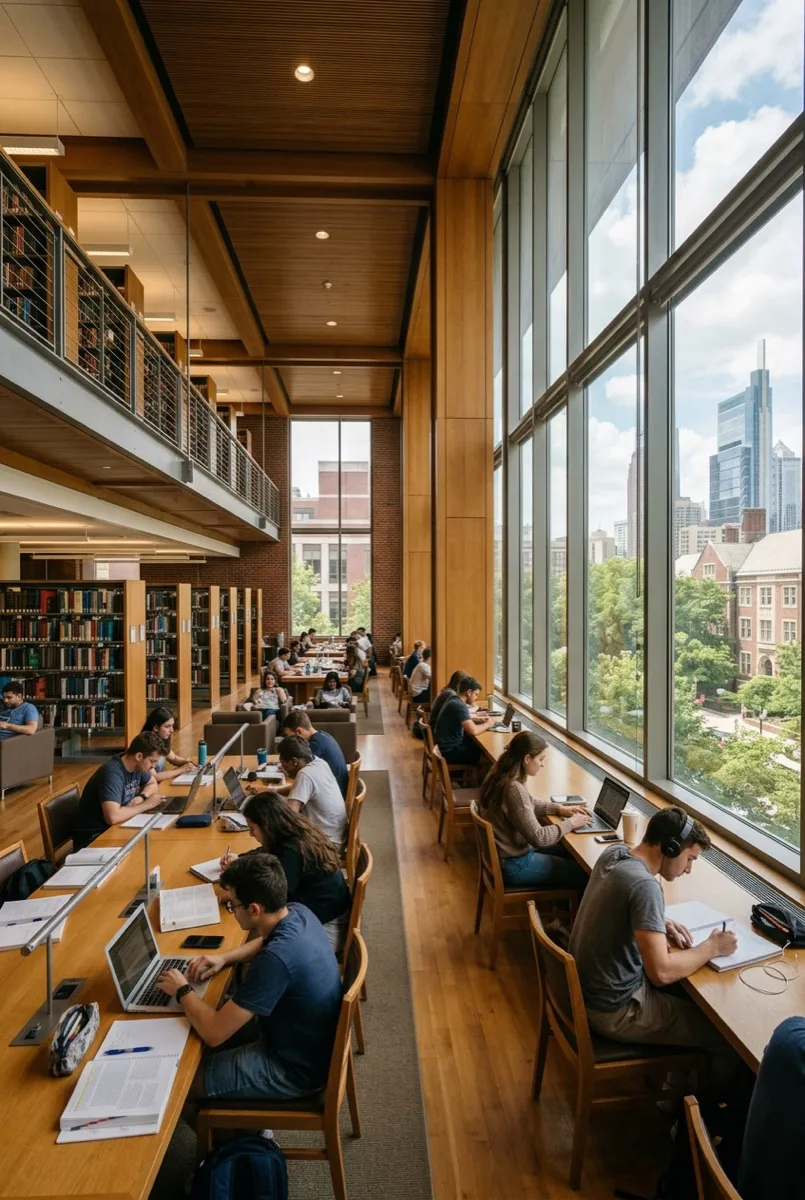
How a Philadelphia University Library Reclaimed Its Reading Room and Protected Its Rare Book Collection
Museum & Library Installations
Window Film Across Philadelphia's Cultural Institutions
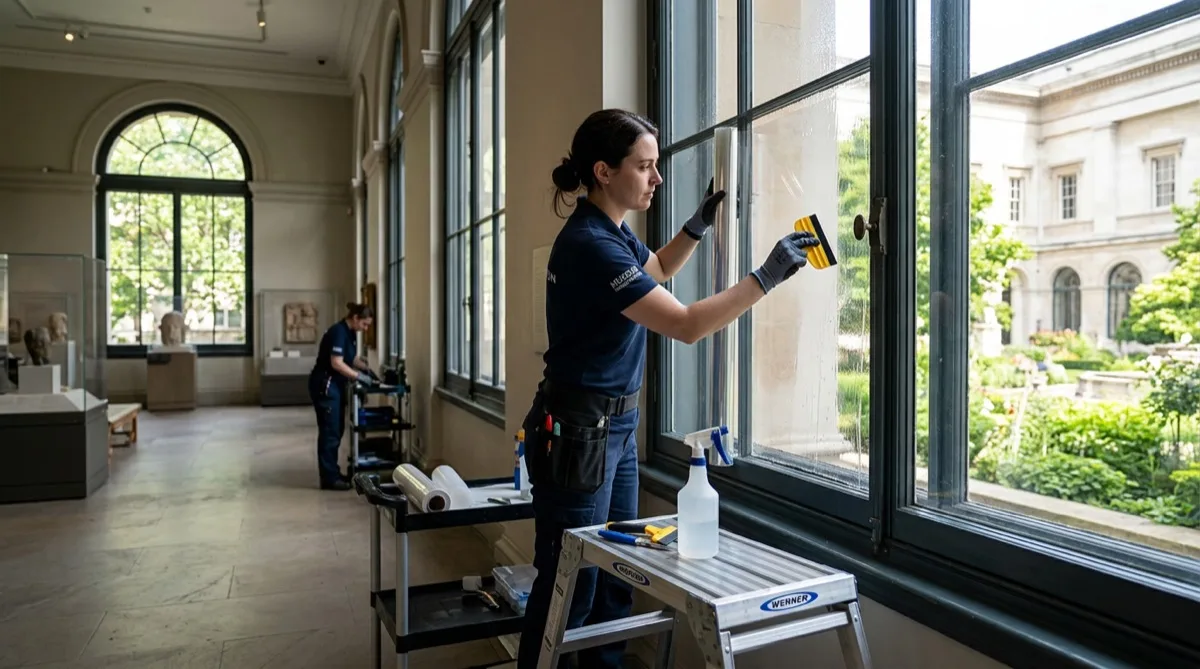
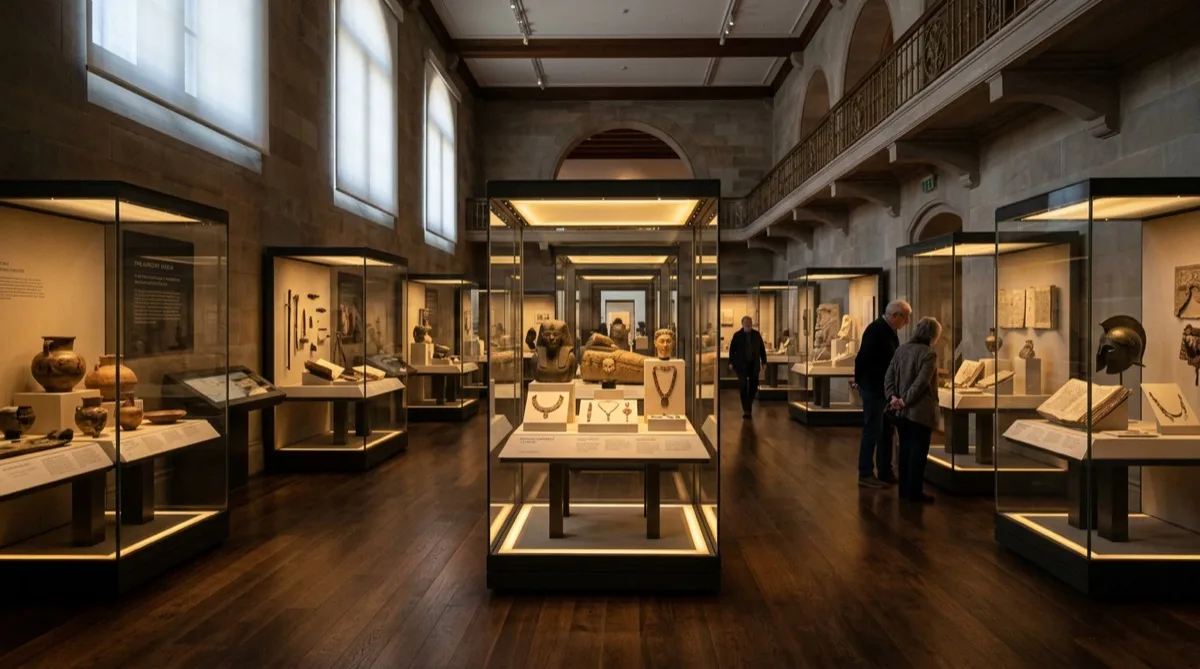
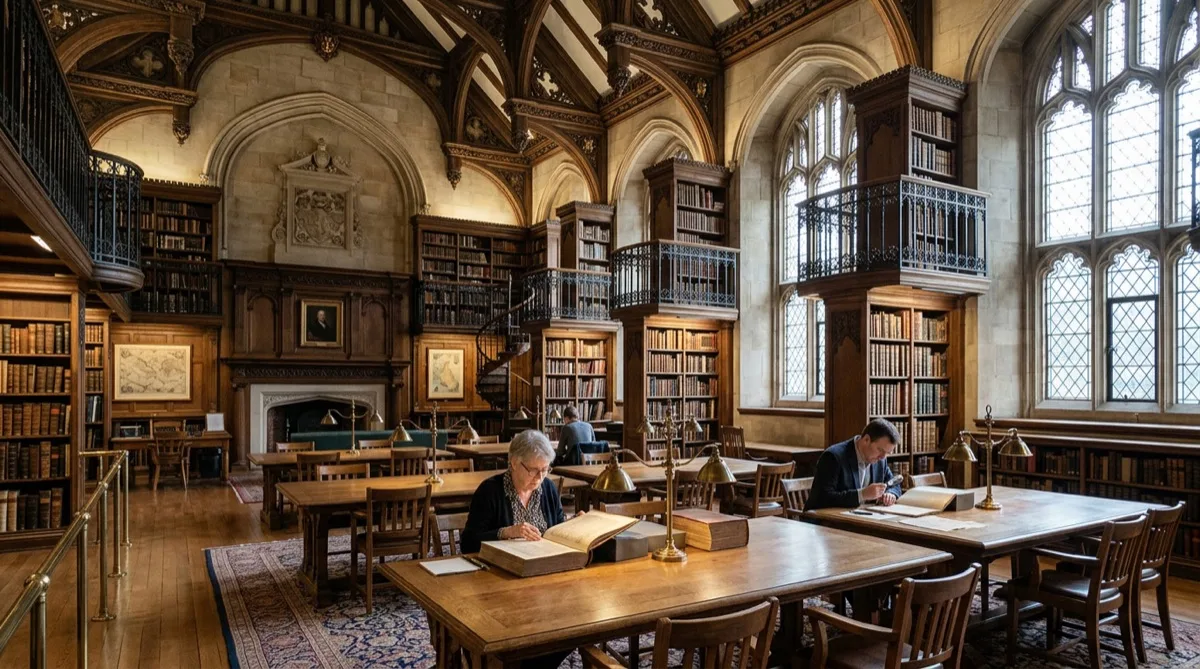
Art museums, public libraries, history museums, university archives, and science centers treated for UV preservation, glare control, energy performance, and security.

Conservation-grade specifications
Film-dependent visible glare control
Typical cooling cost reduction
Free Library of Philadelphia
Philadelphia installation team
From Conservation Goals to Documented Film Specification
01Collection-Sensitive Site Assessment+
We review glass type, orientation, collection sensitivity, public access, glare patterns, security concerns, and historic building constraints before recommending museum window film for Philadelphia or library window film for Philadelphia spaces.
02Film Specification & Documentation+
Your team receives manufacturer data for UV rejection, visible light transmission, solar performance, security ratings, and warranty terms so facilities, curators, conservators, and administrators can evaluate the same information.
03Protected Professional Installation+
Our installation team coordinates room access, protects adjacent surfaces, respects collection spaces, and phases work around public programming, staff needs, and active reading or exhibit areas.
04Closeout, Warranty & Records+
We provide final product records, warranty information, and installed film documentation for facilities files, conservation records, and future preservation review.
What Philadelphia Museum and Library Teams Say
Window film results from curators, library directors, and collections managers.
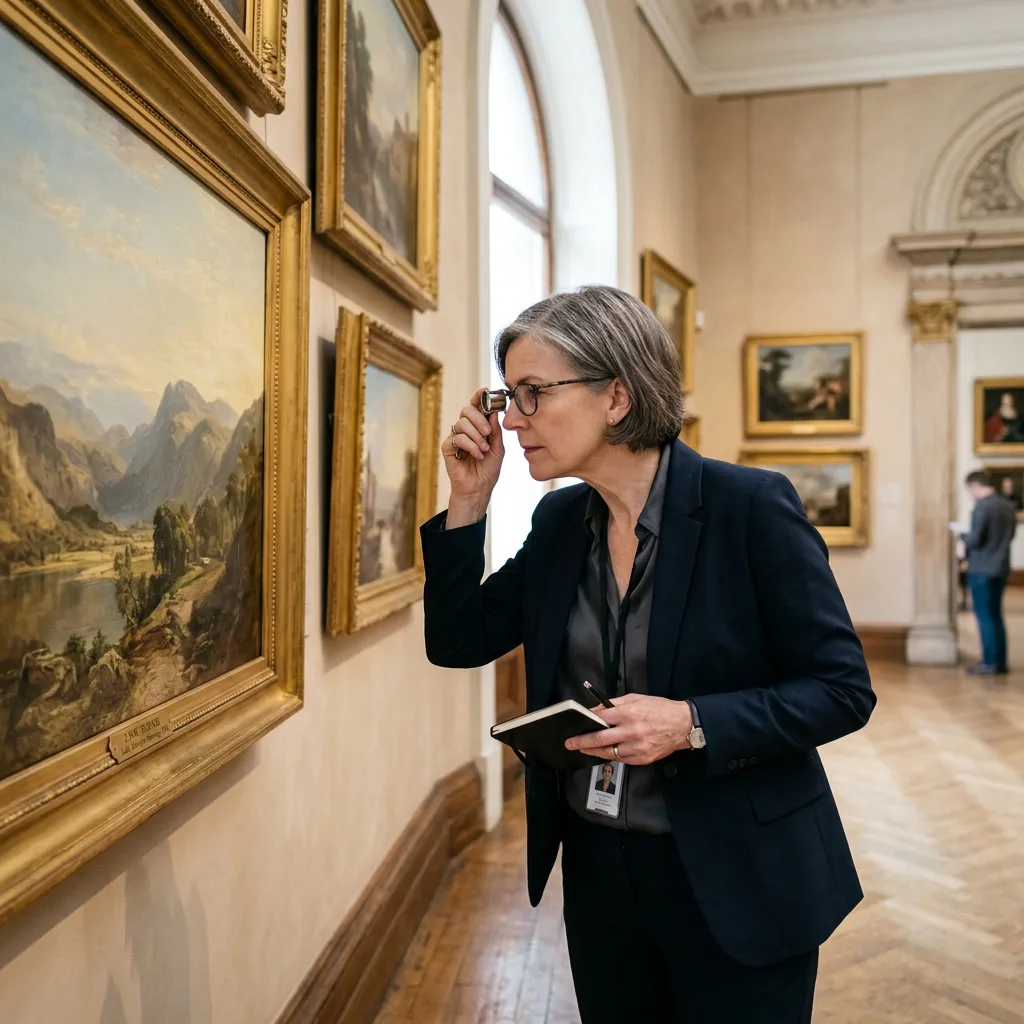
"We needed UV protection that would not change how visitors see the work. The recommended film gave us the conservation data we needed and the galleries still look natural."

"The afternoon glare in our reading areas was a constant complaint. Window film improved patron comfort and helped our facilities team reduce solar heat gain across the branch."
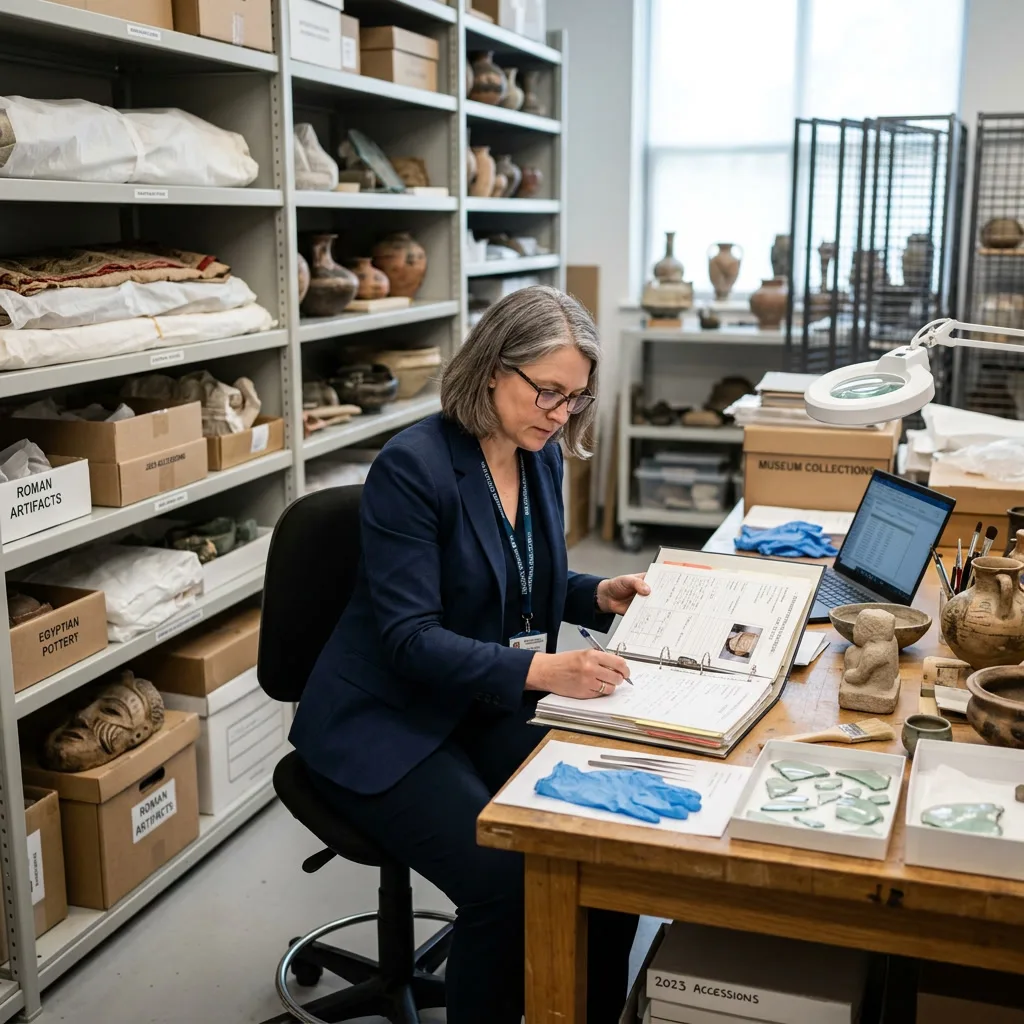
"We combined UV protection with security film at vulnerable glass areas. The installation team understood the sensitivity of the collection spaces and documented everything clearly."
Library and Museum Window Film Across Philadelphia
We serve cultural institutions, public libraries, archives, and museums across Philadelphia with conservation-grade specifications and professional installation.
Manufacturer Resources
Library and Museum Window Film — UV Specs, Conservation Data & Case Studies
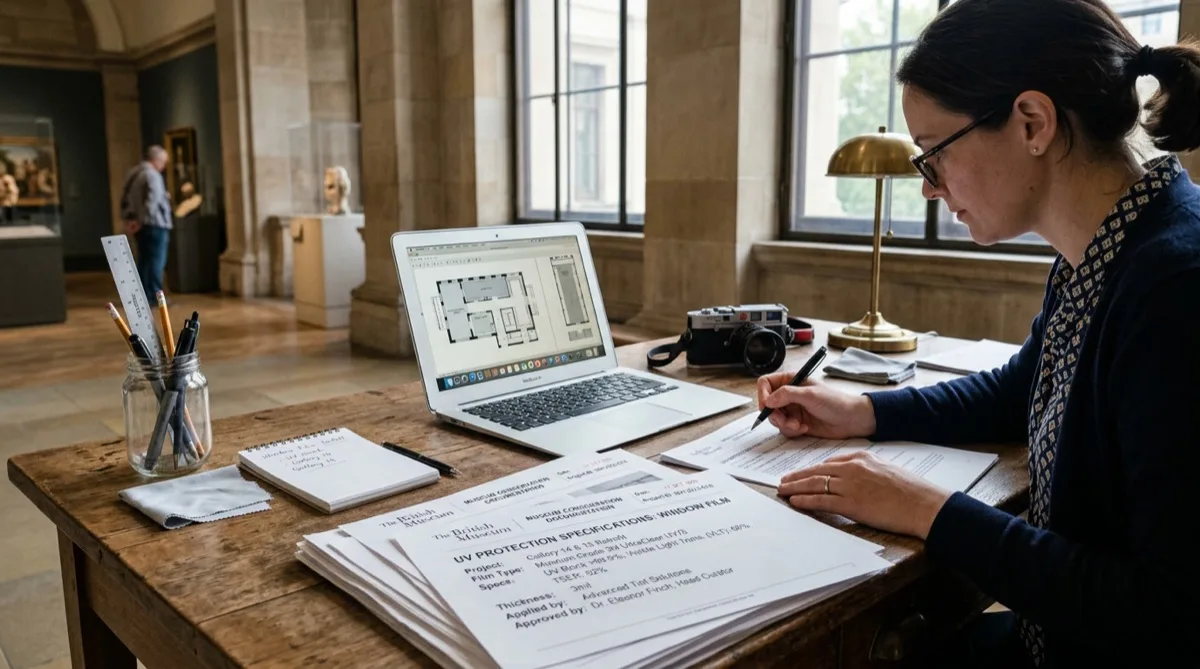
Download official UV performance data, conservation specifications, and security documentation for the window films we install at Philadelphia museums, libraries, and cultural institutions. These documents include AIC-referenced UV performance data, safety certifications, and energy savings figures.
- 3M Prestige 70 — Solar Control Window Film Specification Sheet
- 3M Scotchshield Ultra S800 — Safety & Security Film Technical Data Sheet
- LLumar Solar Control — Architectural Window Film Guide Specification
- Solar Gard Panorama — Energy Saving Window Film Performance Data
- Vista SpectraSelect — Solar Control + Safety Film Performance Specifications
- 3M Daylight Redirecting Film — Case Study: Nonprofit Educational Writing Lab, San Francisco (Glare Control for Students & Staff)
Frequently Asked Questions
Answers about museum window film for Philadelphia and library window film for Philadelphia cultural, civic, and educational institutions.
Talk to a SpecialistThe American Institute for Conservation recommends keeping UV radiation below 10 uW/lm for sensitive collections. Conservation-grade window film blocks up to 99% of UV radiation at the glass, giving museums and libraries a practical path to AIC-referenced protection without changing the building envelope.
Yes. Clear UV conservation film can be specified for compatible historic, stained, or decorative glass after a professional glass assessment. The goal is to reduce damaging UV transmission while preserving the visible character of the window and supporting Philadelphia historic preservation requirements.
Conservation-grade UV film is optically clear and selected to preserve color accuracy. For galleries where curators need reliable artwork viewing, we recommend high-VLT films that block UV while maintaining the natural color quality of daylight and exhibit lighting.
Glare reduction film cuts harsh visible glare before it washes out artwork, display screens, or reading surfaces. The right film keeps rooms daylit while removing the uncomfortable brightness that makes visitors squint, shortens viewing time, and makes library tables hard to use.
Yes. Museum window film for Philadelphia and library window film for Philadelphia projects are planned around public programming, collection access, and staff workflows. We phase work by room or glass area, protect nearby materials, and coordinate with facilities teams so the institution can keep operating.
Some landmark buildings may require review, especially if exterior appearance changes. We can specify clear or low-reflective films, provide product data, and support the documentation your team needs for Philadelphia Historical Commission or preservation consultant review.
Solar control film rejects heat before it enters through glass, reducing the load on HVAC systems that maintain collection-safe temperature and humidity ranges. For museums and libraries, that helps stabilize galleries, reading rooms, archives, and special collections without replacing windows.
Yes. Professionally installed window film can be removed from compatible glass without destructive alteration. That reversibility matters for museums, libraries, archives, and historic buildings where future conservation standards or exhibit plans may require a different specification.
Warranty terms vary by manufacturer and film series, but professional-grade 3M, LLumar, Vista, and Solar Gard films include written performance documentation for UV rejection, visible light transmission, and durability. We provide the relevant manufacturer data sheets with every museum or library specification package.
Yes. Many institutions combine UV conservation, solar control, glare reduction, and security goals in one specification. Depending on the glass and risk profile, we can recommend a single multi-benefit film or a coordinated film package for entries, display cases, galleries, archives, and reading rooms.
Ready to Protect Philadelphia's Collections?
Free site assessment for museums, libraries, and cultural institutions. We provide AIC-referenced UV performance data, historic building consultation, and professional installation with no disruption to public programming.