
★★★★★
"Our skylights were destroying the artwork below. Film installers all said they couldn't help with curved glass. NanoTint was the first solution that actually worked."

Diana M.
Museum Operations Director, Philadelphia
Liquid coating solutions for curved skylightshistoric rowhomesPhiladelphia atriumsspecialty glassmarine applications .
Window Film Philadelphia installs DryWired Liquid NanoTint — the only glass coating that works on curved glass, skylights, polycarbonate, and surfaces where traditional film can't bond.
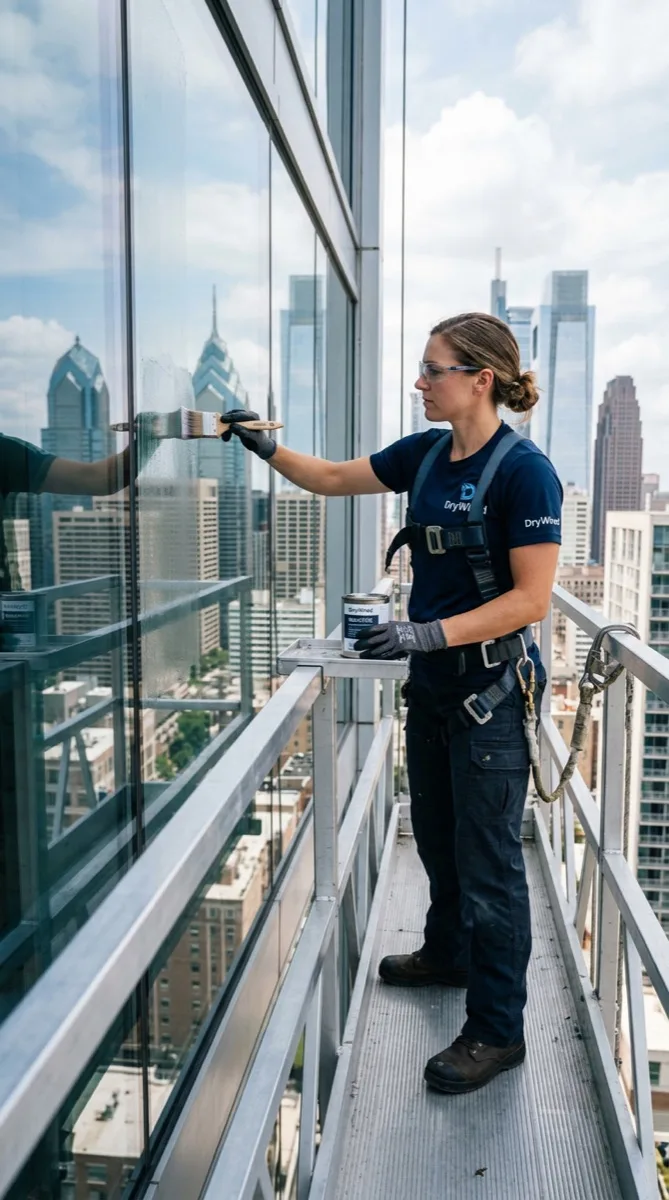
Traditional film can't go on curved glass. NanoTint liquid coating can. DryWired NanoTint in Philadelphia is applied with a brush, roller, or spray applicator, then cures into an optically clear hard coating bonded to glass, acrylic, polycarbonate, and other surfaces traditional adhesive film cannot cover.
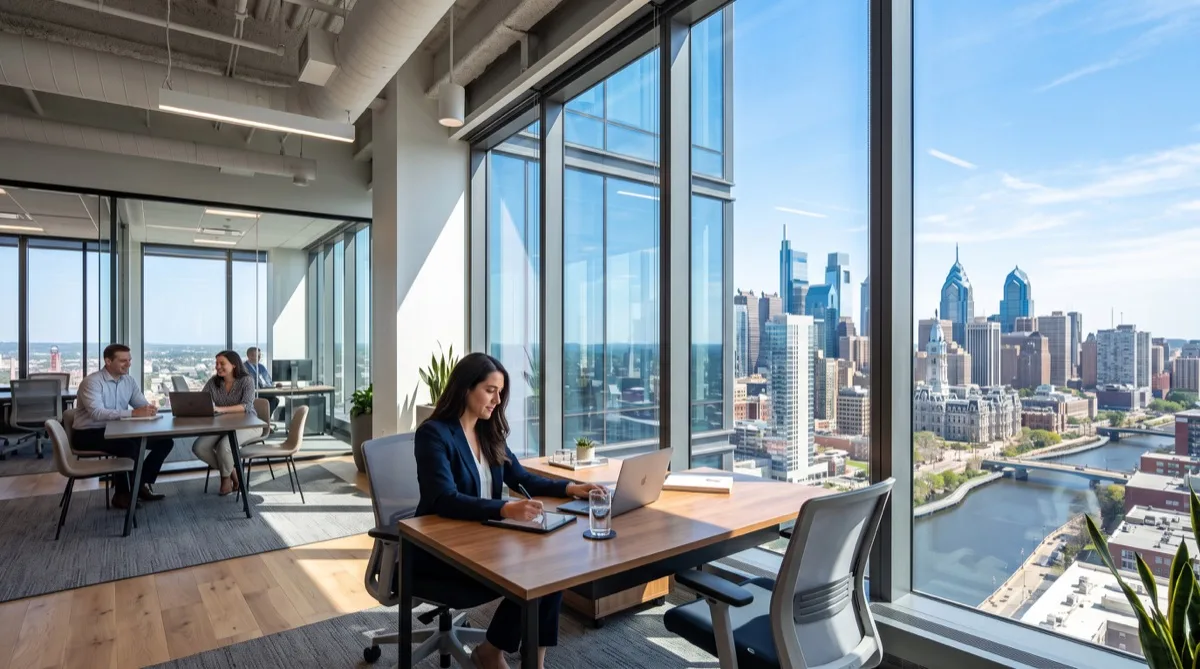
That matters in a city with arched glass in historic rowhomes, museum skylights over sensitive collections, healthcare atriums at Penn Medicine and Jefferson, and boat glass around Penn's Landing. NanoTint window film in Philadelphia gives those specialty surfaces UV and heat protection without forcing a glass replacement.
Liquid NanoTint coating for Philadelphia specialty glass, skylights, and curved surfaces
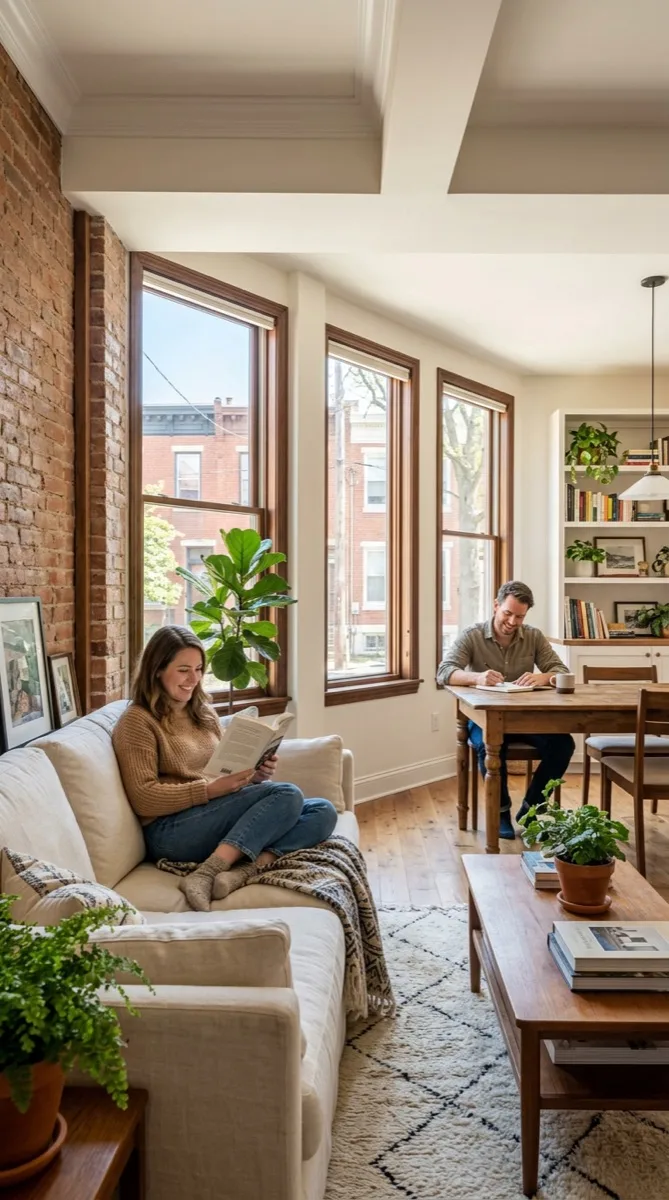
Philadelphia's housing stock is full of specialty glass — arched windows in Society Hill brownstones, curved bay windows in Chestnut Hill colonials, and original leaded skylights in Germantown Victorians. Traditional adhesive film cannot bond to those curved surfaces, but liquid nanotint coating Philadelphia projects can be applied directly to shapes, angles, plastics, and roof glass that film installers usually have to decline.
"Brush, roller, or spray," according to the DryWired Liquid NanoTint installation guide, are approved application methods for the coating. For solar comfort, see our energy savings guidance; for office and institutional specialty glass, see office window film applications. UV risk is also explained in the EPA UV Index guidance.
Get a specialty glass assessment →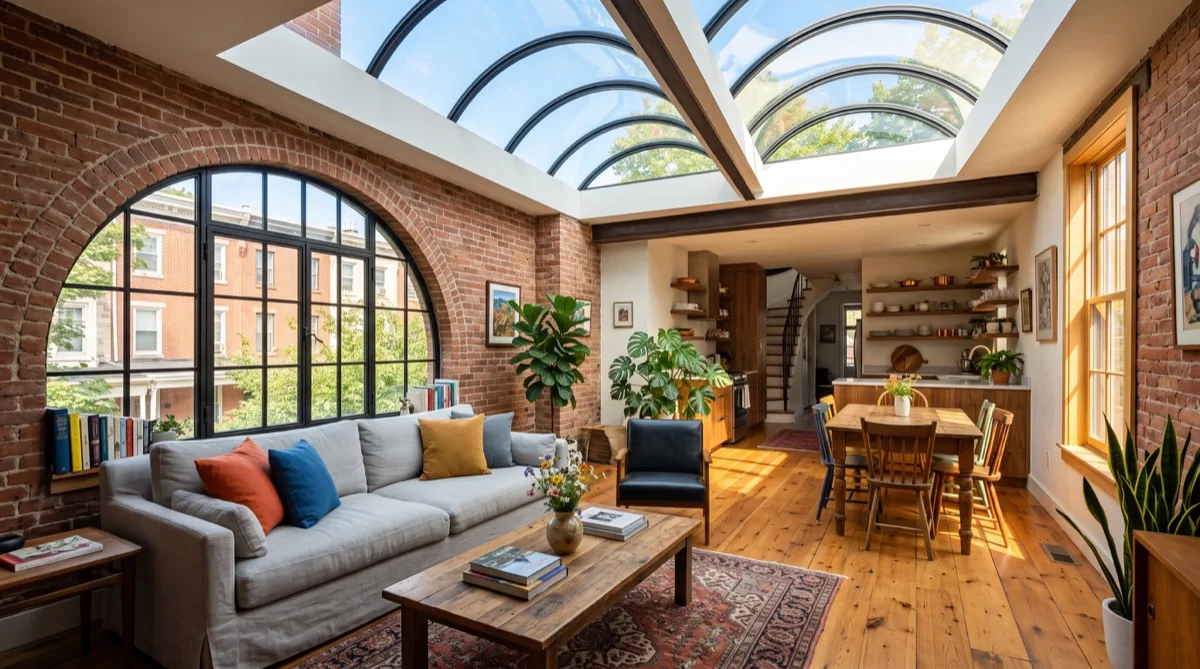
NanoTint window film in Philadelphia is available as clear liquid coating, curved-glass coating, color tint versions, and specialty-surface formulas for glass, plastic, acrylic, and polycarbonate.
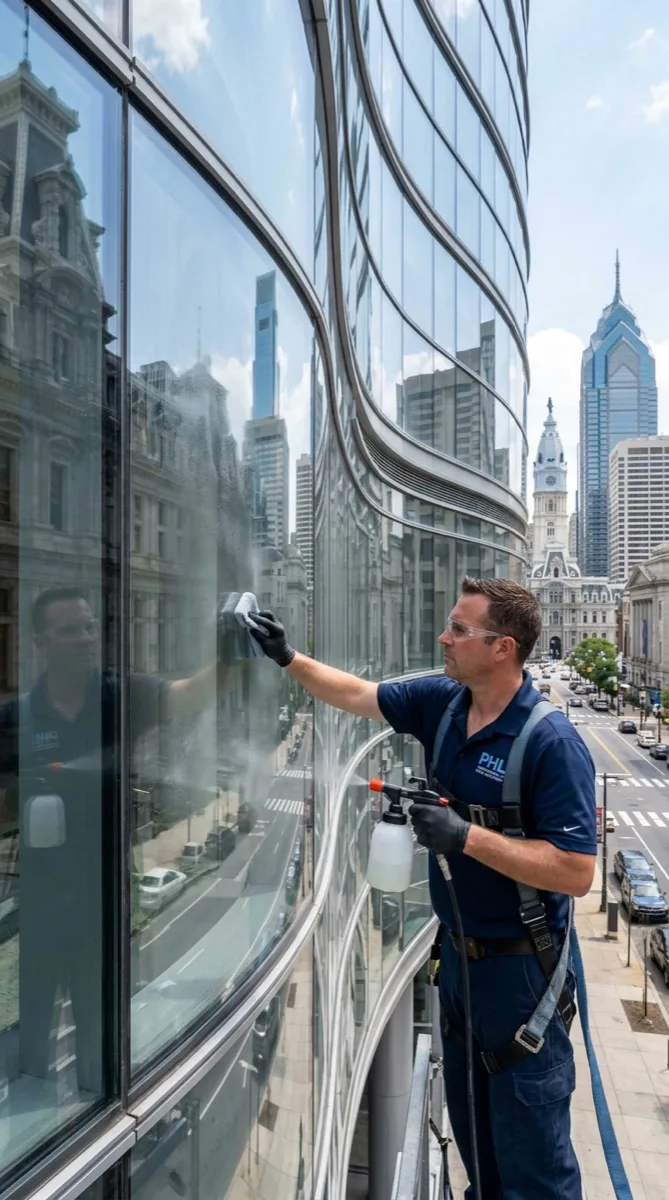 Liquid NanoTint Clear
 Liquid NanoTint Clear is the flagship DryWired coating for glass that needs protection without a tinted appearance. It blocks 99%+ of ultraviolet radiation, reduces infrared heat transmission, and improves comfort while maintaining near-full visible light through the clear version.
Because it is liquid applied, the same product family can serve flat glass, curved glass, plastic, acrylic, and polycarbonate after surface review. For Philadelphia, that makes it useful on historic arched windows, skylights over art or furnishings, hospital atriums, greenhouse panels, and specialty glass where replacement would be expensive or visually disruptive.
Clear version maintains near-full visible light while providing 99%+ UV block and infrared heat reduction. Source: DryWired Liquid NanoTint Product Data Sheet.
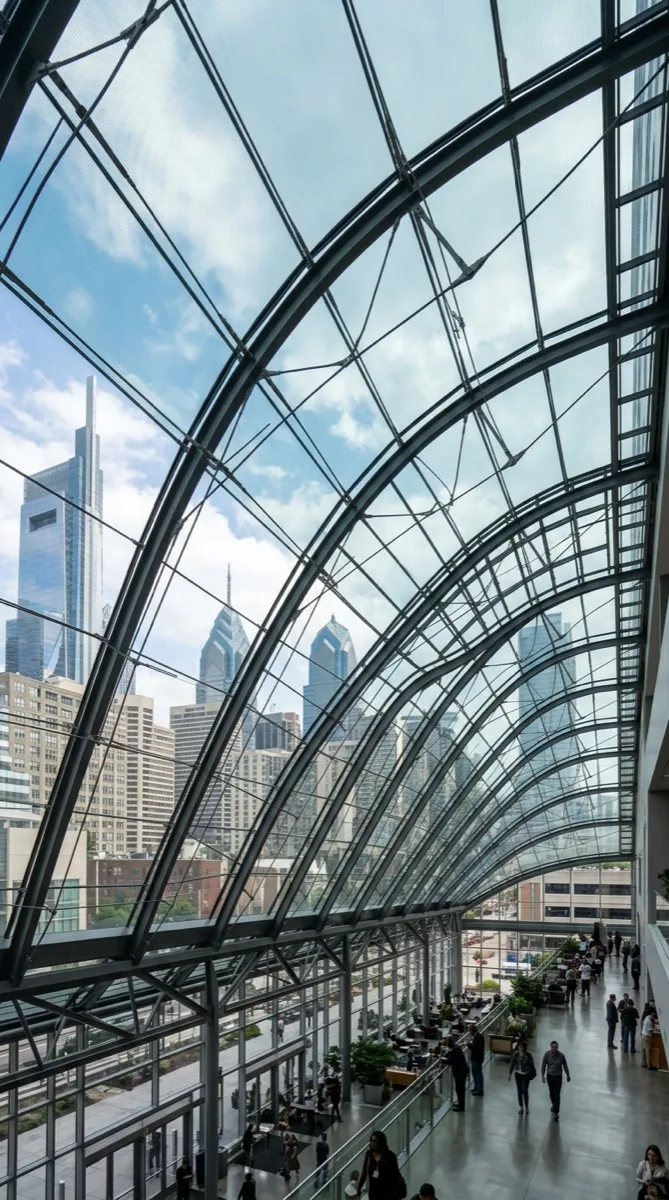 Curved Glass
 Curved surfaces are the one thing traditional film cannot reliably do. A flat adhesive sheet wrinkles, lifts, or bubbles when forced onto compound curves, arched skylights, domes, and shaped architectural glass. NanoTint is different because the coating is applied as a liquid and cures in place.
Philadelphia use cases include museum skylights near the Parkway, historic arched windows in Society Hill and Chestnut Hill, hospital atriums at Penn Medicine and Jefferson, curved restaurant glass, and specialty glazing at universities. NanoTint window film in Philadelphia gives those projects a UV-control path without replacing original or custom glass.
Application method and cure conditions vary by temperature, humidity, access, and substrate. Source: DryWired installation guide and off-gassing report.
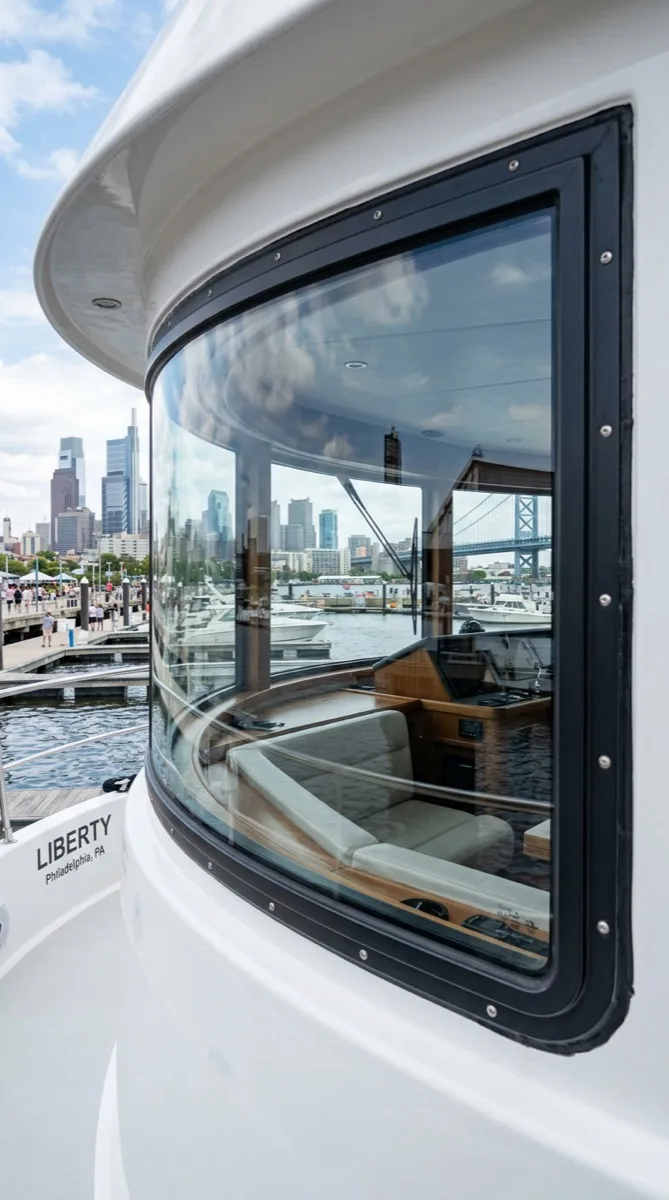 Specialty Surfaces
 Traditional window film is designed for glass and usually struggles on plastic, acrylic, and polycarbonate because adhesives can fail, haze, or react poorly with the substrate. NanoTint specialty variants give Philadelphia projects another option for surfaces that still need UV control and heat reduction.
Common projects include greenhouse panels, polycarbonate skylights, acrylic partitions, specialty commercial panels, and marine glass around Penn's Landing. Film doesn't bond to many of these surfaces with the reliability owners need; NanoTint does when the surface is compatible and properly prepared.
Surface compatibility must be reviewed before application on acrylic, polycarbonate, plastic, and marine glazing. Source: DryWired Safety Data Sheet.
When the glass is curved, plastic, exterior-only, or historically sensitive, the right comparison is not just film brand versus film brand. It is whether adhesive film can work at all.
| Feature | NanoTint Liquid | Traditional Film | Glass Replacement |
|---|---|---|---|
| Curved glass compatible | Yes | No | Yes (new glass) |
| Plastic/polycarbonate | Yes | No | N/A |
| Exterior application | Yes | Limited | N/A |
| UV block | 99%+ | 99%+ | Varies |
| Optically clear option | Yes | Yes | Yes |
| Signal transparent | Yes | Varies | Yes |
| Cost vs replacement | Much less | Much less | Highest |
Source: DryWired Liquid NanoTint Product Data Sheet; EPA UV Index guidance.
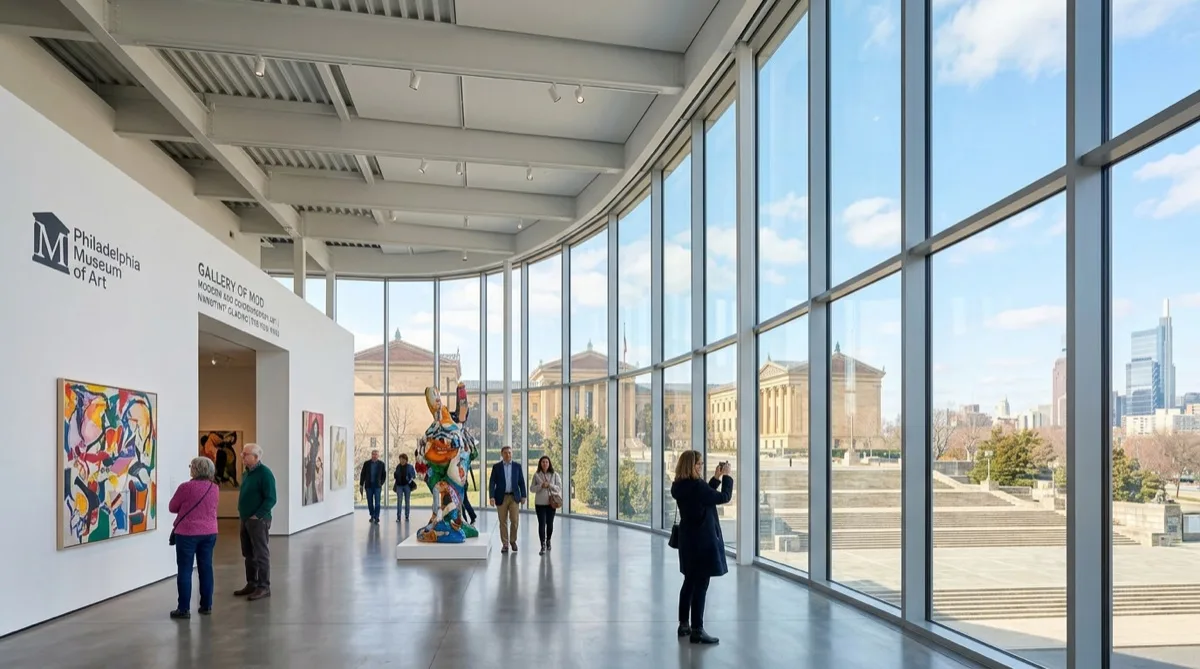
The owner of a historic Chestnut Hill Victorian had original curved bay windows and a small skylight that were allowing UV exposure into rooms with antique floors, fabrics, and furniture.
Three window film companies had already turned down the job because adhesive film could not bond correctly to the curved glass. Window replacement would have changed the historic character of the home and introduced a much larger construction project.
NanoTint was applied by brush to the curved surfaces, including the skylight. The cured coating delivered 99% UV protection without a visible change to the glass, preserving the home's original look while solving the exposure problem.
Request a specialty glass assessment“We wanted the UV protection, but we refused to lose the original curved glass. NanoTint was the first option that protected the room without changing what makes the house special.”
Residential, institutional, and design clients using NanoTint for glass that traditional film cannot cover.
★★★★★
"Our skylights were destroying the artwork below. Film installers all said they couldn't help with curved glass. NanoTint was the first solution that actually worked."
Diana M.
Museum Operations Director, Philadelphia
★★★★★
"I have bay windows with curved glass — every film company I called turned me down. NanoTint went on in a single afternoon. UV problem solved."

Robert K.
Homeowner, Chestnut Hill
★★★★★
"I specify NanoTint on any project with curved glazing, atriums, or polycarbonate panels. It's the only product that handles what film can't."

Jennifer L.
Architect, Philadelphia
Honest answers about NanoTint window film in Philadelphia for curved glass, skylights, plastic, acrylic, and specialty surfaces.
Talk to a SpecialistLiquid NanoTint is a DryWired nanotechnology coating, not an adhesive film. It is applied as a liquid and cures into a hard, optically clear coating bonded to the glass surface, which lets it work on curved glass, skylights, acrylic, polycarbonate, and other surfaces where peel-and-stick film cannot bond properly.
Yes. Curved glass and skylights are the main reason Philadelphia property owners choose NanoTint. Because it is brushed, rolled, or sprayed on as a liquid, it can follow domes, arches, curved bay windows, atriums, and angled skylights that traditional film cannot cover.
Yes. DryWired offers NanoTint options for polycarbonate, acrylic, plastic, and specialty non-glass surfaces, including greenhouse panels, polycarbonate skylights, acrylic partitions, and selected marine glazing.
Liquid NanoTint Clear is designed to remain optically clear with near-full visible light transmission. NanoTint Color versions are available in light, medium, and dark options when a project needs visible tint, glare control, or a lower visible light level.
Yes. NanoTint can be specified for interior or exterior glass surfaces depending on the substrate, exposure, access, and project requirements. Exterior application is especially useful on skylights, roof glass, and specialty glazing where interior access is limited.
No. NanoTint is radio and signal transparent, so it does not create the GPS, cellular, Wi-Fi, or access-control interference that can occur with some metallic films.
Liquid NanoTint blocks 99%+ of ultraviolet radiation and significantly reduces infrared heat transmission while keeping the clear version visually neutral. It is commonly used to protect artwork, furnishings, flooring, merchandise, and occupants from UV exposure.
NanoTint cures into a hard, durable coating bonded to the surface. Warranty terms depend on the product version, surface type, application side, and site conditions, so Window Film Philadelphia reviews those details during the site assessment.
NanoTint is used on historic rowhomes, brownstones, curved bay windows, arched glass, museum skylights, healthcare atriums, university buildings, commercial curtain wall, greenhouse panels, and marine glass around Penn's Landing.
Window Film Philadelphia installs NanoTint window film in Philadelphia as a certified NanoTint installer for residential, commercial, institutional, historic, and specialty glass projects.
Slide from optically clear Liquid NanoTint to darker NanoTint Color versions for stronger visible tint.
VLT 65% · NanoTint Color Light · visible light transmission
Get a Free Quote →