
★★★★★
"We upgraded three commercial properties with C-Bond BRS after a break-in on the block. The film alone wasn't enough — the nanotechnology layer is what makes the difference."

Sarah W.
Property Manager · Center City
Advanced glass strengthening for retail storefrontsPhiladelphia schoolsgovernment buildingshospitalsoffices .
Window Film Philadelphia is a certified C-Bond installer serving Philadelphia. C-Bond nanotechnology strengthens glass at the molecular level — improving safety, film adhesion, and long-term glass performance.
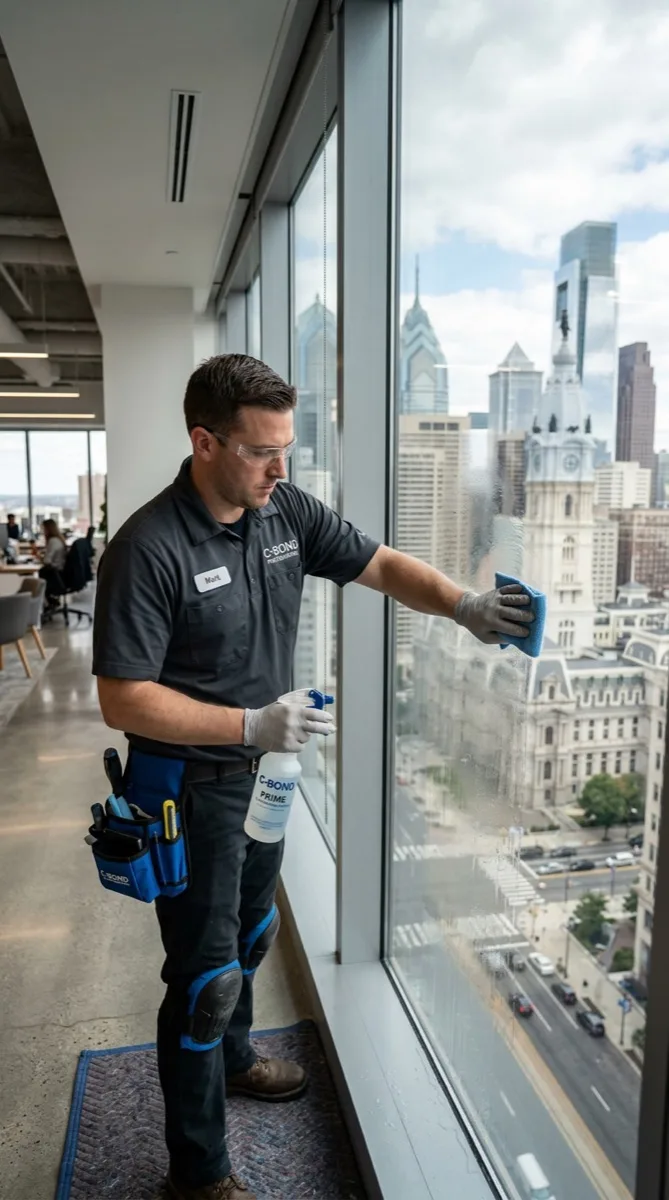
C-Bond is a patented liquid nanotechnology primer that penetrates the glass substrate before film installation. By filling and reinforcing microscopic stress fractures known as Griffith flaws, C-Bond nanotechnology in Philadelphia helps existing glass flex under impact instead of immediately releasing into dangerous shards.
Window Film Philadelphia installs C-Bond Systems products for retail storefronts, schools, municipal buildings, healthcare entrances, restaurants, offices, and homes across Philadelphia. The treatment can be paired with safety/security film, solar-control film, decorative film, or a clear strengthening system depending on the glass and the building's goals.
Philadelphia's certified C-Bond installer for glass strengthening systems

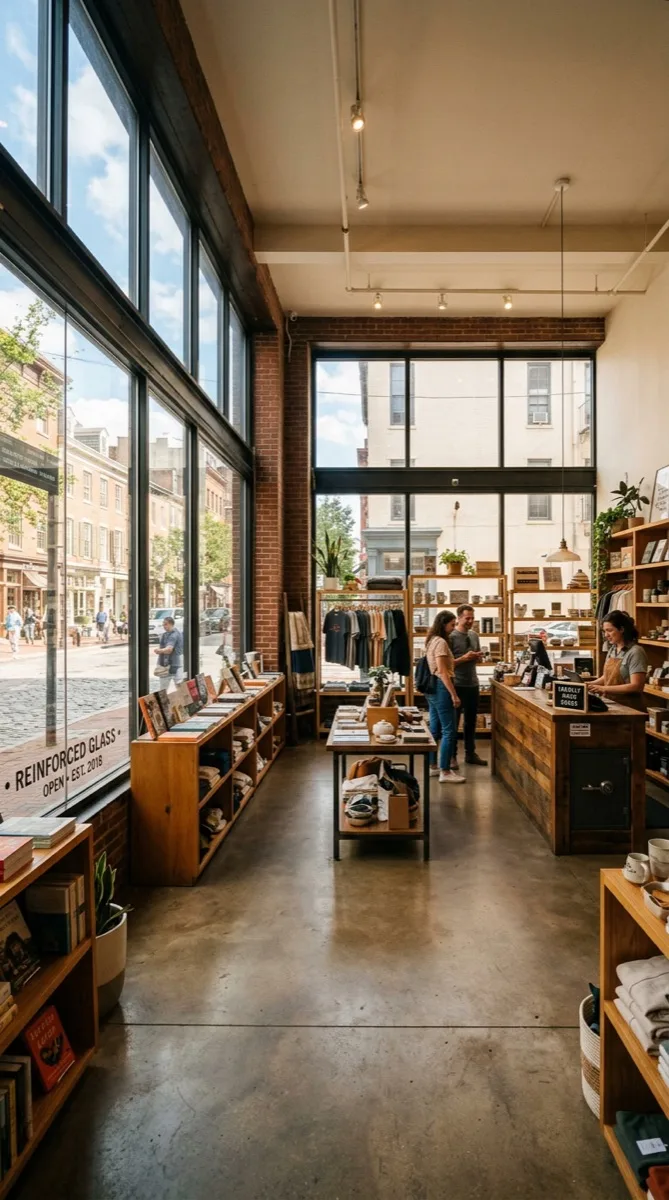
Philadelphia storefronts, schools, government buildings, and healthcare entrances often need more than film that catches fragments after glass breaks. C-Bond glass strengthening Philadelphia projects start at the glass surface itself, reinforcing hidden flaws while improving the bond between glass and the selected film system.
"Security window films are designed to hold glass together after breakage," according to the International Window Film Association. C-Bond adds another layer to that safety strategy by strengthening the glass first; review the IWFA safety and security standards and ask our team how C-Bond can pair with solar-control film when heat, glare, and safety all matter.
Get a C-Bond glass assessment →
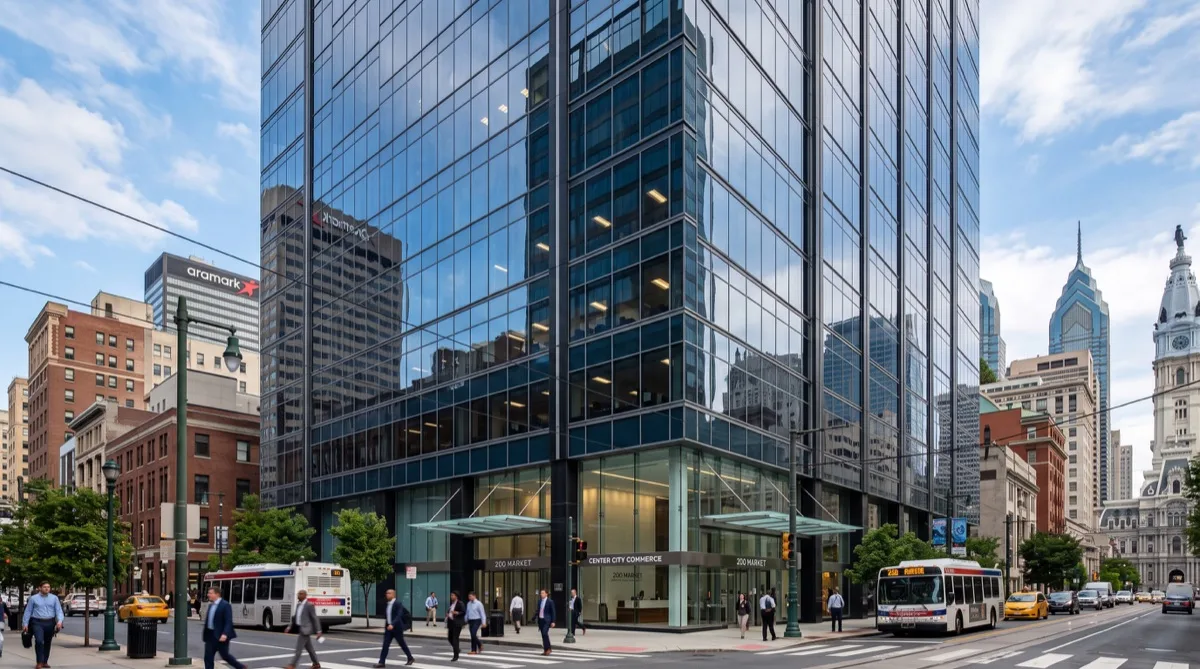
C-Bond window film in Philadelphia is specified as a glass strengthening system, a film-ready primer, or a clear coating depending on whether the building needs security, solar control, preservation-sensitive glass reinforcement, or simplified installation.
 Break Resistant System
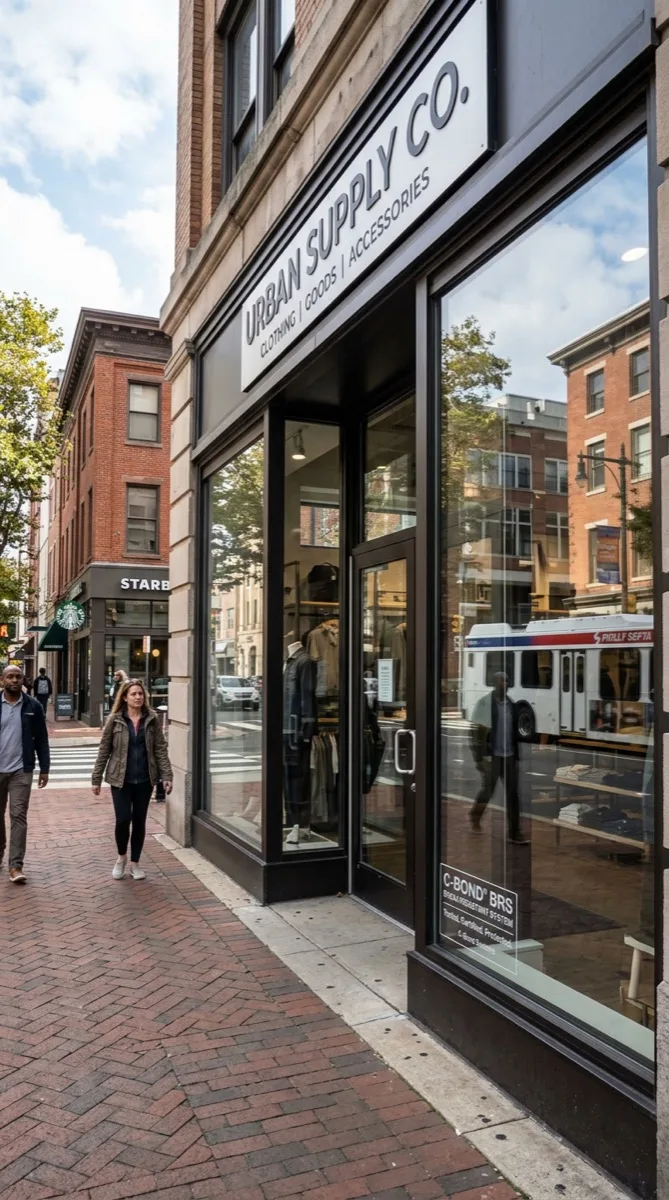
C-Bond BRS is the flagship safety system for Philadelphia glass that needs more than a conventional security film layer. The C-Bond I primer is applied first, penetrating microscopic Griffith flaws and improving the strength and flexibility of the glass substrate before the safety/security film is installed.
The result is a combined glass treatment and film assembly that withstands 3× more force before penetration than security film alone. It is a strong fit for Old City retail, Center City storefronts, K-12 schools, government buildings, hospital entrances, and public-facing commercial glass.
C-Bond BRS is a combined glass treatment and film system. Source: C-Bond Systems. For C-Bond window film in Philadelphia, this is the primary system for glass areas where forced-entry delay and retention both matter.
 nanoHybrid
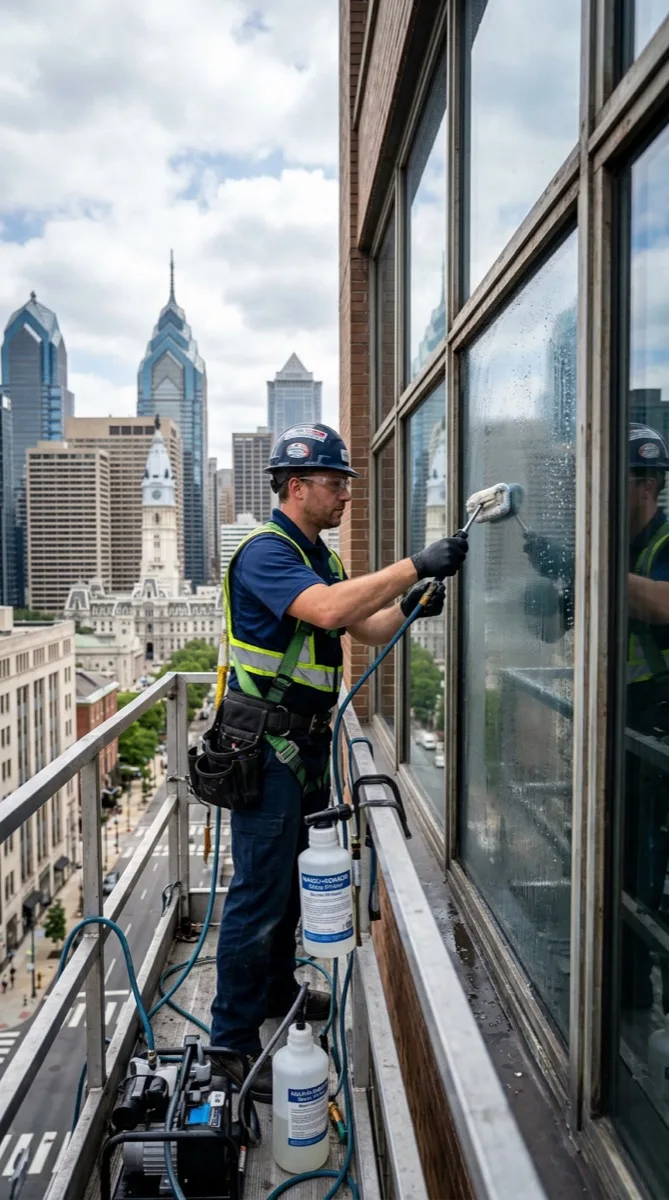
C-Bond nanoHybrid simplifies projects where the building needs both film performance and nanotechnology glass treatment in one product. Instead of applying primer and film as separate field steps, nanoHybrid carries C-Bond technology on the film system itself.
That makes nanoHybrid useful for Philadelphia property portfolios, occupied offices, storefront programs, and institutional work where consistency matters across multiple openings. It can support clear to tinted specifications depending on the selected system.
 nanoShield
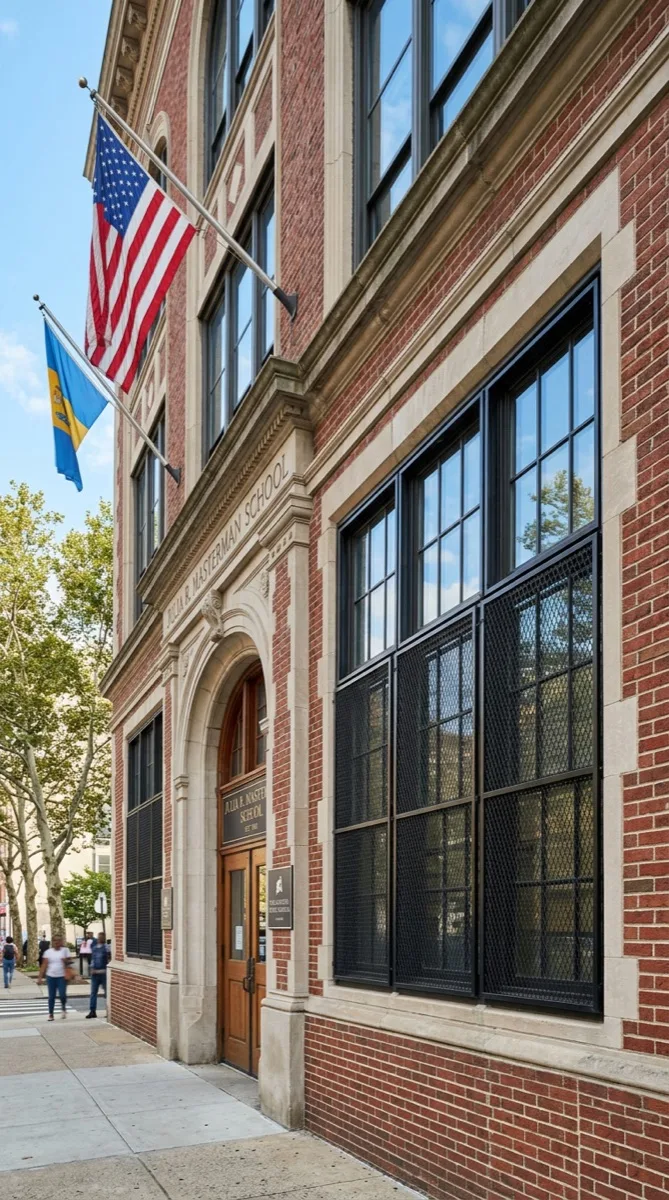
C-Bond nanoShield is for glass that needs strengthening without changing the look or adding a visible film layer. It is a clear protective coating for single-pane glass, transparent storefronts, skylights, and places where owners want the existing glass character to remain intact.
In Philadelphia, nanoShield is especially relevant for preservation districts, clear retail glass, older rowhome panes, and architectural glass where tinting is not desired. The goal is reinforcement without sacrificing visibility, signage, daylight, or historic appearance.
C-Bond TINTC-Bond TINT is applied before standard decorative, privacy, or solar-control film. It gives Philadelphia property owners a way to pair the glass strengthening benefit of C-Bond with the visible comfort, privacy, and energy goals of their chosen tint film.
For restaurants on South Street, offices with west-facing glass, East Girard storefronts, and apartments with heat or glare concerns, C-Bond TINT turns a tint project into a broader performance upgrade: stronger glass, better film adhesion, and reduced cure time.
C-Bond is different because it strengthens the glass substrate itself before or alongside the selected film layer.
| System | Glass Treatment | Film Layer | Force Resistance | UV Block | Best For |
|---|---|---|---|---|---|
| C-BondC-Bond BRS | Molecular | Security film | 3× more | 99.9% | Retail, schools, gov |
| FilmSecurity Film Alone | None | Security film | Baseline | 99.9% | General security |
| ClearC-Bond nanoShield | Molecular | None | Enhanced | None | Clear historic glass |
| GlassLaminated Glass | Interlayer | N/A | Very high | Varies | New construction |
C-Bond I Specification Sheet (C-Bond Systems); IWFA safety and security guidelines.
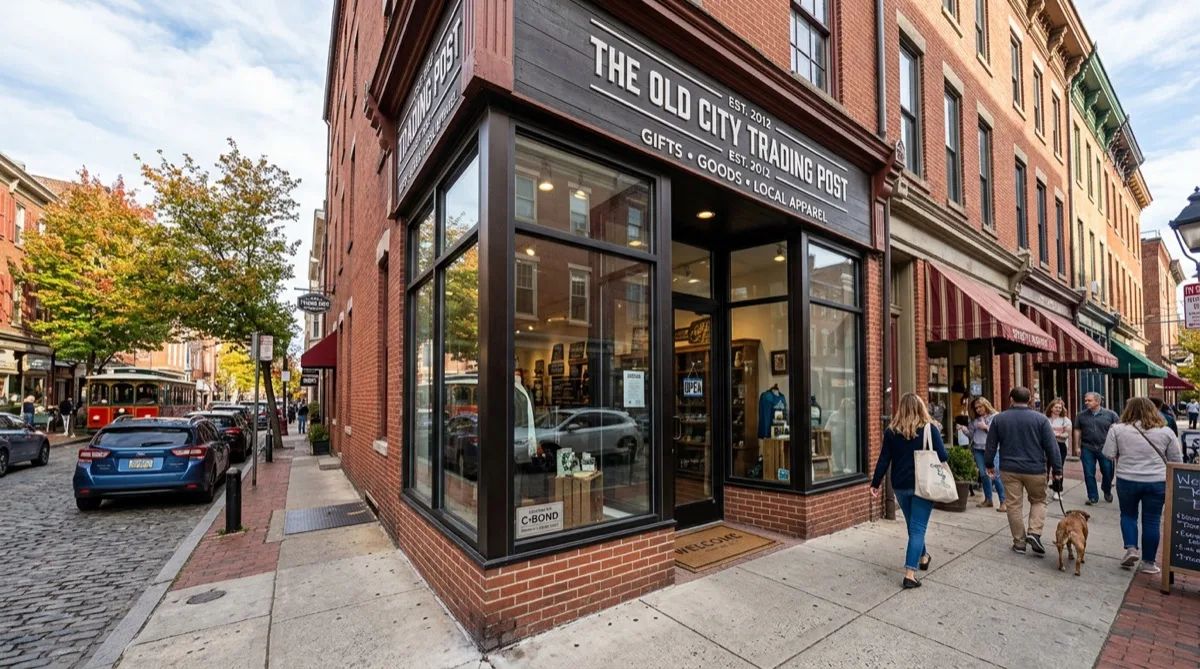
An Old City retailer on a high-foot-traffic corridor had experienced attempted smash-and-grab incidents and wanted more than standard film on the storefront glass.
Window Film Philadelphia installed C-Bond BRS on all storefront glass, combining the liquid nanotechnology primer with a security film layer. The owner kept the clear glass-wall aesthetic that makes the storefront inviting during business hours.
After installation, an attempted break-in failed to penetrate the treated glass quickly enough to allow entry, delaying access long enough for police response. The result was not invisible protection in the absolute sense, but a meaningful forced-entry delay that preserved the storefront appearance.
Discuss a C-Bond BRS project“We kept the look of our glass storefront, but the treated panels gave us time when it mattered. That delay changed the outcome.”
Commercial, retail, and institutional glass safety upgrades across Philadelphia.
★★★★★
"We upgraded three commercial properties with C-Bond BRS after a break-in on the block. The film alone wasn't enough — the nanotechnology layer is what makes the difference."
Sarah W.
Property Manager · Center City
★★★★★
"Our storefront glass looks identical. No one can tell we've done anything — until someone tries to break through it."

James R.
Retail Owner · Old City
★★★★★
"We needed a safety upgrade across multiple buildings without the cost of replacing windows. C-Bond BRS gave us a meaningful improvement at a fraction of that cost."

Michelle T.
Facilities Director · Philadelphia School District
Answers about C-Bond products, glass strengthening, film pairing, and certified installation in Philadelphia.
Talk to a SpecialistC-Bond is a patented liquid nanotechnology primer applied to glass before or with a compatible film system. Standard safety film mainly helps retain broken glass; C-Bond penetrates microscopic stress fractures in the glass itself, improving strength, flexibility, adhesion, and shatter resistance.
C-Bond BRS is the combined safety assembly: C-Bond I primer applied to the glass, followed by a safety or security film layer. The primer strengthens the glass and improves the film bond, creating a glass-retention system for Philadelphia storefronts, schools, government buildings, and public entrances.
C-Bond can be used on many existing glass types, but every project starts with a glass assessment. The installer checks glass condition, surface contamination, frame type, and the intended film system before recommending BRS, nanoHybrid, nanoShield, or C-Bond TINT.
C-Bond nanoHybrid is a single-product option where C-Bond technology is pre-applied to a window film carrier. It gives Philadelphia property teams a simplified way to combine nanotechnology glass treatment and film performance in one specification.
Yes, C-Bond nanoShield and select C-Bond systems can be useful for single-pane glass, storefront glass, skylights, and historic properties where replacement is restricted. Suitability depends on the condition of the glass and the building requirements.
C-Bond I and nanoShield are clear treatments and generally do not create a visible tint. When C-Bond TINT or BRS is paired with a chosen film, the final appearance depends on that film selection.
C-Bond is commonly specified for Old City and Center City retail storefronts, K-12 schools, municipal offices, healthcare entrances, restaurants, bars, offices, and glass-heavy properties that need stronger existing glass without full replacement.
Warranty terms depend on the C-Bond product, glass condition, film pairing, and project type. C-Bond BRS commonly carries warranty support when installed as an approved glass treatment and film system by a certified installer.
Yes. C-Bond TINT is designed as a primer before standard decorative or solar-control films, allowing Philadelphia property owners to combine glass strengthening with glare, heat, privacy, or design goals. For energy-oriented projects, our team can also coordinate film selection through the energy savings program.
Window Film Philadelphia is a certified C-Bond installer serving Philadelphia commercial, institutional, and residential properties. We assess the glass, recommend the correct C-Bond system, and install the treatment with the appropriate film or coating.
Slide from clear glass to a darker chosen tint film with the combined C-Bond TINT system.
VLT 65% · Light tint + C-Bond TINT · visible light transmission
Get a Free Quote →