
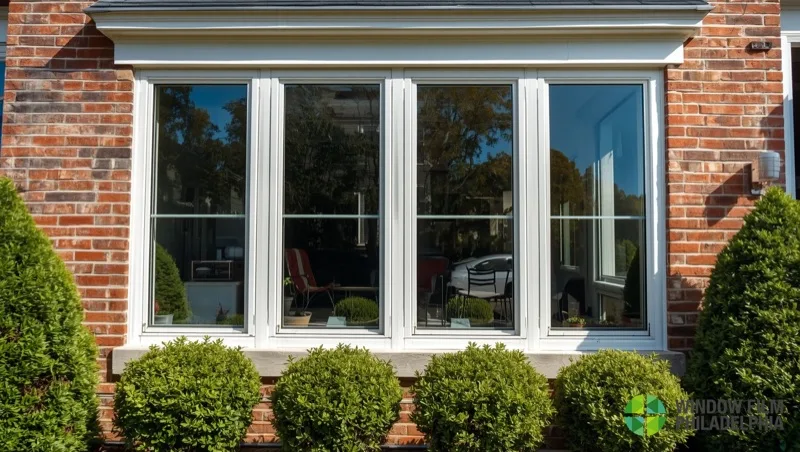
Philadelphia schools face growing pressure to harden their campuses against threats ranging from forced entry to severe weather. Across the School District of Philadelphia, which serves more than 200,000 students across roughly 340 buildings, administrators are increasingly turning to security window film as a practical, budget-conscious layer of protection. Whether you manage a large public high school in Northeast Philly, a charter school in West Philly, or a private academy in Center City, security window film offers a proven way to slow intruders, hold broken glass in place, and give staff critical seconds during an emergency.
Why do Philadelphia schools need security window film?
Glass doors and ground-floor windows are among the most vulnerable points in any school building. A determined intruder can shatter standard annealed glass in seconds, creating an entry point long before law enforcement arrives. In a city as dense and diverse as Philadelphia, where many school buildings predate modern safety codes, the risk is compounded by aging infrastructure.
Security window film addresses this gap by bonding tightly to the interior surface of existing glass. When struck, the film holds the shards together in a flexible membrane, preventing the glass from collapsing inward and slowing anyone trying to push through. This forced-entry delay can buy precious time — often 30 seconds to several minutes — for staff to initiate lockdown procedures and for first responders to arrive.
Philadelphia’s mix of historic brick schoolhouses in South Philly, mid-century buildings in Kensington, and modern construction in the Navy Yard means that glazing varies widely from campus to campus. Security window film can be applied to virtually all of it without replacing the windows, making it one of the most cost-effective retrofits available to facilities directors.
How Security Window Film Works
Security window film functions through a combination of high-tensile polyester layers, aggressive pressure-sensitive adhesives, and — in the highest-performing configurations — a structural attachment system that anchors the film and glass to the frame. The result is a laminated assembly that resists impact, flexes under load, and keeps fragmented glass in one sheet rather than scattering dangerous shards across a classroom.
Key Protective Mechanisms
When evaluating security window film for a school, it helps to understand the three primary ways it protects building occupants:
- Spall control: The film captures glass fragments on the safe (interior) side, preventing them from becoming projectiles during an impact event or blast.
- Forced-entry delay: By holding the glass together, the film transforms what would be a two-second break-in into a sustained physical struggle, buying minutes that matter during a lockdown.
- Blast mitigation: In the event of an explosion or severe pressure wave, filmed glass is far less likely to become lethal airborne shards — a hazard responsible for a significant percentage of blast-related injuries.
Each mechanism matters in different ways for different buildings. A ground-floor classroom facing a busy street in Center City may prioritize spall control and blast mitigation, while a school in a quieter residential pocket of Northeast Philly may be most concerned about forced-entry delay.
LLumar and Vista Security Film Performance
At Window Film Philadelphia, we install LLumar and Vista security films — both manufactured by Eastman Chemical Company and engineered to meet demanding industry standards. These films have been tested under protocols that simulate real-world attack scenarios, giving school administrators confidence in their performance.
LLumar’s security film lines deliver impressive impact resistance. When properly installed with a structural attachment system, LLumar security film can delay forced entry through a standard pane by up to several minutes — long enough for a school resource officer or local patrol unit to respond. Vista security films offer comparable tensile strength and optical clarity, ensuring that natural light and visibility are not compromised while providing critical protection in classrooms and hallways.
For schools considering compliance with the CISA K-12 School Safety framework, both LLumar and Vista products satisfy requirements related to window hardening and access delay. The films carry certifications under ASTM E1886 and ASTM E1996, which evaluate the performance of window systems under impact and cyclic pressure loading from windstorms and blast events.
Real Philadelphia School Context
Consider a typical elementary school in the School District of Philadelphia — say, a building in West Philly with single-pane windows along its first-floor corridors. A substitute teacher locks the classroom door during a drill, but a ground-floor window remains an easy access point. With security window film applied, that window no longer collapses on impact. The intruder is visible, struggling against a film of glass that refuses to fall apart, and every additional second is another second for the school’s locked-door protocol to take effect.
Or picture a large public high school in Northeast Philly with a sprawling glass-fronted lobby. During dismissal, the lobby fills with students, staff, and parents. If a vehicle were to jump the curb and strike the glass entrance — an event that has occurred at schools across the country — security film would hold the glass in the frame rather than allowing it to shatter inward onto a crowd of people.
Private schools and charter networks in neighborhoods from Kensington to South Philly face similar considerations. Many operate in converted commercial or residential buildings whose windows were never designed to resist forced entry. For these schools, applying security window film to safety and security film installations is often the first and most affordable step in a broader campus safety plan.
The Installation Process
Installing security window film is a minimally invasive process that can be scheduled during evenings, weekends, or summer recess — no construction crews, no disruption to classes, and no need to replace existing windows.
- Site assessment: A technician walks the campus to catalog every pane that needs treatment, measuring glass type, thickness, and frame condition.
- Film specification: Based on the threat profile and budget, the appropriate LLumar or Vista film thickness (typically 4 mil to 8 mil) is selected for each location.
- Surface preparation: Each window is thoroughly cleaned and inspected for defects that could affect adhesion.
- Film application: The film is precisely cut, applied with a wet-install method, and squeegeed for a crystal-clear finish with no bubbles or distortions.
- Curing and optional attachment: The film cures over several days. For higher-threat areas, a structural attachment system is installed to mechanically bond the film-and-glass assembly to the frame.
- Final walk-through: The installer inspects every pane with facilities staff to confirm quality and answer maintenance questions.
The entire process for a mid-sized school building typically takes one to three days, depending on the number of panes and whether a dedicated school security application layout is required.
Cost Considerations for Philadelphia Schools
Budget realities are unavoidable for any school administrator in Philadelphia. The good news is that security window film costs a fraction of replacing windows with laminated or tempered glazing. Pricing depends on several factors:
- Film thickness: Thicker films (7–8 mil) cost more but offer greater forced-entry delay and blast resistance.
- Glass size and accessibility: Large lobby panes and hard-to-reach clerestory windows carry higher install labor costs.
- Structural attachment: Adding a wet-glazed or mechanical attachment system increases the per-square-foot cost but significantly improves performance under sustained attack or blast.
- Building scope: A building with 50 ground-floor panes will cost far less than a multi-wing campus with 300+ treated openings.
For schools looking to prioritize, we recommend starting with ground-floor windows, main entrance lobbies, and any glass within reach of pedestrian traffic. A phased approach lets schools spread the investment across budget cycles while immediately addressing the most vulnerable openings.
Compliance and Safety Standards
Security window film is not a standalone solution — it works best as part of a layered safety strategy. Here are the key references school administrators should review:
- CISA K-12 School Safety guidelines identify window hardening as an effective layer of physical security that delays unauthorized entry.
- ASTM F1233 outlines test methods for forced-entry resistance of window systems.
- NFPA 101 Life Safety Code addresses egress through filmed glass, which is an important consideration for any school installing security film on exit-path doors.
Philadelphia schools should also coordinate with their local fire marshal and the School District’s Office of School Safety to ensure that any security film installation complies with applicable codes and does not inadvertently block required egress paths.
Take the Next Step Toward a Safer Campus
Every school in Philadelphia deserves a plan for protecting its students and staff from the threats that target glass entry points. Security window film is one of the fastest, least disruptive, and most affordable ways to harden your campus — and it can be installed without replacing a single window.
If you are a facilities director, principal, or school safety coordinator in the Philadelphia area, contact Window Film Philadelphia today for a free on-site assessment. We will walk your campus, measure every vulnerable pane, and provide a detailed proposal with LLumar or Vista security film recommendations tailored to your building and budget. Call us or request a consultation online, and take the first step toward giving your students and staff the protection they deserve.