When a South Philly homeowner notices their once-dark windows starting to bubble in the afternoon heat, or a Center City property manager debates replacing film on a high-rise facing west, the question isn’t just about aesthetics — it’s about durability. How long can you actually expect professional window film to last on buildings in Philadelphia? The short answer? Between 5 and 20 years. But the real answer depends on three things we see every day: the technology in the film, the quality of the installation, and how much stress the glass is under from Philadelphia’s intense summers and aging building stock. Our team has restored clarity to hundreds of rowhome windows in Fishtown, reduced heat gain in University City labs, and helped businesses from Passyunk to Conshohocken manage glare without sacrificing views. We’ve learned what holds up over time and what starts fading after only a few hot August cycles.
For most customers, the goal is a window film solution that lasts through Philadelphia’s humid 85°F+ summers and remains effective — not peeling, bubbling, or turning purple — across a decade or more. In this guide, we’ll break down what actually determines lifespan, why ceramic and spectrally selective films outperform older dyed types, and how installation mistakes cut short even the most expensive materials. You’ll also learn which film types match your building’s glass, how to spot early signs of failure, and what to expect in your specific neighborhood.
How does Philadelphia’s climate affect window film longevity?
Philadelphia’s climate is a constant test for window film. With summer highs regularly hitting 90°F and humidity levels that spike heat stress on glass, thermal cycling breaks down adhesives faster than in more moderate regions. During a typical July, our cooling degree days exceed 300 — meaning every west- or south-facing window absorbs sustained solar load, expanding the film and contract as temperatures drop each night. This repeated expansion and contraction weakens the adhesive bond, especially on older single-pane glass common in rowhomes. Films that resist this — like ceramic or spectrally selective options — maintain integrity because they reject up to 65% of solar energy at the surface, preventing the glass from overheating in the first place.
In areas like Old City and Society Hill, century-old buildings feature thin, untempered glass that’s never been replaced. These windows don’t face thermal stress cracking risks from high-absorption films, so they’re actually ideal canvases for long-lasting film. However, exposure to the elements — rain, wind, temperature swings — still takes a toll on exterior-applied films, which is why we almost never recommend them. Interior film avoids direct weather exposure, and in Philly’s urban core, that matters. Even in well-insulated commercial high-rises in University City, solar gain through glass increases indoor temperatures by 5–10°F during midday, which is why building managers often call us before HVAC systems are overworked.
A second major factor is ultraviolet exposure. While quality window films block 99% of UV rays, the sun’s angle in late afternoon means west-facing glass in Center City and Northern Liberties gets the most intense beam from 3 to 6 PM. That’s when dark films absorb maximum energy. Over time, lower-end dyed films degrade fastest under this load, showing discoloration - most often a brown or purple tint - within just 5 to 7 years. In contrast, high-performance films like 3M Prestige or LLumar IRX use nano-ceramic or spectrally selective technology that reflects heat rather than absorbing it, drastically reducing the stress that leads to early failure. According to ENERGY STAR’s windows and skylights efficiency guide, windows and skylights that meet strict thermal performance criteria can even qualify for federal tax credits — another reason to invest in quality film. These systems routinely last 15 years or more, even in harsh Philly conditions.
Film Technology Is the Biggest Factor in How Long It Lasts
The single most important decision — more than installation or glass type — is the film technology you choose. We see installations where $2,000 of premium film still looks like new after 18 years, while dyed film on the same block starts bubbling in 7. The difference is in the materials and how they interact with solar energy. Let’s break down the most common types by actual lifespan and performance.
Dyed film. This budget-friendly option absorbs sunlight using a layer of dye, which gradually fades under prolonged UV exposure. Most manufacturers claim 5–8 years of useful life, but on south- or west-facing homes in South Philly or Fishtown, we often see visible degradation — fading, bubbling, or purple discoloration — in as little as 5 years. If you’re budgeting short term and plan to replace it eventually, dyed film can make sense, but it’s not a long-term solution. It performs poorly on single-pane glass in direct sun and should never be used where heat rejection is a priority.
Metalized film. This type layers microscopically thin metal (like aluminum or titanium) onto the film to reflect heat. It offers better durability than dyed film — typically 8–10 years — and strong TSER (Total Solar Energy Rejected) numbers, often between 50–58%. However, the metal layers can interfere with radio signals, including cell reception, Wi-Fi, and GPS inside the building. We see this issue in Center City offices and rowhomes with smart systems. For general use, we recommend ceramic or spectrally selective films instead.
Ceramic and spectrally selective film. These represent the industry standard for longevity and performance. Brands like 3M Prestige Series, LLumar AIR and IRX, Vista VS, and Huper Optik use nano-ceramic particles that reject solar heat without absorbing visible light. As a result, they maintain cooler glass temperatures and reduce adhesive breakdown. These films offer 15–20 years of expected life, with some manufacturers offering limited lifetime warranties for residential applications. For example, 3M Prestige 70 has a VLT (Visible Light Transmission) of 70% and a TSER of 53%, making it nearly invisible while still blocking solar heat. LLumar IRX 65 blocks 61% of infrared heat with a 65% VLT — ideal for homes that want brightness and performance. These films won’t discolor, don’t affect signals, and hold up under intense Philadelphia sun.
Interior vs. Exterior Film: A Very Different Story
Nearly all professional window film on homes and offices in Philadelphia is installed on the interior. That’s because interior film outlasts exterior film by a wide margin. Exterior-applied films are exposed to rain, wind, hail, cleaning chemicals, and temperature extremes — all of which degrade materials far more quickly. Most exterior films last only 5–10 years, even when made with durable, weather-resistant materials. We never install film on the outside of residential or commercial buildings unless it’s a temporary or highly specialized application.
Interior film, by contrast, operates in a controlled environment. Once cured over 30–60 days, it bonds securely to clean, dry glass and is protected from direct weather exposure. For Philly rowhomes with original single-pane glass — which include many in Fishtown, Kensington, and East Falls — interior installation avoids putting any additional thermal or mechanical stress on fragile, century-old panes. Since most residential glass in the city isn’t tempered or insulated, there’s no risk of thermal stress cracking from high-absorption films, which means we can use high-performance options safely. The adhesive only breaks down when exposed to moisture, ammonia-based cleaners (like Windex), or physical abrasion — all avoidable with proper care.
The Installation Mistakes That Cut Film Life Short
No matter how high-end the film is, poor installation can ruin it within months. When we inspect film that’s failing prematurely, we almost always find one of these avoidable mistakes.
Applying film to dirty or damp glass. Even tiny specks of dust or moisture trapped under the film create bubbles or haziness that worsen over time. The standard is to clean the glass thoroughly with isopropyl alcohol and let it dry completely. We see rushed installations — especially in rental properties or during quick renovations — where installers skip this step, only for the client to notice fogging within weeks. That’s not a film defect — it’s an installation flaw.
Using the wrong film for the glass. Applying a dark, high-absorption dyed film to tempered glass in a double-pane insulated unit (IGU) can cause thermal stress cracking. Temperatures on the glass surface can rise 30–40°F above ambient, creating pressure that cracks tempered panes. In Center City high-rises and newer construction in University City, this is a real risk. We always verify glass type before applying any dark film and recommend spectrally selective or ceramic films that reject heat without raising glass temperature.
Improper edge clearance and trimming. We recommend at least a 1/8 inch gap between the film edge and the window frame to allow for expansion. Without this margin, the film can pull away from the glass as it heats and cools. We often see this in Fishtown and Northern Liberties rowhomes where installers cut film too close to the seal. Over a few summers, that small gap grows into a visible edge lift, letting air and moisture in. Once that starts, replacement is the only option — you can’t re-adhere it.
Signs Your Window Film Needs to Be Replaced
Window film doesn’t fail suddenly — it gives warning signs. The most common ones we see in our field audits across Philadelphia are bubbling, peeling corners, and discoloration. Bubbling usually starts at the top center of a pane, where heat collects, or along the edges where moisture can seep in. Peeling begins at a corner and spreads inward as the adhesive degrades. Discoloration — especially a purple or brown tint — signals UV degradation of the dye layer and is almost always seen in older dyed films. Once the film shows these issues, performance drops: it rejects less heat, blocks less UV, and compromises privacy.
If you’re unsure whether to repair or replace, consider the lifespan of your building and film type. For instance, if you have dyed film installed in 2018 on a rowhome in South Philly, it’s likely near or past the 8-year mark and due for replacement. On the other hand, a 3M Prestige installation from 2012 should still be performing well if it was properly maintained. We recommend replacing film when it’s no longer meeting thermal, privacy, or aesthetic goals — not waiting for complete failure.
What to Expect by Philadelphia Property Type
Rowhomes in Fishtown, South Philly, and East Falls. These historic homes often have thin, single-pane glass with no thermal stress risk. That makes them perfect for ceramic and spectrally selective films, which can last 15-20 years. We see no fading, no bubbling, and excellent energy savings. South Philly’s older homes benefit most in summer, where interior temperatures can drop 10-15°F after installation. Since the glass isn’t insulated, film acts as the primary solar control layer. Our energy-saving window film options are specifically matched to the glass types most common in older Philadelphia rowhomes. Maintenance is easy — just clean with mild soap and water, and avoid ammonia.
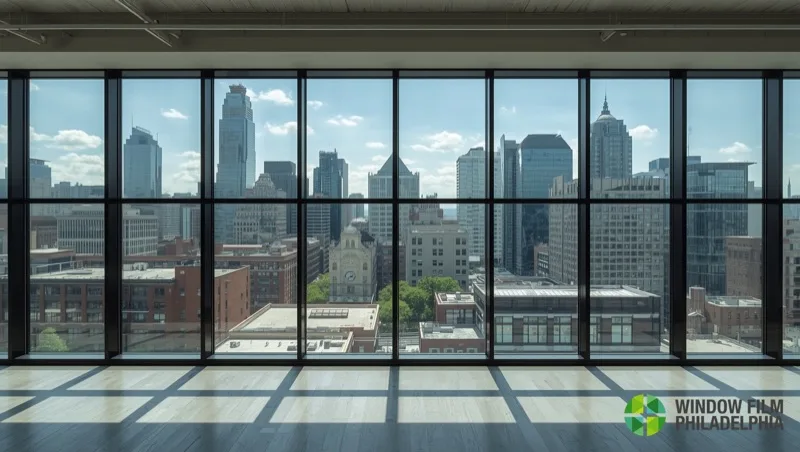
High-rises in Center City and University City. These towers have modern glass - often tempered IGUs with LoE coatings. That means we must be selective with film type. Dark dyed films are off-limits due to cracking risk. Instead, we use spectrally selective options like 3M Thinsulate CC75 or LLumar AIR 75, which have high VLT (75%) and strong heat rejection without increasing thermal stress. These films typically last 12-15 years in commercial applications. The biggest benefit isn’t just cooling — it’s glare reduction for office workers without darkening the view. Our solar control films for Philadelphia buildings are rated and tested for exactly these high-load commercial applications.
New construction in King of Prussia or Cherry Hill. Many newer homes and offices meet PA UCC energy code with SHGC (Solar Heat Gain Coefficient) ≤ 0.40. In these cases, adding dark window film could reduce SHGC too much, causing overheating in winter. Instead, we recommend low-absorption ceramic or spectrally selective films that balance year-round performance. For example, Solar Gard Hilite films reject 52–60% of solar energy while passing visible light — ideal for homes that want to retain passive solar heat. Lifespan is 10–15 years, depending on exposure.
Frequently Asked Questions About Window Film Lifespan
How long should window tint last on a house?
Properly installed high-quality window film on a Philadelphia home should last 10–20 years. Films like 3M Prestige, LLumar IRX, or Huper Optik Drei use ceramic or spectrally selective technology that resists fading, bubbling, and discoloration. With single-pane glass common in historic rowhomes, there’s no risk of thermal stress cracking, so these films bond securely and last decades. Maintenance matters — avoid ammonia-based cleaners and abrasive scrubbers.
Does window film damage glass?
Window film itself does not damage glass — but poor installation or the wrong film type can. Applying high-absorption dyed film to tempered glass in a double-pane window increases surface temperature enough to cause thermal stress cracks. That’s why we always inspect glass type before installation. On single-pane annealed glass — which most older Philly homes have — film is completely safe and often strengthens the pane slightly.
Can window film be reapplied or repaired?
Once film starts bubbling or peeling, it cannot be repaired — it must be fully replaced. You can’t re-wet and re-stick it. However, the replacement process is straightforward: we remove the old film, clean the glass thoroughly, and install new film. Since most glass in Philadelphia doesn’t need special handling, this is usually a one-day job with minimal disruption.
Is there a warranty on window film?
Yes. Most premium brands — including 3M, LLumar, and Vista — offer limited lifetime warranties for residential applications, covering defects like bubbling, peeling, and discoloration. Commercial warranties are typically 10–15 years. These warranties require professional installation to be valid. We use only authorized films and register your warranty with the manufacturer.
For lasting comfort, energy savings, and clarity, your window film should do more than just look good — it should last. At Window Film Philadelphia, we install only the highest-performing ceramic and spectrally selective films designed to endure Philly’s climate without fading or failure. Contact us today for a free consultation to assess your current film or upgrade to a long-term solution.