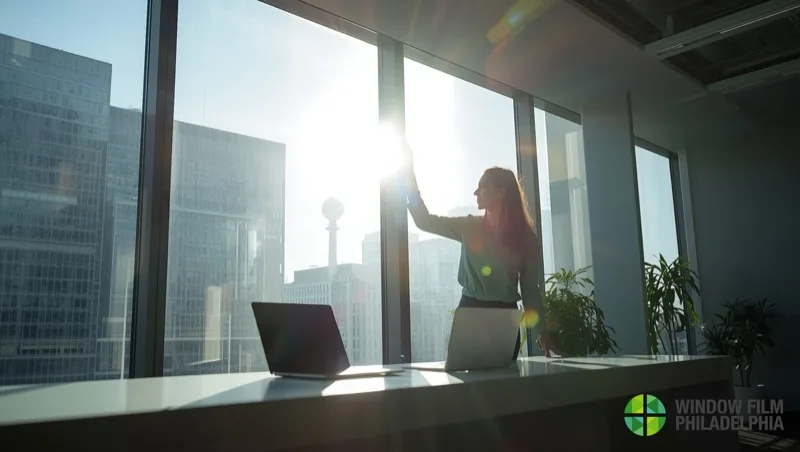
Philadelphia light can be beautiful until it turns a Center City conference room into a screen-reflecting fishbowl or makes a south-facing rowhome parlor in Graduate Hospital too bright to enjoy by 3 p.m. Glare reduction window film Philadelphia property owners ask for most often is not about darkening glass for the sake of it. It is about keeping daylight, views, and architectural character while taking the sharp edge off direct sun.
Why does glare show up so quickly in Philadelphia spaces?
Philadelphia buildings deal with a mix of old construction and modern glass that makes glare especially noticeable. Brick rowhomes in Fairmount, Bella Vista, and South Philly often have tall front windows with limited overhangs, while office buildings in University City and along Market Street can have broad west-facing elevations that pull in hours of late-day sun.
When that sunlight hits untreated glass, the problem is not just visual discomfort. Screen washout, squinting, and closed blinds usually come with added solar heat, which is why glare complaints and comfort complaints tend to show up together. OSHA’s guidance on workplace lighting and glare control identifies excessive glare as a direct contributor to eye strain, headaches, and reduced productivity — making it an occupational concern, not just a comfort preference.
What good glare control should actually accomplish
A glare film should do more than take the room from bright to dim. In most Philadelphia homes and offices, the goal is balanced daylight that still feels open and usable.
That usually means the right film should deliver several results at once:
- Reduce harsh brightness on monitors, televisions, and polished work surfaces.
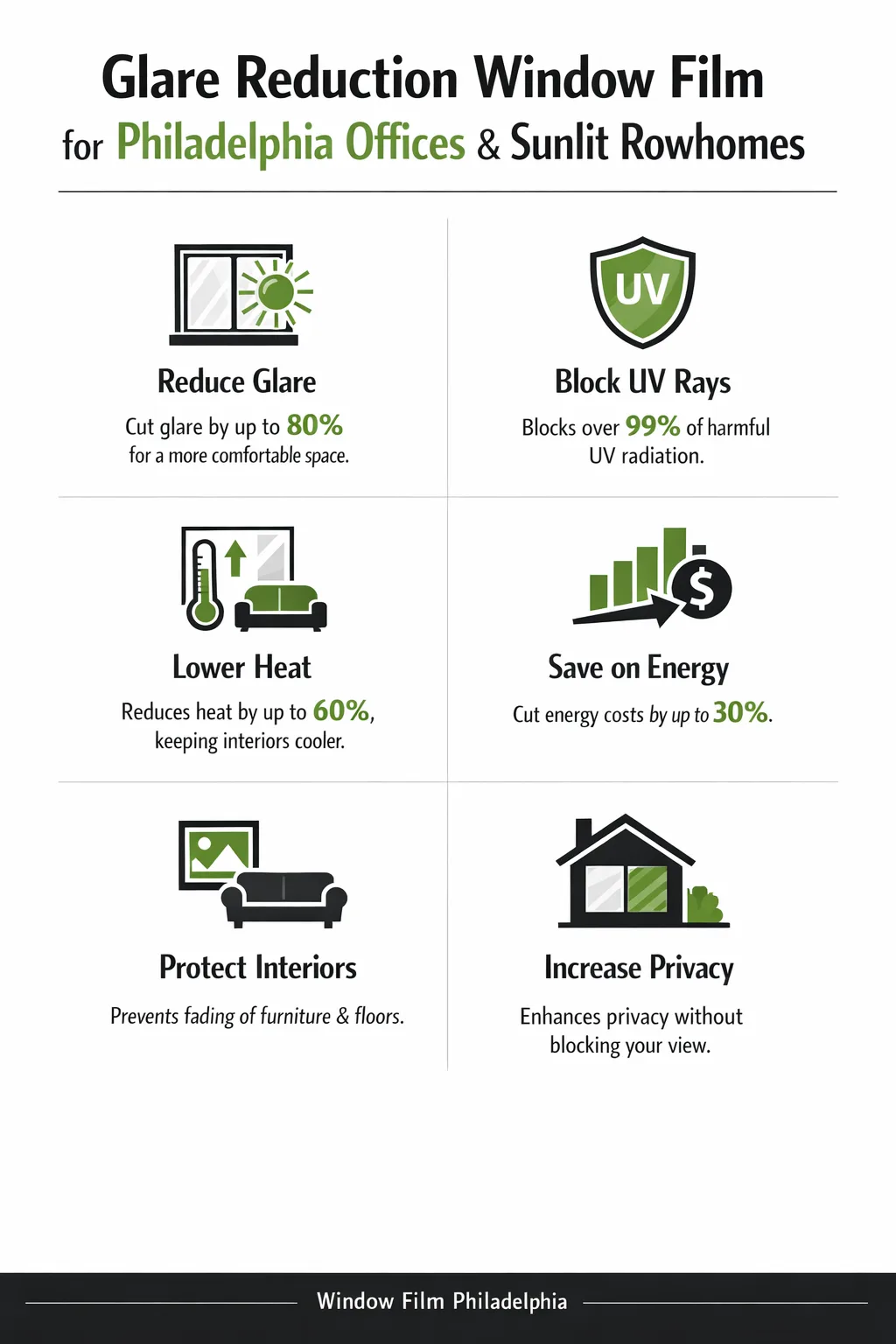
- Lower solar heat on west- and south-facing glass so rooms feel steadier through the afternoon.
- Preserve enough visible light that a rowhome living room or office suite does not feel closed in.
- Add UV protection that helps protect flooring, fabrics, artwork, and merchandise near the glass.
Measurable performance from the brands we offer
This is where product selection matters. A decorative or privacy film may change appearance, but solar control films from approved lines like 3M, Llumar, and Vista are built to improve comfort in measurable ways.
For example, 3M Sun Control Window Film Prestige Series is known for a lighter, less reflective look while still delivering strong performance. Depending on the exact Prestige film selected, published manufacturer data can reach about 60% total solar energy rejected and up to 97% infrared rejection. Many 3M solar films also block up to 99.9% of UV rays, which helps explain why the upgrade is often felt on both screens and furnishings, not just skin and eyes.
For many projects, the best glare reduction window film Philadelphia offices and rowhomes install is a spectrally selective product rather than the darkest film on the card. That matters in places like Old City lofts or Washington Square offices where daylight is part of the appeal and the finish needs to stay refined.
Where film makes the biggest difference
Not every pane needs the same treatment. The most noticeable improvements usually come from the windows that collect direct sun at the worst times of day.
These are some of the Philadelphia situations where glare-reducing film tends to have the fastest payoff:
- West-facing office glass in Center City where late-afternoon presentations and desk work get washed out.
- Front rooms in rowhomes near Passyunk or Fishtown where tall original windows bring in intense summer brightness.
- Home offices in Manayunk or Roxborough where hillside exposure can create long hours of direct light.
- Waiting rooms, retail fronts, and conference rooms in University City that need comfort without shutting the blinds all day.
Matching the film to the building, not just the complaint
The right recommendation depends on glass type, orientation, and how the room is used. A rowhome with double-hung windows and historic trim has different needs than a tenant suite with expansive insulated glass near 30th Street Station.
That is why many property owners start by comparing broader glare reduction options, then look at whether the same project should also support energy savings from solar control film or added UV protection for interiors. When those goals are evaluated together, the result is usually a cleaner specification and a better long-term outcome.
In practical terms, lighter spectrally selective films are often a strong fit for offices that need to stay bright and professional, while some rowhomes benefit from a slightly deeper shade on the most exposed facade. The point is not to make every window look the same. The point is to solve the problem where it actually lives, whether that is a breakfast room that overheats every morning or a glass-walled conference room that becomes unusable at 4 p.m.
A better alternative to living with blinds closed
Many Philadelphia owners try to manage glare by rotating blinds all day, moving desks, or avoiding the sunniest room altogether. Those workarounds usually sacrifice the very daylight and views that made the space appealing in the first place.
A well-chosen film keeps the room functional without forcing a major remodel or full window replacement. In offices, that can mean more usable meeting rooms and fewer comfort complaints. In rowhomes, it can mean keeping original windows in place while making everyday living more comfortable through long summer afternoons.
Get a Philadelphia quote for the right film
If sun glare is making your office harder to work in or your rowhome harder to enjoy, Window Film Philadelphia can recommend a film that fits your glass, your daylight goals, and your building’s character. Contact our Philadelphia team for a quote or on-site consultation and get a practical plan for reducing glare without giving up the light.