
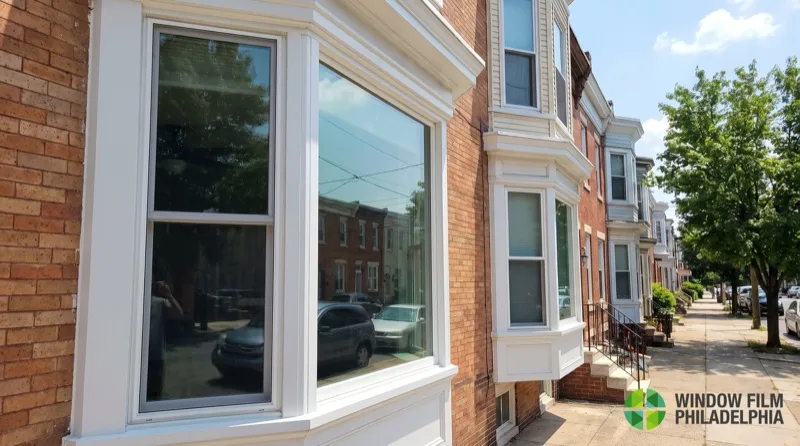
Why Philadelphia Buildings Need Earthquake Protection Systems
Most people associate earthquakes with California or the Pacific Northwest, but the Philadelphia region has its own seismic history. In August 2011, a 5.8-magnitude earthquake centered in Virginia rattled buildings from Center City to Fishtown, sending startled office workers into the streets. The tremor cracked walls, shook fixtures, and shattered windows in older structures across the Delaware Valley. While Pennsylvania does not sit on a major fault line, the USGS has identified seismic zones that can affect the Mid-Atlantic, and the Federal Emergency Management Agency notes that nonstructural damage — including flying glass — accounts for the majority of earthquake-related injuries and property loss in the United States.
For property owners evaluating earthquake protection systems Philadelphia buildings present a unique challenge: aging housing stock in South Philly and Manayunk, historic structures in Old City, and mid-century office towers along Market Street all rely on glass that predates modern safety standards. When the ground shakes, that glass becomes a hazard. Security window film offers a practical layer of protection that holds shattered panes together, keeping shards from becoming projectiles inside your home or business.
How Earthquakes Affect Windows
During a seismic event, buildings flex and sway. That movement puts stress on window frames and the glass within them. Older buildings in neighborhoods like University City and Germantown often have single-pane windows with little give, meaning even moderate ground shaking can cause panes to crack, shatter, or blow out entirely. The danger is not just broken glass on the floor — it is the velocity at which shards travel through a room when a window fails under pressure.
Retrofitting every window with laminated or tempered glass is expensive and often impractical for historic properties where preservation guidelines restrict frame modifications. Security window film provides a cost-effective alternative that bonds to the interior surface of existing glass, creating a membrane that holds broken fragments in place even when the pane fails.
Security Window Film as an Earthquake Protection System
When property owners research earthquake protection systems Philadelphia security window film may not be the first solution that comes to mind, but it directly addresses one of the most dangerous nonstructural hazards identified by FEMA: flying glass. The film works through a combination of high-tensile polyester layers and aggressive adhesive that grips the glass surface. When impact or flexing causes the glass to break, the film stretches and holds the fragments together as a single sheet rather than allowing them to scatter.
Two product lines stand out for this application:
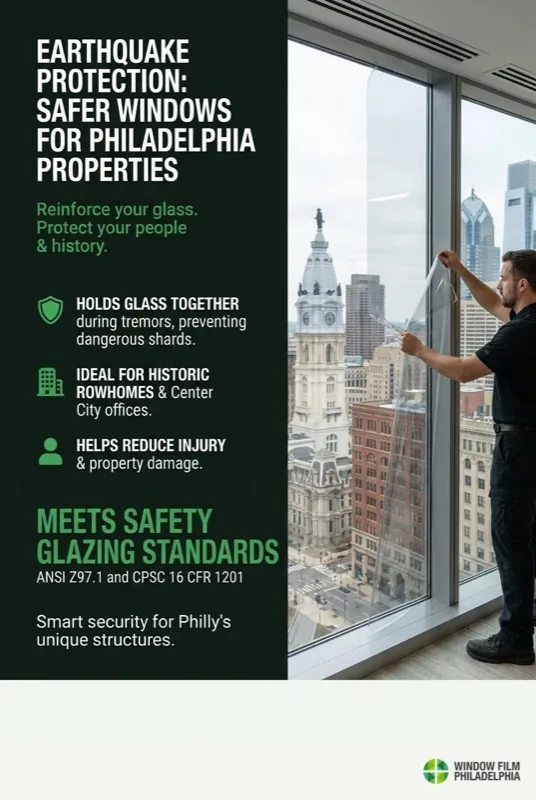
- 3M Safety & Security Window Films — Engineered with micro-layered polyester technology, 3M’s safety films deliver high tensile strength that helps hold glass together under impact. The 3M Ultra Safety series uses up to 42 micro-layers in a single film, giving it the tear resistance needed to keep shattered glass bonded to the frame area. Independent testing has shown these films significantly reduce the velocity and distance of flying glass fragments compared to untreated panes.
- Llumar Safety & Security Films — Manufactured by Eastman, Llumar’s security films are designed to meet ANSI Z97.1 and CPSC 16 CFR 1201 safety glazing standards. These films provide impact resistance that helps glass withstand repeated blows and structural flexing, making them well-suited for buildings in seismic zones where glass may face both impact and pressure stresses.
Both options function as retrofit safety and security window film that upgrades existing glass without requiring full window replacement — a significant advantage for historic Philadelphia properties where original window frames must be preserved.
Key Benefits for Philadelphia Properties
Building owners and facility managers across the city are increasingly treating window film as part of their overall earthquake protection systems. Philadelphia’s mix of property types means the benefits extend in several directions:
- Historic preservation compatibility — In landmark districts like Society Hill and Old City, film can be applied to existing windows without altering visible exterior appearance, meeting preservation board requirements while adding a critical safety layer.
- Protection for occupied spaces — In office buildings along the Benjamin Franklin Parkway or retail spaces in Rittenhouse Square, holding glass together during an event protects occupants from the most common earthquake injury: lacerations from flying shards.
- Reduced cleanup and downtime — When film holds shattered glass in the frame, the aftermath of even a moderate tremor becomes a matter of film replacement rather than full window board-up and replacement, getting commercial spaces back to operation faster.
- Multi-hazard protection — The same security film that performs in an earthquake also resists forced entry, storm debris impact, and blast pressure, providing year-round value beyond seismic events.
Installation Considerations
Proper installation is what separates effective earthquake protection systems Philadelphia properties rely on from a film that simply looks good on the glass. An attachment system — typically a structural bead of sealant or a mechanical anchoring strip — bonds the filmed glass edge to the window frame. Without this step, a broken pane may stay together as a sheet but still pull free from the frame during strong shaking. Professional installers assess each window’s frame material, glass type, and exposure to determine the right combination of film thickness and attachment method.
For older buildings in neighborhoods like Fishtown or Kensington, where wood and steel frames may have shifted over decades, installers also check for existing frame damage that could compromise the film’s performance. The goal is to ensure the entire assembly — glass, film, frame, and attachment — works as one unit when the building moves.
Planning for Seismic Resilience
Earthquake preparedness in Philadelphia does not require dramatic structural overhauls for every building. It requires identifying the nonstructural hazards that cause the most injuries and addressing them with proven, practical solutions. Security window film directly targets the threat of flying glass — the hazard that FEMA identifies as a leading cause of earthquake-related injuries in occupied buildings.
If you are evaluating earthquake protection systems Philadelphia has to offer, the first step is a professional assessment of your existing windows. Our team can inspect your glass, frames, and building type to recommend the right film and attachment system for your specific situation. Contact us today to schedule a consultation and learn how security window film can make your windows safer when the next tremor hits.