
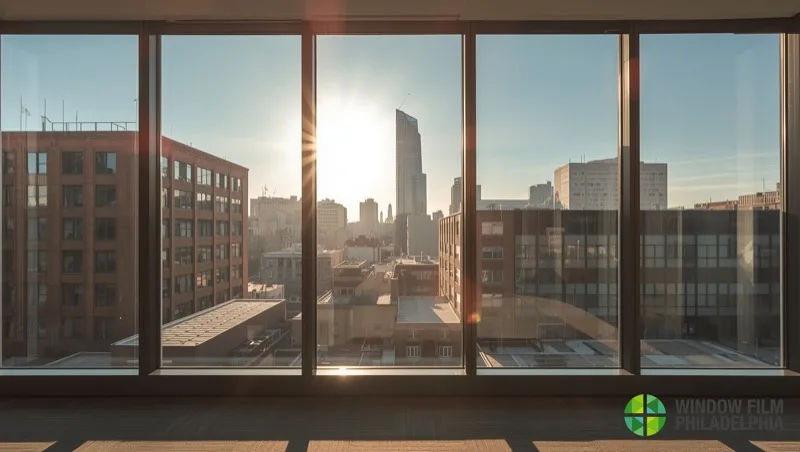
By late July, we can usually predict which Philadelphia rooms will feel miserable before we even walk in. It is the Center City conference room with glass on two sides that turns stuffy after lunch, the South Philly rowhome bedroom that holds heat until midnight, and the Fishtown storefront where the front windows look great for foot traffic but punish everyone standing near the glass. When clients ask us does heat control window film work, they are usually not asking for theory. They want to know whether the room will finally stop feeling like it has a radiator built into the window.
Our answer is yes, heat control window film absolutely works when the glass, the sun exposure, and the film type are matched correctly. Philadelphia’s hottest months are a real stress test because humid air, long western sun, dark masonry, and older glazing all compound the problem. What matters is not just making the glass darker. It is reducing solar heat gain, cutting harsh glare, protecting interiors from UV damage, and doing it without making a rowhome parlor or office lobby feel dim and closed off.
Why does west-facing glass get brutal by midafternoon?
The hardest rooms are rarely the ones that look brightest in the morning. The real trouble usually shows up after 2:00 or 3:00 p.m. when west-facing glass starts taking direct summer sun and the surrounding materials have already been warming up for hours. In Center City towers, that can mean a conference room feels fine during the first meeting and sticky during the second. In Manayunk or East Falls homes, an upper-floor room with broad exposure can stay uncomfortable long after the sun drops behind neighboring roofs.
When people ask us does heat control window film work, the honest answer starts with understanding what is causing the discomfort. Sometimes it is visible brightness, but more often it is solar energy pushing through the glazing and warming floors, furniture, desks, and people near the opening. Philadelphia’s hot months make that worse because the air is already humid, so the HVAC system has to fight both temperature and moisture. A room can technically hit the thermostat setting and still feel wrong because the glass line is radiating heat into the space.
That is why untreated windows can create hot spots even in buildings with good air conditioning. The AC may keep the average room temperature acceptable, but it cannot stop direct solar load from turning one side of the room into the least desirable place to sit. Heat control film works best when the problem is coming from the glass itself, which is exactly what we see in many rowhomes, converted lofts, office suites, and retail frontages across Philadelphia.
What Heat Control Window Film Actually Changes on the Glass
Heat control film is not magic, and it is not just colored plastic. Good architectural film is engineered to reject a meaningful portion of incoming solar energy before it becomes indoor discomfort. That usually means lowering glare, reducing total solar energy passing through the glass, and cutting ultraviolet exposure at the same time. When a client asks us does heat control window film work, we explain that the goal is not to make summer disappear. The goal is to change the performance of the glass enough that the room becomes manageable and consistently comfortable.
A product like 3M Prestige is a good example because it can stay relatively clear while still delivering strong performance. Depending on the specific version, 3M Prestige films can reject up to 97% of infrared light and block 99.9% of UV rays, which is why they are popular in homes and offices that want relief without a mirrored look. On the right glass, spectrally selective options can also meaningfully reduce total solar energy while preserving daylight, which matters in Philadelphia properties where people want the comfort upgrade but do not want to lose the feel of a bright living room or corner office.
We also remind clients that solar performance should be read like a system, not a single marketing number. Visible light transmission, solar heat rejection, and glare control all interact. The federal efficiency criteria summarized in ENERGY STAR guidance for efficient windows are a useful reminder that solar heat gain is a real building-performance issue, not just a comfort complaint. That is one reason energy-saving window film is often a better fit than heavier interior shades alone for Philadelphia glass that bakes all afternoon.
Which Film Types Work Best When You Want Light Without the Oven Effect
Not every client wants the same visual result. Some want the lightest possible film because they love their daylight and skyline views. Others are happy to go darker if it means the room stops overheating every summer. When we hear the question does heat control window film work, we usually follow with another one: what tradeoff are you actually willing to make between brightness, privacy, and maximum heat rejection?
Spectrally selective film. This is often where we start for Philadelphia homes with good natural light. Products in the 3M Prestige family and select LLumar or Vista solar-control lines can reduce solar load while keeping the glass far clearer than older reflective films. We like this category for Rittenhouse condos, Old City townhomes, and upper-story offices where views matter as much as comfort.
Dual-reflective or more traditional solar film. These films usually push harder on glare and heat, especially on punishing west-facing exposures. We may recommend them in commercial spaces, storefront back offices, or rooms where afternoon brightness is just as big a complaint as heat. The look is more noticeable, but so is the performance.
Low-e and specialty thermal films. These can be smart for older Philadelphia buildings where the problem is not only summer solar gain but year-round glass discomfort. We do not recommend them blindly, but on the right glazing package they can help soften seasonal extremes in a way that feels more balanced than going after summer heat alone.
Where We See the Biggest Results in Philadelphia Properties
The biggest performance wins usually come from spaces that are heavily used and predictably sun-struck. In offices, that is often perimeter seating, conference rooms, reception areas, and glass-walled corner suites. In homes, it is bedrooms over brick side walls, south-facing living rooms, nurseries, sunrooms, and stair landings that trap warm air. In retail, it is front windows that look fantastic from the sidewalk but make merchandise displays and cash-wrap zones uncomfortable.
Philadelphia also has a lot of older building stock, which changes how we answer does heat control window film work. Old City storefront glass, Society Hill townhomes, and rowhome renovations in South Philly or Queen Village often involve windows that were not designed for today’s cooling expectations. Even when the frames have been updated, the room orientation and masonry heat retention still create stubborn hot zones. Film does not change the brick, but it can absolutely cut the solar load arriving through the glass and make the mechanical system’s job easier.
For offices and coworking spaces, glare matters almost as much as heat. A room that is 20% more comfortable but still unusable for screens at 4:00 p.m. is not really fixed. That is why we often pair the comfort discussion with glare reduction solutions when we are evaluating Philadelphia workspaces. The best result is not just a cooler room. It is a room people can actually use all afternoon without closing every blind.
Why Some Installations Feel Dramatic and Others Feel Subtle
One reason clients keep asking does heat control window film work is that they have heard wildly different stories from friends and neighbors. Both the glowing review and the disappointed one can be true, because glass type changes everything. Single-pane clear glass, double-pane units, coated glass, oversized west-facing windows, and shaded north exposures will never respond identically.
Film tends to feel most dramatic when the baseline problem is severe: strong direct sun, long hours of exposure, and visible discomfort near the glass. In those cases, clients often notice the difference immediately. The floor no longer feels like it is collecting radiant heat. The couch beside the window becomes usable. The office chair closest to the glass stops being the seat everyone avoids.
The result can feel subtler when the main issue is weak insulation elsewhere, undersized HVAC, or air leakage around frames and doors. Film still helps in that situation, but it is solving only the glass portion of the problem. We tell people this plainly because overselling is lazy. Heat control film works best as a glass-performance upgrade, not as a substitute for every other building envelope repair a property might need.
How We Match Film to Rowhomes, Historic Buildings, and Modern Offices
Philadelphia is not one building type, so our recommendations cannot be one-size-fits-all. In a South Philly rowhome, we may prioritize a clear or lightly tinted film that preserves daylight in narrow rooms while still reducing solar load where the afternoon sun is strongest. In a modern Center City office, we may choose a higher-performing commercial option if the issue is expansive glazing, persistent screen glare, and cooling imbalance across the floor plate.
Historic properties take extra judgment. In Old City, Fairmount, and other preservation-sensitive areas, we pay close attention to how the film changes exterior appearance and how the existing glass will respond thermally. Decorative or reflective choices that might be fine on a contemporary façade can look wrong on an older building. That is another reason we do not treat does heat control window film work as a yes-or-no commodity question. The real question is which film works on this exact glass without creating a visual mismatch or stress issue.
We also look at how the space is used hour by hour. A bedroom needs a different comfort profile than a reception area. A home office in University City where someone works on a monitor all day needs different glare management than a stair hall in Chestnut Hill. If a business owner wants a broader evaluation for sun-exposed glass, productivity, and client comfort, our office window film options give a good sense of the commercial side of that conversation.
What Heat Control Film Cannot Fix by Itself
The best installations are the ones where expectations are honest from the start. Heat control film cannot fix failed seals in insulated glass, bad weatherstripping, a system that is far too small for the space, or an attic turning the second floor into a heat reservoir. It also cannot make a fully exposed glass box behave like a shaded masonry room. When clients understand that, they usually end up happier because they can feel the improvement for what it is instead of expecting an impossible transformation.
That said, we think some people undersell the value of a partial fix. If a room is tenable instead of punishing, if the AC runs less aggressively through a July heat wave, and if furnishings and flooring take less UV abuse, that is a meaningful upgrade. In real buildings, especially older Philadelphia ones, comfort is usually improved in layers. Film is one of the fastest layers to add because it targets the glass directly without a full window replacement project.
We are also careful about installation quality. Dirty edges, poor film selection, or careless curing guidance can make a strong product look average. What we never do is recommend the darkest film by default just because a client says the room is hot. Often the better answer is a clearer, better-engineered product that protects the daylight while cutting the part of the sun that is doing the real damage.
Frequently Asked Questions
Does heat control window film work on old Philadelphia rowhome windows?
Usually, yes, but the exact answer depends on the glass type and condition. Older rowhomes often have rooms with tough orientation, shallow setbacks, and strong afternoon exposure, so the comfort gain can be very noticeable. We just need to verify whether the glazing can safely accept the specific film being considered.
Will heat control film make my room too dark?
Not if the product is chosen well. Many newer films are designed to stay much lighter than older reflective options while still cutting meaningful solar energy and glare. In bright Philadelphia rooms, we can often improve comfort without creating the cave effect people worry about.
Is heat control film worth it if I already have blinds or curtains?
Yes, because blinds and curtains mostly manage light after it has already entered through the glass. Film works at the glazing itself, which helps reduce the solar load before it becomes indoor discomfort. Shades still have value, but they do a different job.
Does heat control window film work for offices as well as homes?
Absolutely. In fact, offices often show the benefit faster because people are sitting near the same windows every day and notice hot spots immediately. Conference rooms, waiting areas, and monitor-heavy workspaces are some of the easiest places to feel the improvement.
How long does it take to notice the difference?
Most clients notice the change as soon as the film has cured enough to let the room behave normally in full sun. The first really hot afternoon is usually when the value becomes obvious. People often describe it less as a dramatic temperature drop on the thermostat and more as the room finally feeling even and usable.
Why the Best Answer Starts With the Glass, Not a Generic Sales Pitch
When someone asks us does heat control window film work, we think the right response is a measured one. Yes, it works, and during Philadelphia’s hottest months it can make a real difference in comfort, glare, UV protection, and how hard the cooling system has to fight the glass. But the result depends on matching the film to the exposure, the glazing, and the way the room is actually used.
That is why we prefer site-specific recommendations over canned answers. A west-facing University City office, a Queen Village bedroom, and an Old City storefront may all be hot for different reasons. The smart path is to evaluate the glass, identify the solar problem that is actually happening, and choose a film that solves that problem without compromising the look of the space.
If your rooms are hardest to live with during Philadelphia’s hottest months, we can help you sort out what the glass is doing and what film will realistically improve it. Contact us for a tailored recommendation, and we will walk you through the options that fit your building instead of pushing a one-size-fits-all fix.