
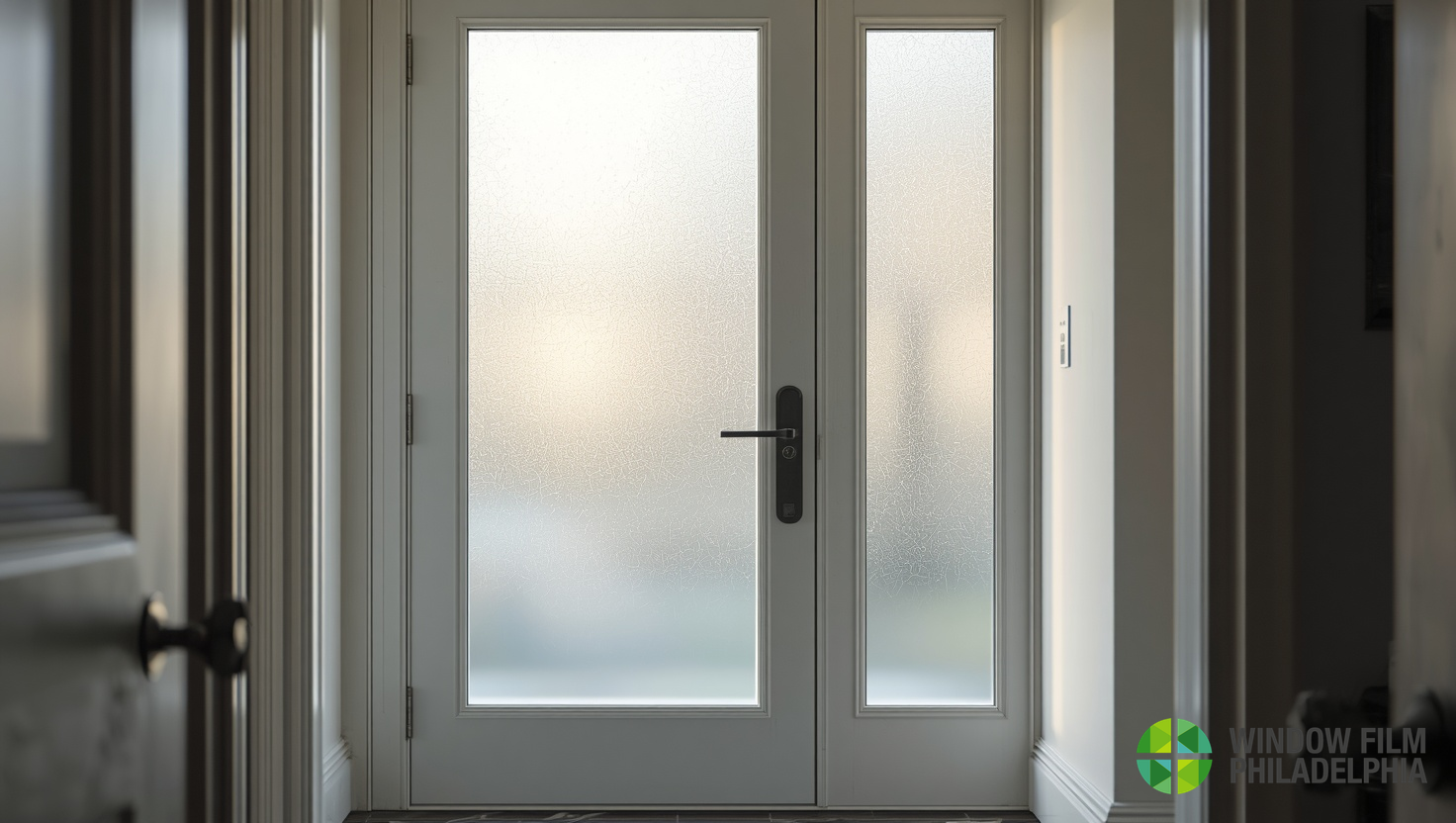
When a South Philly bedroom faces a bright alley wall, a Fishtown rowhome bathroom gets harsh midmorning sun, or a Center City conference room bakes after lunch, frosted glass can feel like an obvious fix. It softens the view, calms glare, and gives privacy without closing the room off. The harder question is the one we hear on site: does frosted glass reduce heat enough to make the room noticeably cooler?
Our answer is specific: frosted glass and frosted window film can reduce some visible glare, but they are not automatically heat-control products. For Philadelphia’s sun-exposed rooms, real comfort depends on how much solar energy the glass system rejects, how much daylight the owner wants to keep, and whether the goal is privacy, cooling, or both.
Frosted Glass Helps Privacy First, Not Heat First
Frosted glass works by scattering visible light. That diffusion gives bathrooms, sidelights, glass offices, and street-facing rooms a softer appearance, and it can make direct sun feel less sharp on the eyes. In Old City boutiques and Queen Village rowhomes, we often use decorative frosted films because they solve a privacy problem while keeping the space brighter than curtains or shades.
Heat behaves differently. Solar heat gain comes from a mix of ultraviolet, visible, and infrared energy passing through or being absorbed by the glass. A frosted pattern may cut glare because it diffuses visible light, but unless the product is engineered for solar control, it may not reject much infrared heat. That is why two films that look equally frosted can perform very differently in July.
When people ask, does frosted glass reduce heat, we separate the word “frosted” from the performance data. Frosted appearance describes privacy and light diffusion. Heat rejection is measured by specs such as total solar energy rejected, shading coefficient, and sometimes infrared rejection.
Why Philadelphia Rooms Overheat Even When the Glass Looks Soft
Philadelphia has a mix of building conditions that make window comfort tricky. A west-facing Center City office can collect hours of low-angle afternoon sun. A Manayunk rowhome may have a third-floor bedroom under a warm roofline. A Navy Yard office with broad glass can feel fine in the morning, then become uncomfortable when sun angle and internal equipment loads meet.
Frosted glass can make that sunlight less visually intense, but the room can still gain heat. Infrared radiation is a major driver of that warm feeling near glass, and visible light also carries energy. If a film only diffuses light, occupants may see less glare while the surface temperature and room load stay higher than expected.
That is why we ask where the window faces, what time the room gets uncomfortable, and whether the complaint is glare, privacy, fading, or actual heat. A Society Hill bathroom may only need privacy. A Rittenhouse condo living room with afternoon hot spots may need solar control. A University City lab may need glare control without making the space feel dim.
The Specs That Matter More Than the Frosted Look
For heat performance, we look first at TSER, or total solar energy rejected. TSER accounts for ultraviolet, visible, and infrared portions of solar energy, so it is a better broad measure than appearance alone. Higher TSER generally means stronger overall solar heat rejection, but the best choice still depends on glass type, exposure, and room use.
VLT, or visible light transmittance, tells us how much visible light passes through. A higher VLT film looks lighter and preserves more daylight. A lower VLT film usually gives more glare control and may add privacy, but we never assume darker is automatically better. Spectrally selective films can reject meaningful heat while keeping a lighter look.
IRR, or infrared rejection, can help explain comfort near sun-exposed glass, but we read it carefully because manufacturers may test different wavelength ranges. Shading coefficient is another useful number: a lower shading coefficient means less solar heat gain compared with clear unfilmed glass. When the question is does frosted glass reduce heat, these numbers tell the truth better than a sample held up in the showroom.
When Decorative Frosted Film Is the Right Answer
Decorative frosted film is the right answer when privacy and daylight are the main goals. We see this in glass-walled offices near Rittenhouse, conference rooms in Center City, storefront sidelights in Old City, and bath windows in Passyunk homes. The film obscures detail, softens glare, and gives the glass a finished architectural look.
Products in the decorative category, including Solyx frosted and patterned films, are useful when owners want etched-glass style without replacing the glass. They can make a room feel calmer because the view is diffused and the brightest patches are softened. For many interior partitions and street-facing windows, that is exactly the improvement people wanted.
We are careful about language, though. We do not sell standard frosted film as an energy product unless its technical sheet supports that claim. Some decorative films provide modest solar improvement because they reduce visible light transmission, but that is not the same as selecting a solar-control film for TSER, glare reduction, and summer comfort. If heat is the main complaint, we show decorative options only after explaining the tradeoff.
When Solar-Control Film Beats Frosted Glass for Heat
When the primary problem is heat, we usually start with solar control films for Philadelphia buildings. Ceramic, metalized, carbon, hybrid, and spectrally selective films are designed to manage incoming solar energy more deliberately than standard decorative frost. They can reduce solar heat gain, lower glare, and often block up to 99% or more of UV depending on product.
Ceramic films use nano-ceramic construction to reject infrared heat without metalized layers. We like them when signal friendliness, a neutral look, and durability matter, such as condos, offices, schools, and medical spaces. Metalized films can provide strong heat rejection and a more reflective appearance, but we review aesthetics and possible RF concerns before recommending them.
Spectrally selective films are especially useful when the owner wants the room cooler without making it feel heavily tinted. Products such as 3M Prestige and comparable LLumar or Vista architectural films are often considered when daylight matters. The specific VLT, TSER, shading coefficient, and UV data must come from the current manufacturer spec sheet for the exact glass and film combination.
This is where the phrase does frosted glass reduce heat can lead people in the wrong direction. Frosted privacy may solve the visibility problem, but solar-control film solves the energy problem more directly. In some projects we combine goals by using a solar-control film on the main sun-exposed glass and frosted film only where privacy is needed.
Low-E Film Is Better for Four-Season Comfort Questions
Philadelphia is not only a cooling climate. We get hot, humid summer stretches, but we also get winter mornings where old glass feels cold to sit beside. Low-E window film is designed for that four-season problem: it can reduce solar heat gain in warmer weather and reflect a portion of interior heat back indoors during colder months.
For older rowhomes, churches, schools, and commercial buildings where full window replacement is not practical, Low-E film can be a serious retrofit option. It helps reduce radiant heat transfer through glass, supports comfort near windows, and can preserve more natural light than heavy window coverings. When specified correctly, it can also help lower energy consumption, although we never promise exact savings without a building-specific analysis.
Federal efficiency incentives are usually tied to qualifying windows and skylights, so we point owners to ENERGY STAR’s windows and skylights tax credit page when they are comparing window upgrades and energy criteria. Film selection is its own technical decision, but that resource helps frame how seriously window performance affects the building envelope. For readers comparing retrofit paths, our energy-saving window film options page is the natural next step.
How We Match Film to Philadelphia Glass and Room Use
Our process starts with the room, not the sample book. We ask when the space overheats, which direction the glass faces, whether occupants need privacy during the day or at night, and whether screens, artwork, flooring, or merchandise are suffering from sun exposure. A west-facing Fairmount living room needs a different solution than a north-facing Chestnut Hill bathroom window.
We also inspect the glass. Existing tint, insulated glass units, tempered glass, laminated glass, seal condition, frame style, and partial shading can affect film choice. What we never do is treat frosted appearance as a substitute for compatibility review. Some glass systems need a conservative specification to manage thermal stress risk.
For commercial spaces, we also think about consistency. A frosted band across office fronts may need to align with door hardware and sightlines, while a solar-control film across exterior glass needs to look even from the street. In mixed-use Philadelphia buildings, the best result often comes from separating zones: decorative frost for privacy bands, clearer solar-control film for occupied perimeter rooms, and Low-E film where winter comfort matters.
Frequently Asked Questions
Does frosted glass reduce heat by itself?
Sometimes it reduces a little perceived heat because it softens bright visible light, but frosted glass is mainly a privacy and glare tool. If the product is not engineered for solar control, it may do much less for infrared heat than people expect. We check TSER, VLT, and shading coefficient before calling any frosted product a heat solution.
Is frosted window film better than blinds for hot rooms?
Frosted film can keep daylight in the room while improving privacy, which blinds often cannot do when they are closed. For heat, however, solar-control or Low-E film is usually the better comparison. Blinds can block direct sun visually, but much of the heat may already be inside once sunlight passes through the glass.
Can we use frosted film and heat-control film together?
In some layouts, yes, but we choose the stack or zone carefully. Often the cleaner solution is to use solar-control film on sun-exposed glass and decorative frosted film on interior partitions, sidelights, or privacy bands. We review manufacturer guidance before combining films on the same pane.
Will darker frosted film always keep a Philadelphia room cooler?
No. Darker film usually cuts more visible light and glare, but it is not automatically the best heat performer. A lighter spectrally selective film may reject heat well while preserving daylight. We compare performance data instead of judging by darkness alone.
Does frosted film protect furniture from fading?
Frosted film may reduce some visible light, and many films include UV reduction, but fading has several causes: UV, visible light, heat, material dyes, and age. UV-blocking films can block up to 99% or more of UV depending on the product, which helps reduce a major fading factor. We never claim any film eliminates fading completely.
The best window film work is specific to the glass, the exposure, and the people using the room every day. If you are asking does frosted glass reduce heat because one room is uncomfortable, we can compare privacy film, solar-control film, and Low-E options on site; get a free consultation and we will help you choose the right path for the space.