
Why does decorative film work well in Philadelphia homes?
When homeowners compare decorative window film Philadelphia options, they are usually trying to solve two problems at once: they want more privacy, but they do not want to darken the room or cover up the character of the glass. That balance matters in Philadelphia, where rowhomes in South Philly sit close to the sidewalk, corner condos in Center City pick up strong daylight, and older homes in Manayunk or Old City often have beautiful windows that people do not want to hide behind heavy curtains.
Decorative film changes the feel of a room without changing the structure around it. Instead of adding another layer of fabric, blinds, or shutters, the design lives directly on the glass. That makes it useful for bathrooms, front door sidelights, stair landings, home offices, and interior glass doors where you still want light to move through the house. In neighborhoods with tight setbacks and street-facing first floors, that can make daily life feel more comfortable right away.
It also fits the way Philadelphia homes are actually used. A family might need daylight in the kitchen but not a direct view from the sidewalk. A condo owner near Rittenhouse Square may want a cleaner look for interior office glass. A rowhome in Fishtown may need a softer boundary between the dining room and a backyard door. Decorative film handles those moments with less visual weight than drapery and less permanence than replacing the glass itself.
The rooms where decorative film makes the biggest difference
The best results come from installing film where privacy and light are competing with each other every day. Before choosing a pattern, it helps to think about the exact sightline you want to soften and the exact daylight you want to keep.
- Front door glass, sidelights, and transoms where you want to blur the view from the stoop without making the entry feel closed off.
- Bathroom windows where frosted or gradient film adds privacy without sacrificing daylight in narrow city footprints.
- Street-facing living and dining rooms where lower panes can be obscured while upper glass stays open and bright.
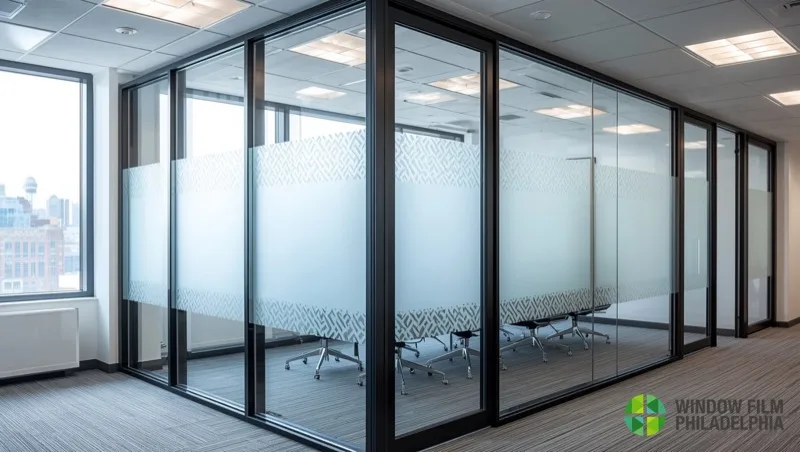
- Interior office or den glass where a subtle texture makes the room feel defined while still borrowing natural light.
- Mudrooms and back doors where film can soften direct lines of sight from alleys, patios, or neighboring properties.
These are especially common needs in Philadelphia houses because the city has so many long, narrow floor plans and closely spaced homes. Decorative film can make a first-floor room feel less exposed while keeping the kind of daylight that makes old plaster walls, hardwood floors, and historic trim look their best.
Design ideas that feel custom instead of temporary
A good decorative film installation should look intentional, not like a last-minute privacy patch. Frosted and etched looks remain the most versatile choice because they work with both classic and modern interiors, but they are not the only option. Reeding effects, linen textures, gradients, geometric bands, and cut-glass inspired patterns can all create a more architectural finish when the design matches the room.
For homeowners who want a refined look, 3M Fasara collections are popular because they offer subtle textures and layered patterns that feel more like finished glass than simple frosting. Solyx products are useful when the project needs a clean etched-glass effect, a decorative gradient, or a custom banded layout for sidelights and interior partitions. Many decorative films also block up to 99% of UV rays, so the upgrade can help protect flooring, fabrics, and artwork while it improves privacy.
If you want to see how different textures and finishes fit residential spaces, our decorative and promotional film solutions page is a helpful starting point. Homeowners who are deciding between frosting, reflective privacy, or a softer obscured view can also compare broader privacy window film options before choosing a final look.
What Philadelphia homeowners should check before installation
Decorative film works best when the glass, lighting, and architecture are considered together. Older Philadelphia homes sometimes have uneven panes, delicate wood trim, or custom muntin layouts that call for careful measuring and a pattern that respects the original proportions. That is one reason a tailored layout usually looks better than a one-size-fits-all roll cut in the field.
Historic context matters too. If your home is in a regulated district or the window is part of a facade with preservation requirements, it is smart to review guidance from the Philadelphia Historical Commission before making highly visible exterior-facing changes. Interior-applied decorative film is often a flexible choice, but it still helps to confirm how the finished glass will read from the street in places near Independence Hall, Society Hill, or other blocks with strong historic character.
Room conditions matter just as much as design. Bathrooms need the right product for moisture and cleaning routines. South-facing rooms near Fairmount Park may need a pattern that reduces direct visibility without making summer light feel harsh. Homes near SEPTA corridors or busy sidewalks may benefit from partial coverage that blocks eye-level views while keeping the upper glass open.
The best privacy upgrades are specific, not generic
The most successful decorative window film Philadelphia projects start with a very clear goal. Some homeowners need full obscurity in a bathroom. Others only need to break up a direct line of sight from the sidewalk. Some want a soft designer look on an office door, while others want a stained or etched effect that better fits historic architecture.
That is why placement matters as much as pattern. A full frost on every pane can be too flat for some homes, while a centered band, bottom-half treatment, or gradient layout can look far more custom. In many Philadelphia rowhomes, the smartest move is not maximum coverage. It is targeted coverage that protects privacy where people actually look in, while preserving the open feel that makes a small footprint livable.
Decorative window film Philadelphia homeowners choose most often is not about making glass disappear. It is about making glass work harder. The right design can define a room, soften a harsh view, protect finishes, and make the house feel more polished without the cost and disruption of replacing windows or adding heavy millwork.
A simple way to refresh glass without remodeling the room
If a room feels exposed, unfinished, or too plain, decorative film can deliver a meaningful visual upgrade in a short installation window. It is especially practical for rowhomes, condos, and older properties where you want privacy and style without changing the bones of the house.
For homeowners who want a broader residential plan, our homes and condos window film services page shows how decorative, privacy, UV, and comfort-focused films can be combined across the same property. Window Film Philadelphia can help you compare textures, map out sightlines, and choose a layout that looks right from both inside and out.
When you are ready to narrow down patterns, opacity, and placement, schedule a consultation with Window Film Philadelphia. A well-planned decorative film installation can make an entry, bath, office, or first-floor living space feel brighter, more private, and far more finished without turning the room into a cave.