Why does office glass become a problem in Philadelphia?
Philadelphia offices deal with a very specific mix of conditions: humid summers, bright afternoon sun, older building envelopes, and workspaces that still need to feel open and daylit. In Center City towers, renovated Old City loft offices, and University City medical and research spaces, the glass that looks great on a leasing brochure can become a daily source of glare, hot spots, and privacy complaints.
That is where commercial window film Philadelphia property owners choose starts to make practical sense. Instead of replacing good glass, film lets building owners and tenants tune performance at the perimeter, especially on east- and west-facing elevations where morning and late-day sun are toughest on desks, conference rooms, and reception areas.
What office teams usually want fixed first
Most facility managers are not starting with aesthetics. They are trying to solve comfort issues that staff mention every week and energy issues that show up every month.
Common priorities for commercial window film Philadelphia projects include:
- Reducing harsh screen glare in open-plan seating near the glass
- Improving privacy in conference rooms, executive offices, and street-level spaces
- Cutting solar heat gain so the HVAC system is not fighting perimeter zones all afternoon
- Keeping daylight and views instead of shutting blinds for half the workday
For office-specific applications, our office window film page shows how these upgrades are usually scoped in working commercial environments rather than empty-showroom conditions.
The performance numbers that actually matter
The best commercial film conversations stay focused on measurable outcomes, not vague claims. For office comfort and cooling load, solar energy rejection and UV control are usually the most useful numbers to review.
A strong example is 3M Prestige Series film, which can reject up to 60% of total solar energy while blocking 99.9% of UV rays. In plain terms, that means less heat collecting at the glass line, less fading pressure on finishes, and a better chance of keeping blinds open in rooms that currently overheat by midafternoon.
That matters in Philadelphia buildings with long west exposures facing the Schuylkill, broad south-facing glass near Market Street, and adaptive-reuse offices in Fishtown where daylight is welcome but unmanaged glare is not. Teams comparing envelope upgrades often use the GSA Sustainable Facilities Tool as a reference point when thinking about glazing performance, daylighting, and cooling demand together.
Where commercial window film pays off fastest
The fastest wins usually show up in the same kinds of rooms, no matter whether the office is in a newer building near 30th Street Station or a historic property closer to Independence Hall. These are the spaces where people notice the difference right away.
- Conference rooms with full glass walls or strong western exposure tend to become easier to use in late afternoon meetings.
- Perimeter desks near large windows usually see less eye strain, fewer monitor reflections, and more stable comfort.
- Reception zones and street-facing offices gain privacy without forcing the business into a permanently shaded look.
- Break rooms and shared lounges often feel more even through the day because direct solar gain is reduced before it builds up indoors.
A well-planned commercial window film Philadelphia installation can also reduce the constant thermostat tug-of-war between sunny zones and interior offices. In buildings where one side of the floor runs hot and another stays comfortable, film is often one of the least disruptive ways to rebalance the experience. Offices that need more help with brightness at desks and conference tables can also compare glare-reduction options as part of the same project.
Privacy without making the office feel shut down
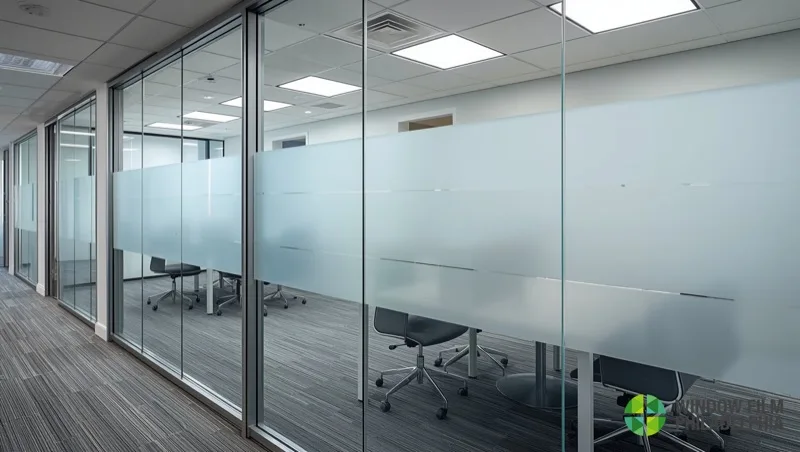
Privacy is usually part of the brief, but not in the same way it is for residential projects. Offices in Philadelphia often need selective privacy: enough obscurity for boardroom discussions, HR conversations, or ground-floor visibility control, while still preserving natural light and a polished interior look.
That is why many commercial window film Philadelphia projects combine solar control film on exterior glass with decorative or privacy film on interior partitions. Frosted and gradient options work well for meeting rooms, healthcare-adjacent offices in University City, and client-facing suites in Center City where discretion matters but a boxed-in feeling does not.
Our privacy window film guide covers the privacy side in more detail, including when a frosted finish makes more sense than a reflective look.
A smart fit for older Philadelphia buildings
Philadelphia has no shortage of offices in older masonry buildings, converted warehouses, and historic commercial properties. In those settings, owners often want better interior comfort without changing the character of the facade or launching a major window replacement project.
Commercial film fits that reality well. It is especially useful when the existing glass is still serviceable, the tenant improvement budget needs to stay controlled, and the building cannot afford weeks of disruption. Around Old City and parts of Center City, where preserving the feel of a building matters, film can improve performance while keeping the original visual rhythm of the windows intact.
For many teams riding SEPTA in and out of the core business districts, the difference is simple: fewer blinds drawn at noon, fewer perimeter complaints during heat waves, and a workplace that feels more consistent from one side of the suite to the other.
A practical next step for Philadelphia offices
If your office has bright conference rooms, hot perimeter zones, or glass that feels too exposed, commercial window film Philadelphia businesses install can solve several problems at once without replacing the windows. The right specification can improve comfort, support privacy, and take pressure off cooling equipment during Philadelphia’s sticky summer stretches.
If you want a local recommendation, reach out through our contact page to schedule a consultation. We can review your office glass, talk through privacy and glare priorities, and put together a quote for a commercial window film Philadelphia solution that fits your building and your team.