Why Heat-Reducing Window Film Matters in Philadelphia
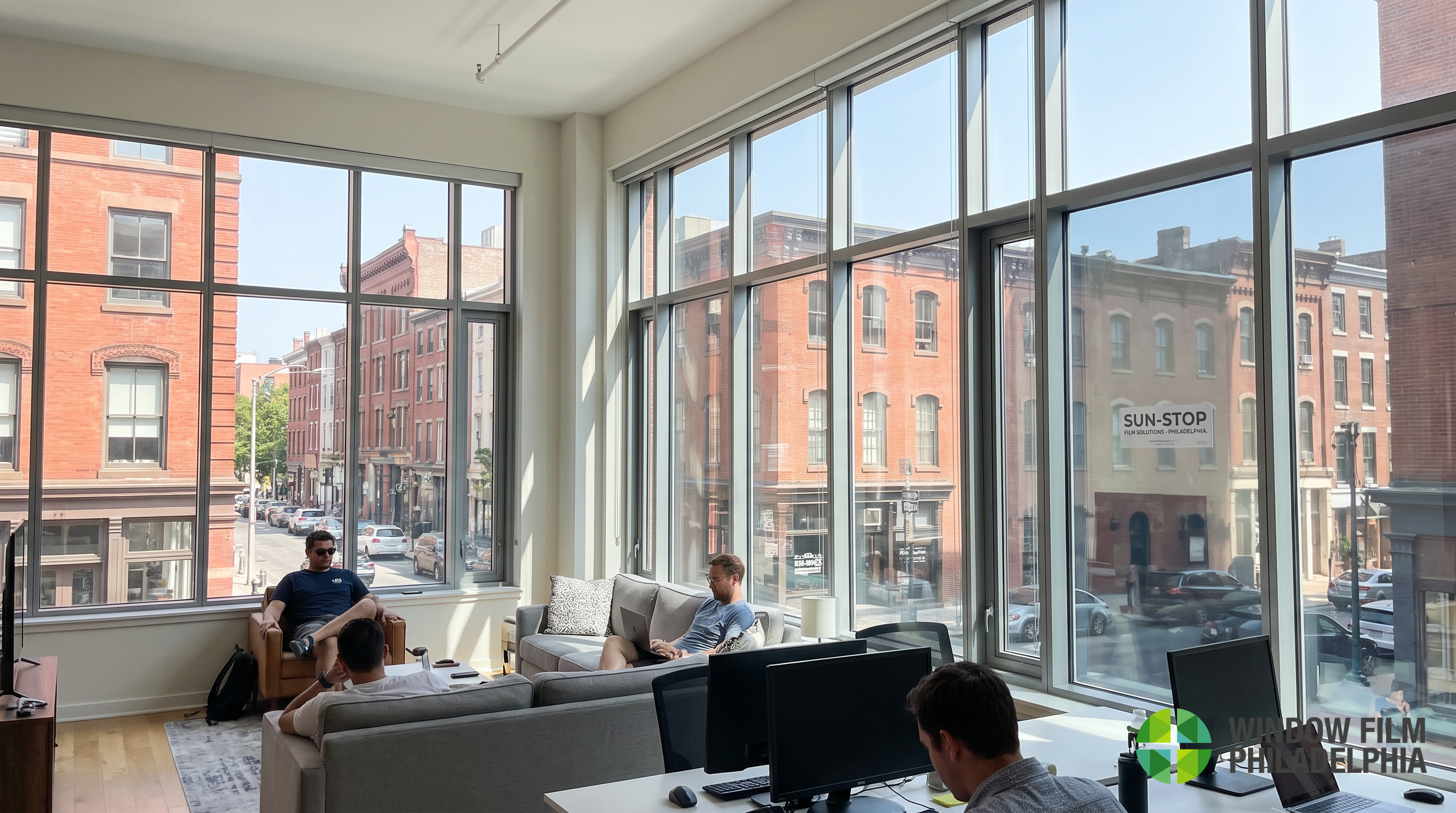
Philadelphia’s humid summers push HVAC systems to their limits, especially in older buildings across Fishtown, South Philly, and Old City where single-pane or aging double-pane windows let solar heat pour in. Finding the best window tint to reduce heat Philadelphia properties can rely on means balancing visible light, infrared rejection, and year-round energy performance without turning your interior into a cave.
The right film can cut cooling costs significantly while preserving natural light. According to the U.S. Department of Energy’s Better Buildings Initiative, recent advances in window technologies reduce both conduction losses and solar gains, delivering tremendous energy savings in commercial buildings — and the same principles apply to residential properties.
Top Heat-Reducing Window Films We Install
Several film lines stand out for Philadelphia properties based on performance data, durability, and suitability for our regional climate. Here are the top options we recommend:
3M Prestige Series
The 3M Sun Control Window Film Prestige Series uses non-metallized, multi-layer optical film and nanotechnology to reject up to 97% of the sun’s infrared light and up to 60% of the heat coming through your windows. Because it contains no metal, it won’t interfere with cell signals or corrode over time — a real advantage in humid Philadelphia summers. The Prestige series also blocks up to 99.9% of UV rays, protecting interiors from fading without darkening rooms excessively.
3M Sun Control Traditional Series
For budget-conscious property owners in Manayunk or University City, the 3M Traditional Series delivers high heat reduction at a lower cost. It improves building energy performance and occupant comfort by targeting solar heat gain directly, making it a practical choice for large commercial facades along Market Street or residential blocks in Roxborough.
Llumar Energy-Saving Film
Llumar’s solar control films offer Total Solar Energy Rejection (TSER) ratings that compete with premium lines at a mid-range price point. With TSER values reaching the mid-40% range depending on the specific product, Llumar films reduce heat transfer through glass while maintaining respectable visible light transmittance — ideal for Philadelphia offices and retail spaces that need natural light without the heat penalty.
How to Choose the Right Film for Your Property
Selecting the best window tint to reduce heat for Philadelphia buildings depends on several factors that go beyond raw performance numbers. When researching the best window tint to reduce heat Philadelphia offers, consider these criteria:
- Glass type and orientation — South- and west-facing windows in Center City high-rises receive the most solar exposure and benefit from higher heat-rejection films.
- Visible light transmittance (VLT) — Lower VLT means more heat rejection but darker interiors. Philadelphia’s overcast winters make higher VLT films more practical for year-round comfort.
- Building use — Offices and healthcare facilities may prioritize glare reduction alongside heat control, while homes in Germantown or Chestnut Hill may focus purely on cooling savings.
- Aesthetic preferences — Neutral, low-reflectivity films preserve exterior appearance for historic properties in Old City and Society Hill where preservation guidelines matter.
For a deeper look at how heat-reducing film can lower your energy bills, our energy savings benefits page breaks down the expected return on investment for Philadelphia properties.
What Performance Numbers Actually Mean
Film manufacturers use several metrics to communicate heat-rejection performance, and understanding them helps you compare products accurately. Here are the key specifications to look for:
- TSER (Total Solar Energy Rejection) — The percentage of total solar energy (visible light, infrared, and UV) blocked by the film. Higher is better; premium films reach 50–60%.
- IRR (Infrared Rejection) — Measures how much infrared energy is rejected. The 3M Prestige series reaches up to 97% IRR, making it one of the strongest performers on the market.
- SHGC (Solar Heat Gain Coefficient) — The fraction of solar radiation admitted through the window. Lower SHGC means less heat transfer. Window film can reduce SHGC by 40–60% depending on the product.
- VLT (Visible Light Transmittance) — The percentage of visible light that passes through. Films with 35–50% VLT offer a good balance of heat rejection and natural light for Philadelphia homes.
Installation Considerations for Philadelphia Buildings
Philadelphia’s mix of historic rowhomes, mid-century commercial buildings, and modern high-rises means installation requirements vary widely. Proper surface preparation and professional installation are essential — especially for landmark-adjacent properties in Independence Hall’s vicinity where glass condition and frame types can complicate the process.
Interior films are the most common choice for heat reduction, applied to the inside surface of the glass where they’re protected from weather. For buildings with difficult interior access or specialty glass, exterior films may be appropriate. Either way, professional installation ensures the film performs to its rated specifications and lasts its full warranty period.
If your property also struggles with glare on screens and workspaces, pairing heat-reduction film with a glare reduction solution can address both issues with a single installation.
Ready to Cut the Heat?
Choosing the best window tint to reduce heat for your Philadelphia home or business doesn’t have to be a guessing game. Our team evaluates your glass, orientation, budget, and comfort goals to recommend the film that delivers real, measurable results — not just marketing claims.
Contact us today for a free consultation and quote. We’ll help you compare options from 3M, Llumar, and Vista so you can make an informed decision that keeps your property cooler and your energy bills lower all summer long.