Why Mirrored Window Film Makes Sense in Philadelphia
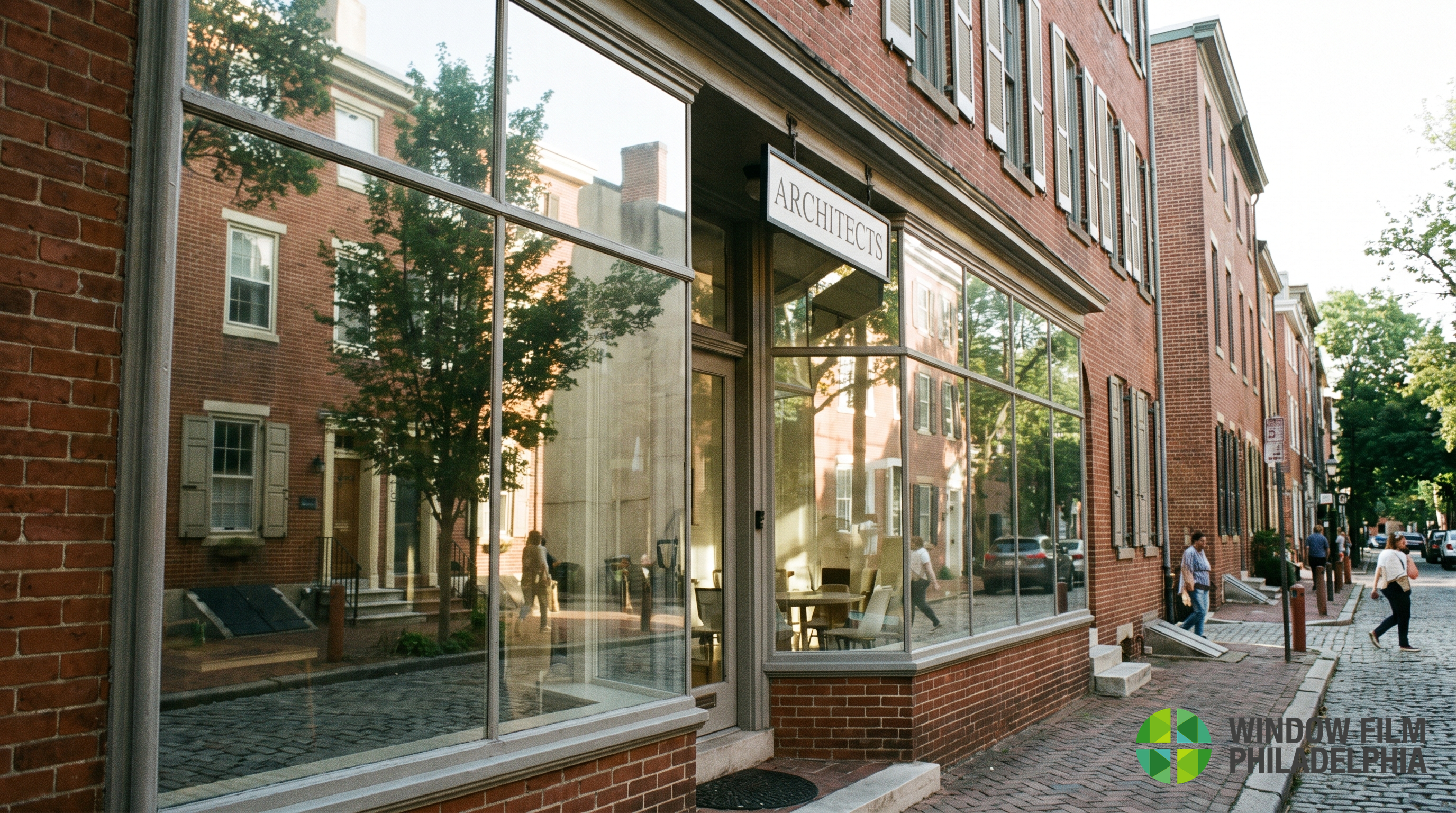
Walk along Market Street or Chestnut Street on a bright July afternoon and you will see it: glass storefronts acting like magnifying glasses, baking interiors and forcing the HVAC to work overtime. Mirrored window film flips that dynamic. The reflective exterior surface bounces solar radiation away before it enters your space, while people inside still get a clear view of the street. For privacy window film needs in particular, the one-way mirror effect means passersby see only their own reflection — not your merchandise, your customers, or your living room.
Philadelphia’s mix of dense commercial corridors and tightly spaced rowhomes makes mirrored film especially useful. When the building next door is ten feet away, mirrored film creates visual breathing room without pulling the blinds shut.
How Mirrored Window Film Works
The reflective surface of mirrored window film relies on a thin metallic or nano-ceramic layer that reflects a high percentage of visible light and infrared energy back through the glass. During daylight hours, the brighter side (outdoors) overpowers the dimmer side (indoors), creating the one-way mirror effect. You can see out; people outside cannot see in.
The key performance metrics to understand:
- Solar Heat Gain Coefficient (SHGC): Measures how much solar heat passes through the glass. Lower numbers mean better heat rejection. According to the U.S. Department of Energy’s window resources, solar heat gain through windows accounts for a significant portion of commercial cooling energy — and reflective film directly reduces that load.
- Visible Light Reflectance (VLR): The percentage of light bounced off the exterior surface. Higher VLR creates a stronger mirror effect.
- Total Solar Energy Rejected (TSER): The combined figure for heat, visible light, and UV blocked. Premium reflective films routinely post TSER values above 70 percent.
Top Mirrored Film Options From Brands We Carry
3M Sun Control Reflective Series
3M’s Sun Control Window Films with reflective coatings are engineered to deliver strong solar performance without sacrificing too much visible light. The 3M Silver P Series, for example, rejects up to 99 percent of UV rays and can reduce glare by up to 83 percent. With TSER ratings reaching the high 80s, these films are well suited for Philadelphia offices and storefronts that face direct afternoon sun — think west-facing facades in University City or Fishtown where late-day heat builds up fast.
LLumar Reflective Window Film
LLumar’s reflective lineup, including the DRN and RHE series, combines a mirror-like exterior with serious heat rejection. These films block up to 99 percent of UV radiation and can reject up to 78 percent of solar energy. The mirror finish is available in several shades, from a subtle silver to a darker charcoal, letting you tune the balance between privacy and natural light. LLumar films carry the Skin Cancer Foundation’s Seal of Recommendation, which speaks to their UV-blocking credibility.
Vista Reflective Film
Vista Window Film offers reflective options that lean into both performance and aesthetics. The Vista Lumistyne series provides a mirrored exterior with a neutral interior view — useful for Philadelphia retail spaces that want to reduce glare on display cases without darkening the shop floor. Vista films typically achieve 99 percent UV block and TSER values in the 60 to 70 percent range depending on the specific product.
Where Mirrored Film Shines in Philadelphia
Storefronts and Retail
On corridors like South Street, Old City, and Frankford Avenue, storefront windows are both an asset and a liability. They draw customers in, but they also let in heat, glare, and prying eyes. Mirrored film solves multiple problems at once. During business hours, shoppers see a sleek reflective exterior that still allows passersby to catch glimpses of the interior in the right lighting. After hours, the mirror effect intensifies because the interior is darker than the exterior, adding a layer of security window film deterrence against smash-and-grab attempts.
Offices and Commercial Buildings
Center City high-rises with floor-to-ceiling glass face intense solar loads, especially on south and west exposures. Mirrored film can cut glare on workstations near windows, reduce the load on building cooling systems, and create a more uniform exterior appearance. A 3M reflective film applied to a west-facing curtain wall in a Market Street office can reduce interior temperatures by several degrees — enough to eliminate hot spots that make perimeter desks unusable in the afternoon.
Rowhomes and Residential Corner Properties
Philadelphia rowhomes on corner lots often have side windows that face directly onto the sidewalk or a neighboring property. Mirrored film on these windows provides daytime privacy without the cave-like effect of blackout curtains. In neighborhoods like Manayunk and South Philly where homes are inches apart, the reflective surface lets you keep the blinds open and still feel like nobody is watching.
What to Expect During and After Installation
Mirrored window film installation is a straightforward process, but surface preparation matters. The glass must be thoroughly cleaned and free of any residue before the film is applied. Most installations on standard residential or small commercial windows take a few hours; larger commercial facades may require a day or more depending on square footage and access.
After installation, you may notice a slight haze for the first week as the adhesive cures. This is normal and clears on its own. The mirror effect will be strongest when there is a clear light-level difference between inside and outside — bright daylight outside, lower light inside. At night, when interior lights are on and the exterior is dark, the effect reverses: people outside can see in, and you may need blinds or curtains for glare reduction and nighttime privacy. This is a fundamental characteristic of all one-way mirror films, not a defect.
Choosing the Right Reflectivity Level
Not every property needs the most aggressive mirror finish. Here is how to think about the options:
- High reflectivity (silver mirror): Maximum daytime privacy and heat rejection. Best for storefronts, west-facing offices, and properties where solar control is the top priority. Interior light will be noticeably reduced.
- Medium reflectivity (subtle silver): Balanced privacy and natural light. Good for residential windows and offices where you want the mirror effect without darkening the room too much.
- Low reflectivity (neutral/bronze): Minimal mirror appearance but still meaningful heat and UV rejection. Useful for historic districts like Society Hill where exterior appearance guidelines may restrict highly reflective surfaces.
A professional installer can show you film samples on your actual glass so you can see the effect under real lighting conditions before committing.
Start Your Mirrored Film Project
Mirrored window film is one of the most cost-effective ways to add privacy, cut heat, and reduce glare across Philadelphia properties — from Center City offices to Manayunk rowhomes. The right film depends on your building’s orientation, your privacy priorities, and how much natural light you want to preserve. Our team installs 3M, LLumar, Vista, and Solyx reflective films and can help you compare options side by side. Contact us for a free consultation and on-site evaluation.